
Your headcount ask might already be funded
🔧 Tooling now eats 14-18% of loaded marketing budget, up from 9%. That creep is competing with your next hire, Google is pushing AI deeper into shopping and advertising, and more!

Hey there Smarty 👋
Are you geared up to catch the latest and greatest in quick shorts?
And just a quick heads-up! If you stumbled upon us through a friend, make sure to subscribe here! That way, you’ll never miss out on the trending shorts.

🔧 Before you ask for headcount, audit what your tools are actually costing
Tools and platforms now represent 14 to 18% of the fully loaded cost of running a marketing team, up from roughly 9% just a few years ago.
That shift happened gradually enough that most teams never noticed it as a single decision.
It happened through a dozen separate approvals, each one reasonable on its own, that collectively moved a meaningful share of budget from people to software without anyone framing it as a tradeoff.
That matters directly for anyone about to ask for more headcount, because the tool line is competing with the headcount line for the same pool of money, and it’s rarely audited with the same scrutiny a new hire gets.
A tool renewal often gets approved on autopilot while a headcount request gets a full business case, even though the tool line has grown faster as a share of budget.
Total the actual cost of the stack before building the headcount case
Most teams can name their tools. Few can state, in one number, what the full stack costs annually, including every seat, every add-on, and every tool nobody uses anymore but nobody canceled either.
Pull every recurring marketing tool subscription and sum the actual annual cost, not the per-seat sticker price.
Compare that total against what it was two years ago. A number that grew faster than headcount or revenue over that window is the first place to look before asking for more budget elsewhere.
Find the tools nobody would defend in a review meeting
A tool renewing quietly every year rarely gets re-justified the way a new purchase would, which means low-utilization tools survive far longer than they would if they had to make the case for themselves annually.
Check usage data or, where that’s not available, ask each team lead directly whether they’d fight to keep a specific tool if it were cut tomorrow.
A tool nobody actively defends is a candidate for cancellation regardless of how reasonable it looked when it was purchased.
That same mismatch, between what’s being asked of teams and what’s actually funded to support it, showed up in AirOps’ recent survey of 300+ CMOs and VPs: 75.4% are facing higher targets this year, but only 43.0% got any budget increase to match.
If tooling is quietly absorbing the gap between those two numbers, the full report breaks down where other leaders are finding that money instead.
Reframe the ask as a reallocation, not just an addition
“We need more headcount” competes against every other budget request in the building. “We found $80K in underused tooling and want to redirect it toward a hire that will use it” is a fundamentally different, much stronger conversation, since it doesn’t require finance to find new money at all.
The headcount you need might already be funded. It’s just currently paying for a tool nobody remembers signing up for.
Together with Billo
You Need To Check This Before You Scale Another Q4 Ad
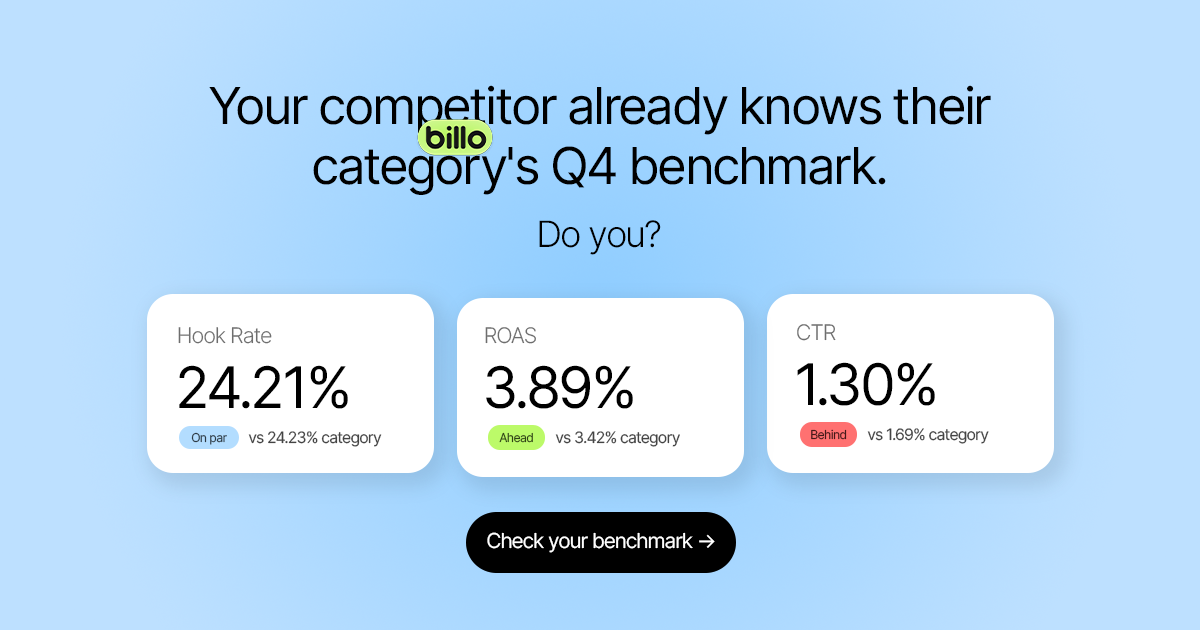
Your best-performing ad may be underperforming against the ads competing for your customer.
Q4 benchmarks change by category and month. Scale against the wrong one, and every extra dollar can widen your performance gap.
Billo analyzed 80,069 sales-objective Meta video ads across 14 categories and turned the findings into a free Q4 Performance Calculator.
- See how your results compare with the right category benchmark.
- Find the month when your category offers the biggest opportunity.
- Identify the performance gap to fix before increasing spend.
In under a minute, you get a sharper target and a clear priority for your next creative batch. That means faster decisions and more confidence behind the ads you choose to scale during the most competitive quarter.
Run the calculation before your next Q4 budget increase locks in an avoidable disadvantage.
🛍️ Google is pushing AI deeper into shopping and advertising
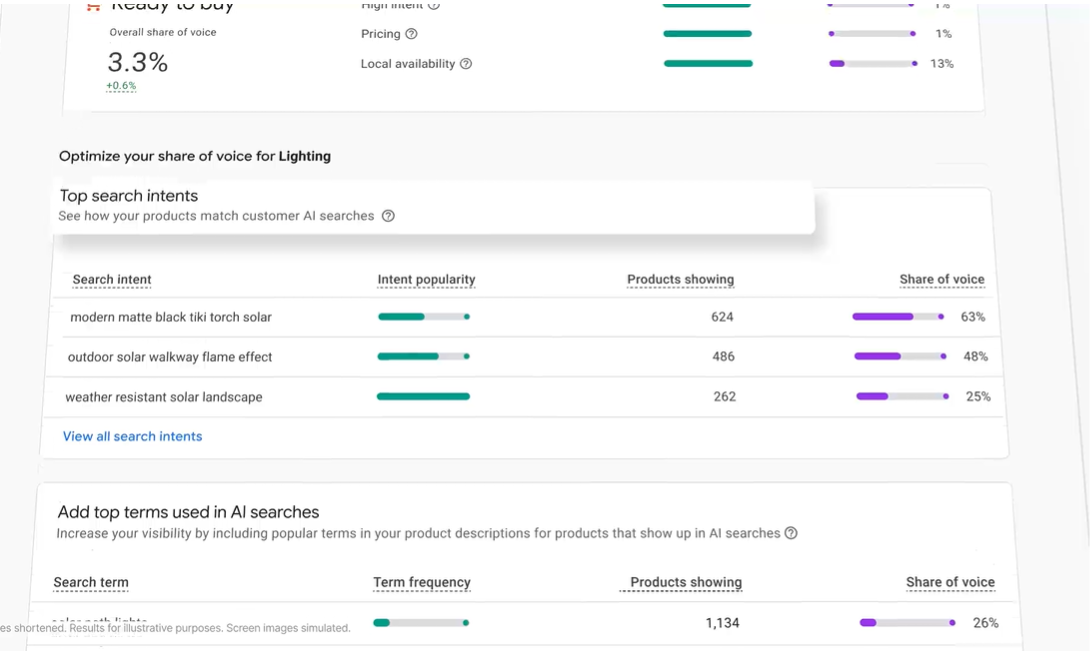
Google is expanding its commerce and advertising stack with AI shopping tools across Merchant Center and YouTube, while a new Spend Benchmarks report lets advertisers compare their Google Ads activity with similar businesses.
The Breakdown:
Brands can now measure how visible they are inside AI results - Merchant Center’s AI performance insights compare a retailer’s share of voice with competitors across AI Mode and AI Overviews, now available in five countries.
YouTube ads are getting conversational shopping agents - Eligible U.S. retailers can test Google’s Business Agent inside ads, letting shoppers ask product questions and get tailored answers without leaving YouTube.
Google is connecting AI discovery directly to checkout - Expanded Universal Commerce Protocol tools support cart transfers and checkout testing, while Google says stronger Merchant Center feeds can improve how products appear in AI recommendations.
Advertisers can compare spending and clicks with similar businesses - Google Ads’ new Spend Benchmarks report uses factors such as industry and location to show weekly peer comparisons, alongside potential recommendations to increase spending.
Google is giving advertisers more context at both ends of the funnel. Retailers can see how products surface in AI, answer questions inside ads, and reduce checkout friction, while spending benchmarks provide another reference point for budgets. Peer spending, however, does not account for each business’s margins, conversion rates, or profitability
👨💻 Quick hits
🔥 Peak-season updates can introduce pricing mismatches, inaccurate product details, and broken variants across thousands of pages. Zenyt checks the entire store continuously and surfaces the problems costing the most, helping campaigns land on accurate pages when traffic is at its highest. Enter your store URL and get a free analysis.
💬 Meta launched WhatsApp Business Tools MCP, letting businesses connect third-party AI tools to WhatsApp and create automated agents, customer responses, marketing templates, and workflows through conversational instructions instead of extensive coding.
🎯 LinkedIn is highlighting its Companies hub in Campaign Manager to help marketers identify high-intent accounts, track organic and paid engagement, reach decision-makers, and retarget engaged companies using CRM data.
🔍 Google updated Search profiles for publishers, lowering eligibility from 100,000 to 10,000 social followers, adding multi-profile management from one login, and improving article displays with larger thumbnails and longer headlines.
💡 Competitors’ negative reviews can reveal stronger PPC messaging opportunities. AI can analyze recurring complaints, uncover what customers actually value, and identify differentiators worth testing, provided the business can genuinely deliver them.
That’s a wrap for today! Tell us your thoughts about today's content as we line up more Shorts! And don’t hesitate to share this with someone who’d adore it. 🥰