
The real bottleneck in scaling creators
🔓 54% cite rights negotiation as a top barrier to scaling creator content. It's not a legal problem, it's a speed problem, ChatGPT shopping is becoming a new battleground for advertisers, and more!
Hey there Smarty 👋
Are you geared up to catch the latest and greatest in quick shorts?
And just a quick heads-up! If you stumbled upon us through a friend, make sure to subscribe here! That way, you’ll never miss out on the trending shorts.

🔓 The scaling problem hiding in every creator rights negotiation
Difficulty securing usage rights or content permissions is one of the top barriers to scaling creator content, cited by 54% of paid media managers and marketing executives. That's a striking number for a problem that sounds purely administrative.
It means the thing actually capping how fast a program can scale, for more than half the teams running one, isn't creator supply or content quality. It's the friction of negotiating rights one relationship at a time.
The default structure most programs run makes this worse than it needs to be. Rights get negotiated narrowly at the start of each relationship, whatever's needed for the immediate campaign, and every time the brand wants to expand usage, a new platform, a longer window, paid placement that wasn't originally scoped, that's a fresh negotiation with a creator who now has more leverage.
Default to broader rights upfront instead of narrow rights renegotiated later
A narrow initial grant feels cheaper in the moment and gets expensive the first time content performs well enough to justify wider use, since that's exactly when a creator has the most leverage to charge more for expanding it.
Build your standard offer around a broader default package, organic and paid, a defined multi-month window, whitelisting included, priced accordingly from the start.
Paying slightly more upfront for room to actually use strong content is usually cheaper than paying a premium to renegotiate mid-campaign once a piece is already proving itself.
Separate your rights template from your one-off exceptions
A rights negotiation that starts from a blank document every time is slower than one that starts from a standard template and only negotiates genuine exceptions.
Build a default rights package that covers the large majority of your program's actual use cases, and reserve individual negotiation for the real edge cases, exclusive category requests, unusually long windows, rather than treating every creator relationship as a negotiation built from scratch.
This is exactly the kind of program structure Insense supports at the roster scale ecommerce brands past $2M need.
Track rights friction as a scaling metric, not just a legal one
If 54% of teams cite this as a genuine barrier to scaling, it's worth measuring directly rather than only noticing it anecdotally when a specific deal drags.
Track average time-to-signed-rights-agreement across your roster and watch for it trending upward as the program grows, since that trend is an early signal of a scaling bottleneck before it becomes a visible one.
The bottleneck on scaling creator content usually isn't finding more creators. It's how long it takes to agree on what you're actually allowed to do with what they make. You can book a free strategy call and get $200 towards your first campaign
Together with Omnisend
They Switched Platforms Before BFCM and Made $113K
For ecommerce teams watching software costs climb, switching sounds sensible until migration enters the conversation. Nobody wants the move disrupting revenue.
Ecom2Win faced that decision weeks before BFCM, when nearly one in six brands earns at least 30% of its annual orders. The agency moved its client to Omnisend anyway.
The outcome answered the biggest concerns:
- Migration was completed in 24 hours, with every automation rebuilt and checked within four days.
- Email generated $113,000 and accounted for 53% of the store’s total revenue during BFCM.
- Omnisend plans can cost up to 35% less than Klaviyo, helping brands keep more of the revenue they generate.
More than 150,000 ecommerce brands use Omnisend, with customers generating an average of $79 for every $1 spent. Migration is free and can be completed within five business days.
Jocelyn breaks down how they moved without sacrificing peak-season revenue and why Omnisend was worth choosing before BFCM.
🛒 ChatGPT shopping is becoming a new battleground for advertisers
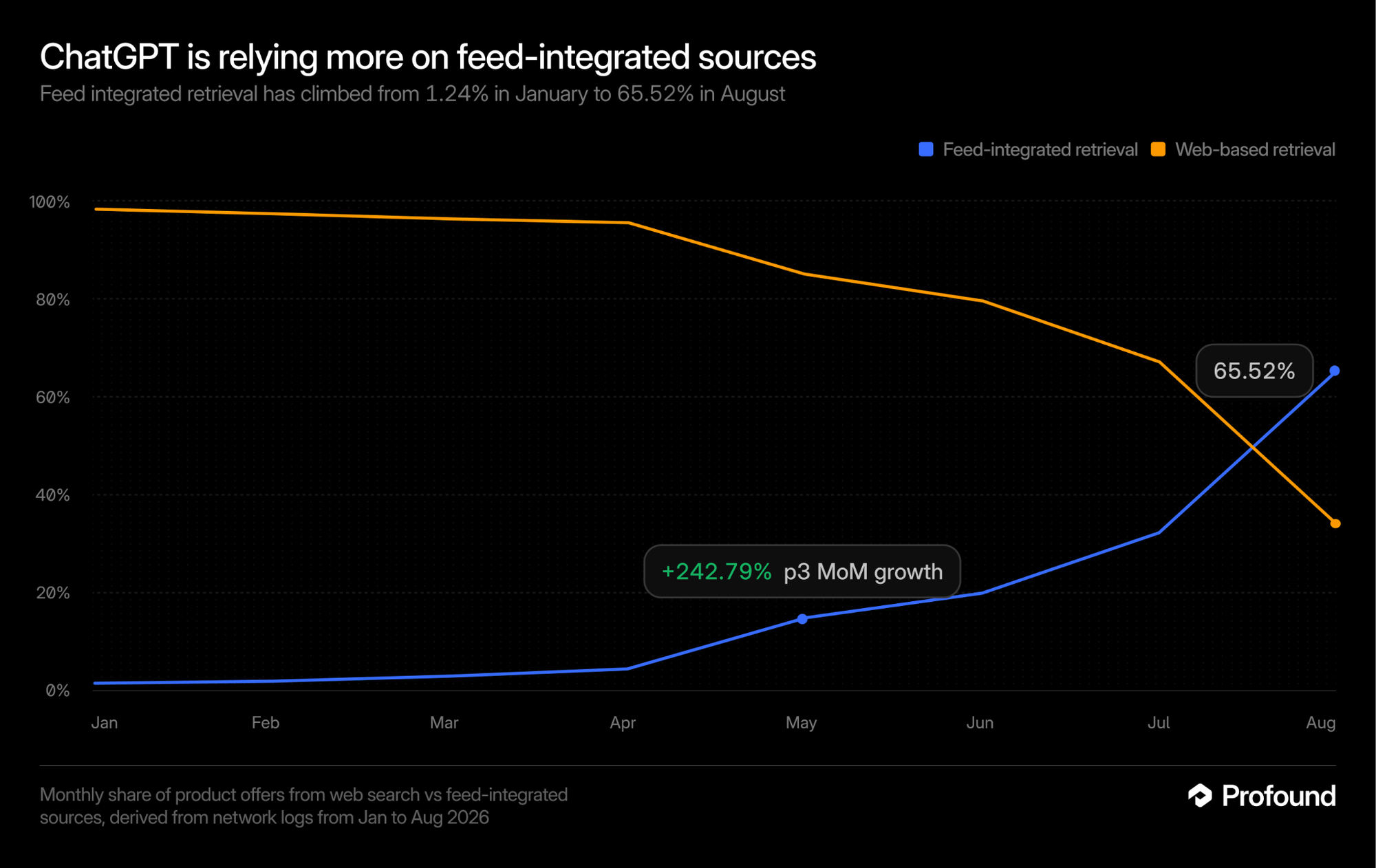
Three changes are reshaping how brands appear across AI shopping and search: Amazon DSP ads are entering ChatGPT, product feeds are driving more ChatGPT Shopping recommendations, and Cloudflare is changing how AI bot blocking works from September 15.
The Breakdown:
Product feeds now heavily influence ChatGPT Shopping - Feed-sourced recommendations reportedly jumped from 8.26% to 61.54% after July 10. Among 687 tracked merchants, 450 lost visibility while only 67 gained.
Amazon DSP ads arrive inside ChatGPT - Advertisers can now buy conversational ChatGPT ads through Amazon DSP, combining Amazon’s shopping data with lower DSP fees, although OpenAI’s measurement remains limited.
Cloudflare’s new bot rules could affect search indexing - Starting September 15, bots such as Googlebot, Bingbot, and Applebot will be classified according to their strictest identified use, potentially grouping traditional search crawlers with AI-related activity.
Blocking AI bots could unintentionally block search crawlers - A broad “block AI bots” setting could therefore interfere with indexing. Brands using Cloudflare need to review crawler settings rather than assuming AI blocking only affects model-training bots.
AI visibility is becoming an infrastructure issue as much as a marketing one. Brands now need to think about where they buy ads, whether their product feeds are accessible to AI shopping systems, and whether bot-blocking settings accidentally remove them from search and discovery.
👨💻 Quick Hits
🛍️ Reddit says 88% of users researching food and beverage content expect to spend the same or more this holiday season, while half begin researching and shopping as early as April.
📌 Pinterest expanded its Nvidia partnership to power AI discovery and shopping, using Blackwell GPUs to process 25x more visual context per Pinterest Assistant request while significantly reducing response times.
💰 Google is testing payments to publishers whose content significantly contributes to AI Mode, AI Overviews and Gemini responses, through a limited Search Console pilot called AI Contribution.
🤖 Microsoft Advertising introduced new rules for AI-generated ads, requiring advertisers to preserve provenance data and disclose synthetic content where required while prohibiting deceptive deepfakes, impersonation and unauthorized likenesses.
💃 Events
🔥 How to Turn Bigger Growth Targets Into a Stronger Budget Case
September 17 | Virtual Event
Krithika Shankarraman, the first marketing hire at Stripe and OpenAI, joins AirOps CMO Christy Roach to unpack findings from 300+ marketing leaders. Learn how to connect investment to growth, defend the work that moves pipeline, and make resource asks that leadership can evaluate quickly.
Can't attend the session live? Register anyway, and you’ll get the recording in 24 hours.
That’s a wrap for today! Tell us your thoughts about today's content as we line up more Shorts! And don’t hesitate to share this with someone who’d adore it. 🥰