
The spam update nobody will quantify
🔍 Google's third 2026 spam update rolled Aug 18–21. What it won't say points to pattern-level detection, not page-level, Meta is putting more business and creator tools behind one stack, and more!
Hey there Smarty 👋
Are you geared up to catch the latest and greatest in quick shorts?
And just a quick heads-up! If you stumbled upon us through a friend, make sure to subscribe here! That way, you’ll never miss out on the trending shorts.

🔍 Google's third spam update this year says more by what it won't say
Google rolled out its third spam update of 2026 between August 18 and 21, and its entire public characterization was that this is a normal spam update rolling out across all languages and locations.
It declined to say what share of queries were affected and confirmed it doesn't target link spam or site reputation abuse specifically. That vagueness isn't an oversight. It's the pattern, and the pattern is the story worth acting on.
Spam enforcement has been moving from page-level judgment toward pattern-level detection, where the signal isn't a single bad page but a recognizable shape across a whole site: templated structures, scaled thin content, publishing velocity that outruns any plausible editorial process.
A site can have no individual page that clearly violates a guideline and still get caught, because the pattern across the domain is what the system now reads.
Audit for pattern, not just for individual bad pages
A traditional content audit checks pages one at a time: is this page thin, is this one duplicative, does this one match intent. Pattern-level detection means that page-by-page view can pass every check while the domain still reads as spam in aggregate.
Step back and look at your site the way a pattern detector would: how many pages share a near-identical template, how fast publishing volume has scaled recently, what share of the domain is genuinely differentiated versus filled to a formula.
A site that looks fine page by page and alarming in aggregate is exactly the profile this shift targets.
Separate a real ranking change from update noise before reacting
An unconfirmed or vaguely described update makes it tempting to attribute any traffic movement to it, which leads teams to change things that were never the problem.
Before reacting to a shift that lines up with the August 18 to 21 window, confirm the movement is real and sustained rather than volatility, and check whether it concentrates in the templated or scaled sections of the site.
Where the drop clusters there, the pattern-detection read is likely. Where it's spread evenly, something else is going on.
Build differentiation the pattern can't flag, then measure whether it holds
The durable answer to pattern-level detection isn't a cleanup pass. It's producing content different enough in substance that no formula describes it, the kind an AI system also has reason to cite because it says something a generated page couldn't.
Tracking whether that genuinely differentiated content is earning citations across ChatGPT, Perplexity, Gemini, and Google AI Mode, rather than assuming a cleanup fixed the underlying pattern, is what Semrush's AI Visibility Toolkit is built to surface You can try it free for 7 days.
A "normal spam update" nobody will quantify is still telling you something. It's telling you the shape of your site matters more than any single page on it.
Together with AirOps
How High-Growth Marketing Teams Secure More Resources
75.4% of marketing teams face higher pipeline or revenue targets, yet only 43% received a budget increase. If your team is expected to close that gap, you need a stronger operating playbook.
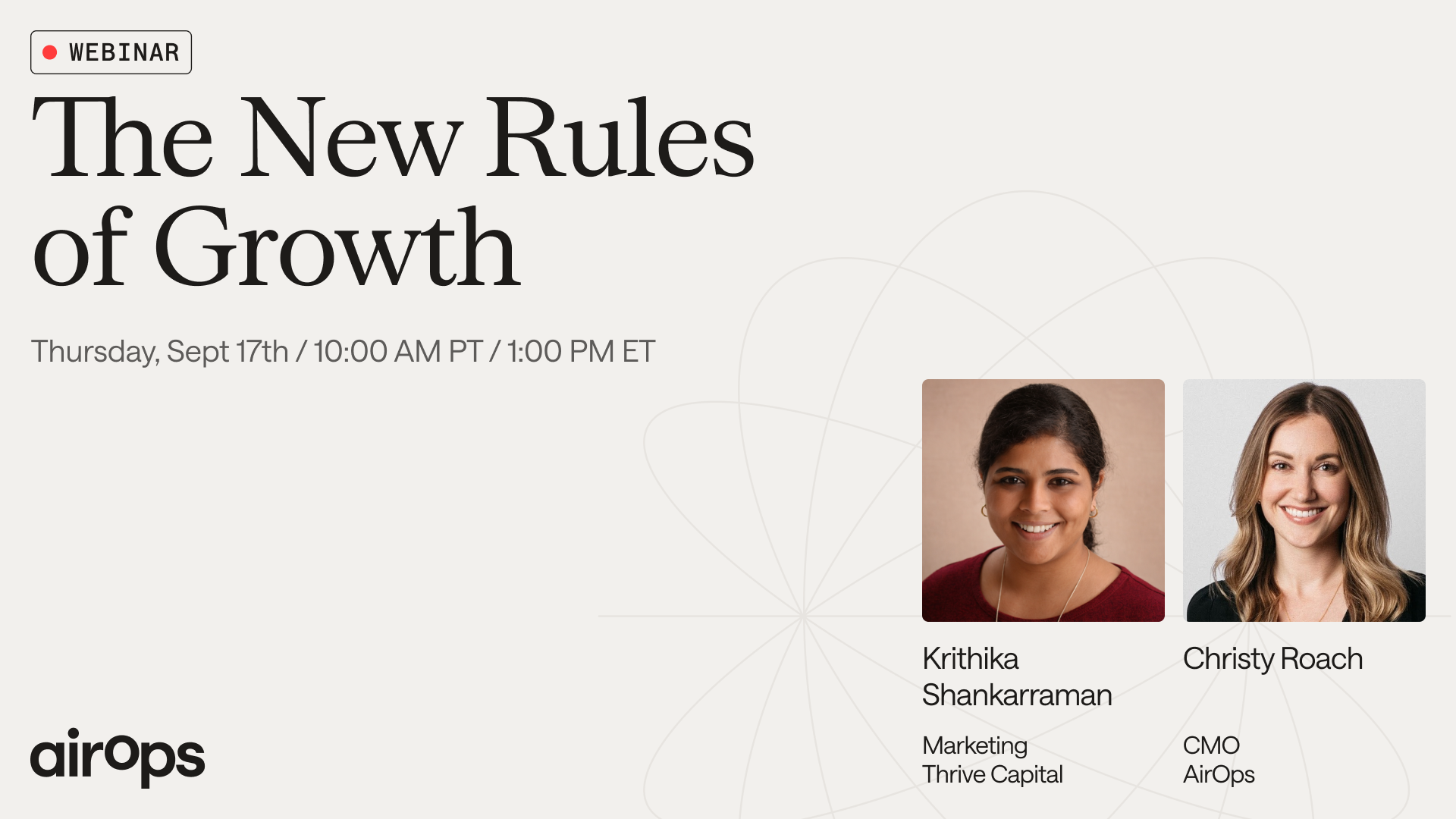
On September 17, Krithika Shankarraman, the first marketing hire at Stripe and OpenAI, joins AirOps CMO Christy Roach to unpack findings from 300+ marketing leaders.
You’ll learn how to:
- Strengthen budget and headcount requests by tying investment to business growth
- Push back when expectations exceed resources while protecting work that moves pipeline
- Design a smaller, senior team with clearer ownership and greater leverage
Krithika built both marketing functions from the ground up. Christy has held leadership roles at AssemblyAI, Airtable, Asana, and Gusto.
You’ll leave knowing where to invest and how to make a stronger case for the people and budget needed to hit your targets.
Reserve your free spot and learn how to secure more resources for your team.
Can't attend the session live? Register anyway, and you’ll get the recording in 24 hours.
📣 Meta is putting more business and creator tools behind one stack
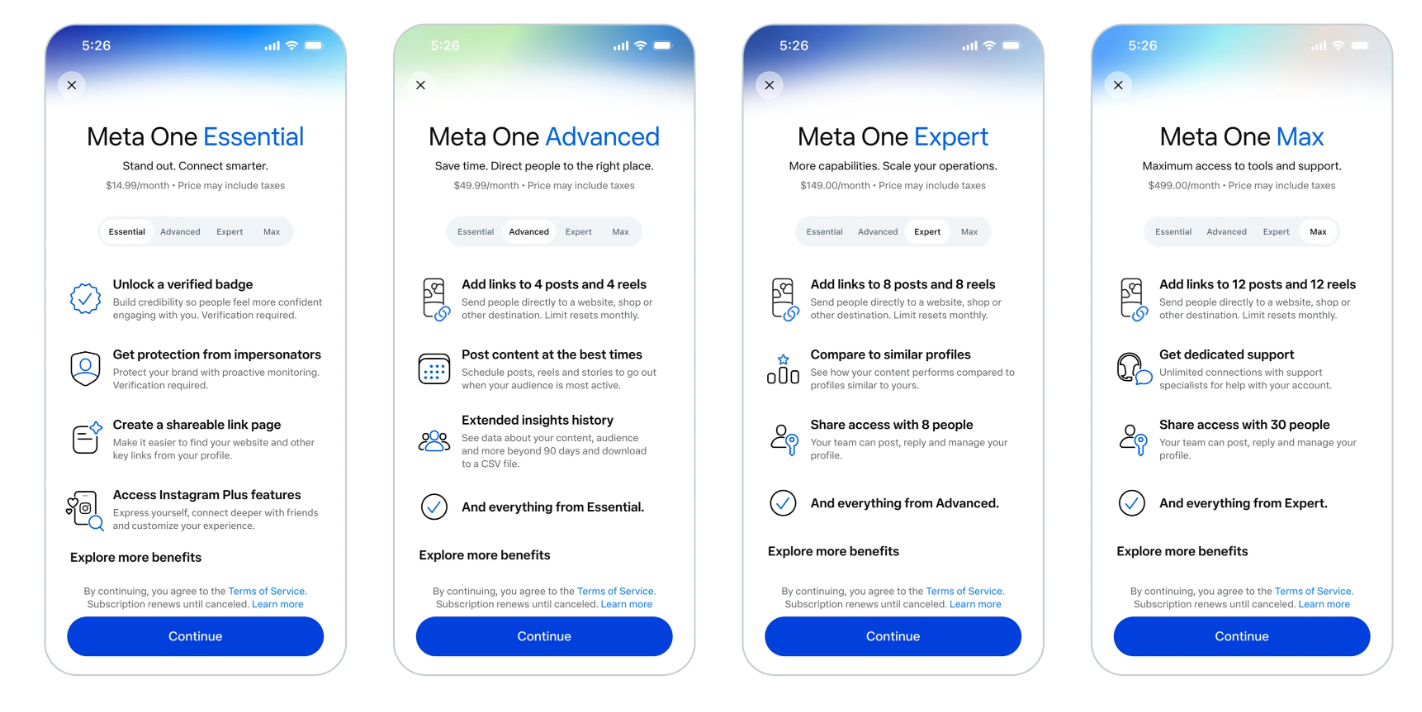
Meta is expanding its business toolkit with Meta One subscription plans and a new Creator Marketing Hub, adding paid analytics, AI customer support, Instagram links and more tools for finding and working with creators.
The Breakdown:
Meta One adds paid business tools from $14.99 to $499 - Plans include competitor tracking, longer insights history, non-follower audience data and smarter scheduling across Facebook and Instagram.
Instagram links and AI support become subscription perks - Higher Meta One tiers can add links directly to posts and Reels, while a new business agent can handle WhatsApp customer messages 24/7.
Creator partnerships get a dedicated workspace - The Creator Marketing Hub brings discovery, recommendations, outreach and one-click ad creation together, with filters for finding relevant creators and potentially strong affiliate content.
Brands can turn more creator content into ads - Meta is expanding creator APIs, content permissions and editing tools, while Instagram Live ads launching September 29 will let brands sponsor creators’ livestreams.
Meta is reducing the steps between finding an audience, creating content and turning that attention into customers. Meta One monetizes deeper business capabilities, while the Creator Marketing Hub makes creator discovery, outreach and paid amplification easier to manage from one system.
👨💻 Quick Hits
📈 Caudalie generated €700K in incremental revenue within 12 weeks after uncovering issues across its digital storefront. Zenyt gives your team full-store coverage, visual evidence for every finding, and a revenue-ranked action list instead of another page-by-page manual audit. Enter your store URL and get a free analysis.
📈 Facebook ads became more efficient in 2026, with traffic CTR rising 12.87% to 1.93% and CPC falling 14.29% to $0.60, while average lead costs held nearly flat.
💰 ChatGPT is opening paid and organic paths for brand visibility, with OpenAI joining a Sept. 22 webinar explaining ChatGPT Ads, GEO, and how marketers can use both to drive customers.
💵 Google is testing direct payments to publishers when their content significantly contributes to Gemini, AI Overviews, or AI Mode answers, with participating publishers able to track monthly earnings through Search Console.
🎬 Meta is developing Edits Plus, a paid tier for its video editing app offering more project storage and expanded AI access, as Meta begins monetizing its most compute-intensive creative tools.
That’s a wrap for today! Tell us your thoughts about today's content as we line up more Shorts! And don’t hesitate to share this with someone who’d adore it. 🥰