
Your spam rate can pass and still fail
🫣The ceiling everyone checks isn’t the one that actually determines placement anymore, Google and ChatGPT are feeding each other, and more!

Hey there Smarty 👋
Are you geared up to catch the latest and greatest in quick shorts?
And just a quick heads-up! If you stumbled upon us through a friend, make sure to subscribe here! That way, you’ll never miss out on the trending shorts.

🫣Your spam rate can pass and still fail
Google and Yahoo’s mandatory spam complaint threshold is 0.3%. But current deliverability engagements point to a much tighter working standard in 2026: stable senders are increasingly expected to stay below 0.10%.
That creates an uncomfortable middle ground. A sender sitting at 0.20% or 0.25% can technically pass the rule while still operating well outside the range associated with reliable inbox placement.
Compliance and healthy deliverability are no longer the same benchmark.
Start by moving the internal red line
Pull the last three months of complaint data and judge it against 0.10%, not 0.3%.
Don’t treat everything below Google’s mandatory threshold as healthy. Flag every week or month above 0.10%, then look at what was being sent during those periods.
That one change can expose deliverability pressure that a compliance-focused dashboard would continue showing as perfectly acceptable.
Then break one number into three
A blended complaint rate can hide the source of the problem. Instead, separate at least:
Welcome flows → Promotional campaigns → Win-back sends
An apparel brand, for example, could appear relatively healthy with a 0.18% blended complaint rate while promotional sends alone are generating 0.31%. Looking only at the account-wide number would hide a campaign category that’s already above the mandatory threshold entirely.
The useful question therefore isn’t simply, “What’s our spam rate?”
It’s “Which type of email is creating it?”
The number doesn’t even need to cross 0.10% to become dangerous
Direction matters before the threshold does. Consider a complaint rate moving like this:
Week 1: 0.04% → Week 2: 0.06% → Week 3: 0.08%
Every week is technically healthy against the tighter benchmark. But the trajectory is telling you something the latest number alone doesn’t: complaints have doubled in three weeks.
That’s the moment to investigate send frequency, campaign type, targeting and recent list changes, rather than waiting for the fourth or fifth week to confirm what the direction was already showing.
The better monitoring system therefore has three layers: 0.10% as the working ceiling, campaign-level segmentation to locate the source, and week-over-week movement as the early-warning system.
Doing all three manually means repeatedly pulling different cuts of the same deliverability data.
This kind of monitoring is exactly where connecting campaign data to the AI tools already in your workflow becomes useful.
Omnisend connects directly with ChatGPT and Claude, letting you interrogate campaign, automation and subscriber data without opening another dashboard, including checks designed to catch deliverability problems such as rising bounce rates before they start costing opens.
Its new guide breaks down 10 practical ways to run these checks and other email diagnostics with AI. Read the guide.
The number that gets a sender in trouble and the number associated with healthy placement are no longer necessarily the same.
Waiting for the first one means potentially discovering the problem long after the second one started warning you.
Together with Levanta
The biggest holiday mistake brands make? Trying to build a creator program in November.
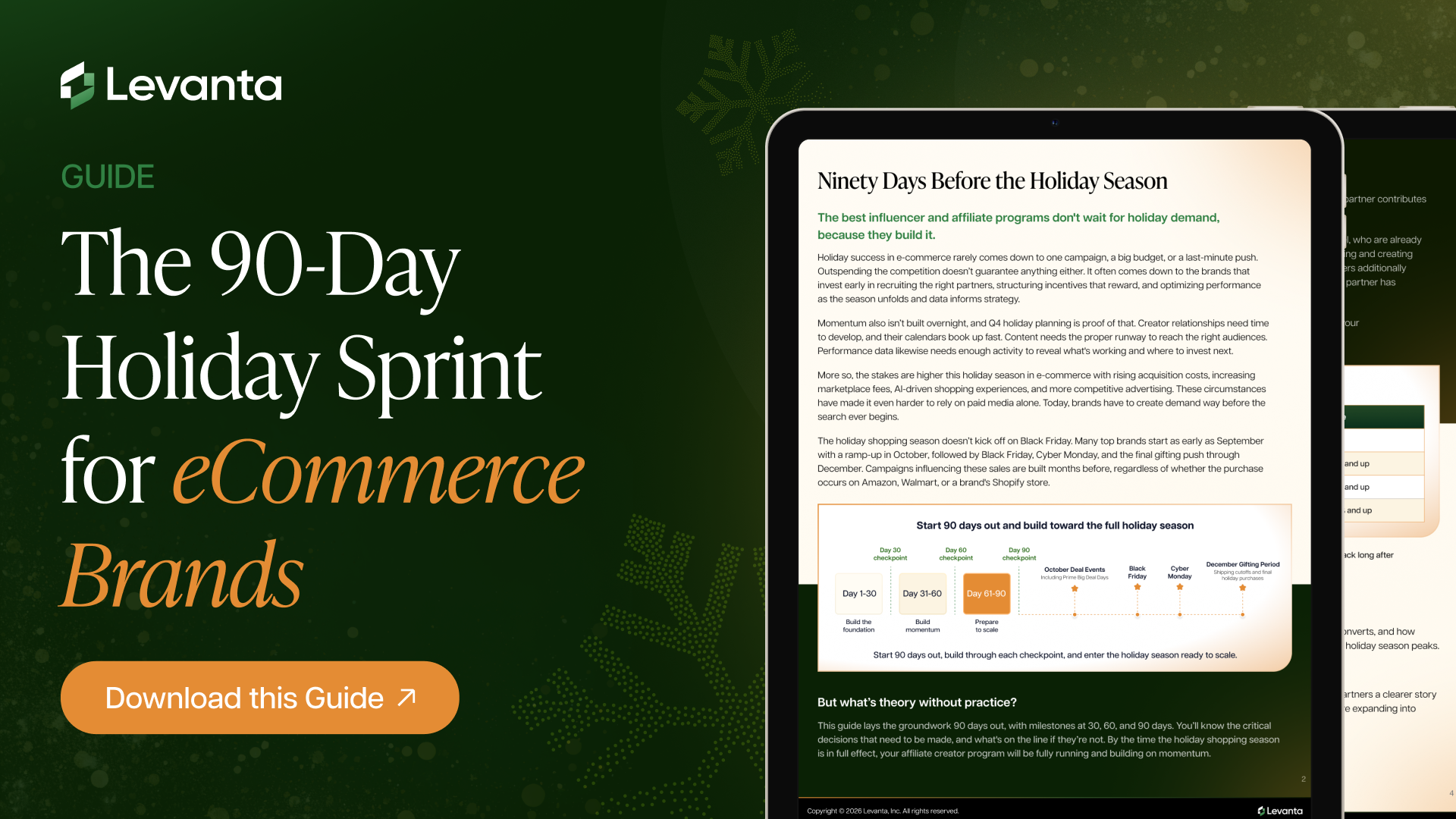
The strongest holiday programs are built over the 90 days leading up to peak shopping season. That is when brands recruit the right partners, test incentives, and build enough momentum to scale when demand arrives.
Trusted by 3,000+ eCommerce brands, Levanta created The 90-Day Holiday Sprint, a free step-by-step playbook to:
- Recruit and activate creators before their holiday calendars fill
- Build competitive commission structures without sacrificing margin
- Use Day 30, 60, and 90 checkpoints to create a program ready to scale for BFCM
Don’t wait until November to build the creator program you will wish you already had. Your 90-day countdown starts now.
🔄 Google and ChatGPT are feeding each other
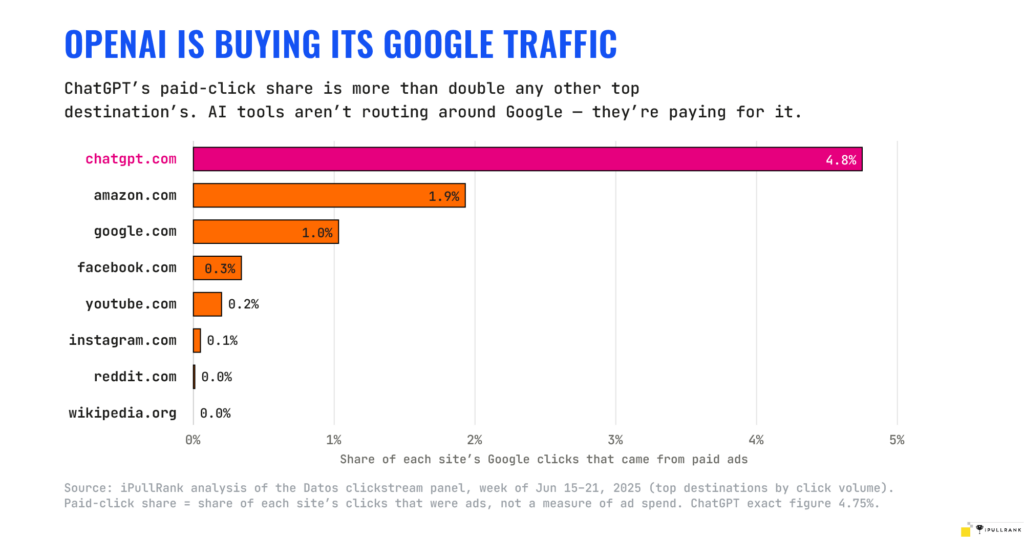
ChatGPT is becoming a bigger source of B2B traffic, but Google remains an important gateway into ChatGPT itself. The emerging discovery journey looks less like AI replacing search and more like users moving between both.
The Breakdown:
1. ChatGPT Referrals Surge - Demandbase says monthly ChatGPT referrals to B2B sites jumped 303%, from 645K to 2.6M. Perplexity declined, while Gemini and Claude stayed flat.
2. Robots.txt Gets Murky - OpenAI says robots.txt may not apply to ChatGPT-User when a person requests a page. TollBit found it reached disallowed pages on more sites than comparable bots.
3. Google Feeds ChatGPT - Across 13.1B search events, ChatGPT ranked as Google’s sixth-most-clicked destination. Zero-click searches rose 2.6 points while organic clicks fell 2.8, but paid clicks remained stable.
4. Watermarks Become Optional - Google is adding a toggle to remove visible watermarks from Nano Banana, Omni, and Lyria outputs. SynthID and C2PA remain, while EU users still receive mandatory labels.
AI discovery isn't creating a clean break from traditional search. ChatGPT increasingly sends traffic outward while simultaneously depending on Google for users, creating a more interconnected discovery ecosystem.
👨💻 Quick hits
🚪 If zero-click searches have increased 2.5x since AI Overviews launched, how much buyer influence now happens beyond your website? AirOps’ State of AEO 2026 gives you a clearer framework for auditing visibility where discovery increasingly begins and ends. Download the report.
💼 75% of LinkedIn AI citations come from individual profiles. Research analyzing 9.5 million AI citations found employee and expert profiles dominate LinkedIn citations, suggesting personal expertise increasingly drives brand visibility in AI search.
🔴 TikTok live adds AI-Generated intros. TikTok is testing AI-generated summaries that automatically introduce creators and explain their broadcasts, giving viewers instant context when joining a Live.
🎧 Reddit tests AI-Generated audio and video summaries. Reddit is experimenting with AI-generated clips that animate and voice summaries of conversations, turning text-heavy discussions into more consumable audio and video experiences.
💸 Monetized recommendations are eroding consumer trust . A survey of 10,700 adults found 45% are less likely to trust recommendations from people who frequently monetize products, even without a disclosed commercial relationship.
That’s a wrap for today! Tell us your thoughts about today's content as we line up more Shorts! And don’t hesitate to share this with someone who’d adore it. 🥰