
One order three commissions
Hey there Smarty 👋
Are you geared up to catch the latest and greatest in quick shorts?
And just a quick heads-up! If you stumbled upon us through a friend, make sure to subscribe here! That way, you’ll never miss out on the trending shorts.

🧾 Stop paying creator commission on sales they didn't drive
A shopper sees a creator's Partnership Ad, clicks, leaves, gets your email two days later and checks out with the creator's code they found on a coupon site.
The ad platform and your email platform both claim the order, and the code pays the creator a commission on top. Cyber Week multiplies it by thousands.
Price the leak
Say 1,000 Cyber Week orders use creator codes, with an average order of $90 and a 15% commission. That's $13,500 in commission.
If 30% of those codes came from coupon sites and browser extensions, you paid $4,050 for sales the creators didn't drive, plus the code discount itself. The 30% is illustrative, so check your own referrer data.
Spotting which creators drive real orders is easier when your creator platform reads your ad data. Insense connects to your Ads Manager and shows which creators perform best, and new customers can get $200 toward their first campaign. Book a free strategy call by DATE and get $200 towards your first campaign
Find the leaked codes
Pull every code order and check the session's landing source. Orders arriving from coupon or extension domains, or with no creator link in the session, are leaks.
Rule 1: Pay on links during the sale
From November 20 to December 1, pay commission on orders placed through each creator's tracking link. Deactivate any code found on a coupon site and issue a new one.
Rule 2: Stop codes from stacking
Set creator codes so they can't combine with sitewide sale pricing. A 15% code on top of 30% off cuts margin twice.
Rule 3: Switch to a target bonus
During the sale, replace percentage commission with a flat bonus for hitting a link-order target, such as $300 for 50 orders. Your cost is capped and the creator still has a clear goal. The figures are illustrative.
Rule 4: One claim per order
When two creators touch an order, the most recent creator link within seven days gets the credit. That window is my judgment.
Contract wording you can send
"From November 20 to December 1, commission applies to orders placed through your tracking link. Codes found on coupon sites will be replaced, and codes won't combine with sitewide offers."
Count commission in creator ROI
On October 5, TikTok said GMV Max will factor in affiliate commissions, coupons and referral fees to optimize for true return. Apply the same logic to every creator:
Creator ROI = (revenue − commission − coupon cost) ÷ ad spend
Search each creator code on the top coupon sites. Every hit is commission you'll pay in November unless you replace it now.
Together with AirOps
Are You Judging AI Search by the Wrong Numbers?
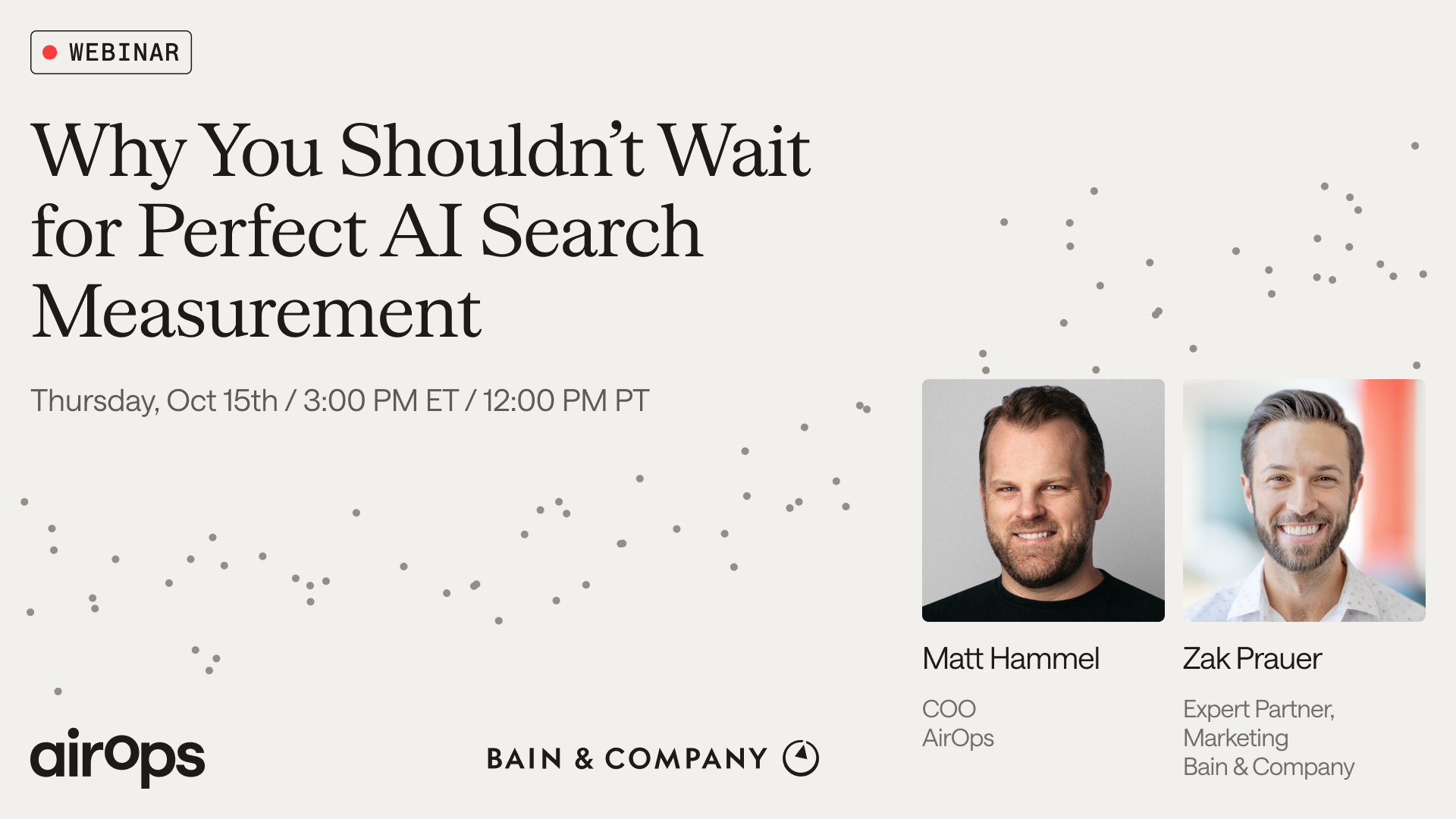
You wouldn’t judge a brand campaign only by last-click sales. Yet AI search is being asked to prove itself against paid-channel attribution standards. You risk cutting the budget that helped win a customer because another channel got credit for the sale.
On October 15, join Matt Hammel, COO of AirOps, and Zak Prauer, Expert Partner at Bain & Company, to rethink how you evaluate AI search:
- Use findings from Bain’s Marketing Leaders Reality Index to understand why paid-channel measurement sets the wrong expectations.
- Look beyond citations to whether AI recommends your brand when buyers are weighing their options.
- Discover what AI search conversations reveal about customer needs that survey responses can miss.
You’ll leave with a clearer view of what your reporting overlooks, so the next investment decision accounts for how buyers actually choose.
Can't attend the session live? Register anyway, and you’ll get the recordings in 24 hours.
📊 Google Ads is changing how campaigns are measured and optimized
Google is rolling out updates across Demand Gen, Conversion Lift, AI Max and commerce advertising, giving advertisers new reporting tools, more automation and additional ways to reach customers.
The Breakdown:
Display Views Get Easier to Count - Demand Gen Display will count any rendered impression as a view for attribution, even if just one pixel appears briefly. View-through conversions may rise without any actual performance improvement.
Conversion Reporting Gets More Detailed - Google Ads is adding video impressions to eligible web conversion paths and grouping metrics by funnel stage. Conversion Lift is also becoming self-serve, requiring at least 1,000 observed conversions and a $5,000 campaign budget.
AI Max Gets More Transparent - New reporting columns show location-of-interest, optimized targeting and brand inclusion settings. AI Max can also generate and refresh search ad copy using landing pages, keywords and existing assets.
Retailers Can Share Audiences With Brands - Google's commerce audience sharing lets eligible retailers provide first-party audience segments to advertising partners. Brands can combine these with their own data, but campaigns must direct traffic to the retailer's approved domain.
These updates give advertisers more ways to understand campaign performance while Google automates more of the execution. The biggest distinction is between reported conversions and incremental results: easier attribution can increase credited conversions, but Conversion Lift helps determine whether advertising actually generated additional business.
👨💻 Quick Hits
📊 Meta is removing manual ad placement exclusions for engagement, leads, app promotion and sales campaigns, pushing advertisers toward AI-driven placements while retaining some control through creative customization, bid adjustments and account-level exclusions.
🥽 Sony has transferred 43 U.S. AR/VR patents to Meta, with 419 global patents potentially included in the deal. The technology covers headsets, XR glasses and information processing, potentially strengthening Meta’s future wearable devices.
🤖 Google Ads is testing AI-powered campaign creation, letting advertisers describe their goals in natural language while AI suggests campaign objectives and assets. Manual setup remains available, with no confirmed rollout timeline.
▶️ YouTube is testing Ask YouTube inside Shorts, allowing viewers to ask AI questions about videos they're watching. The limited, English-only experiment targets adults, alongside new mobile feeds for discovering similar creators and related Shorts.
That’s a wrap for today! Tell us your thoughts about today's content as we line up more Shorts! And don’t hesitate to share this with someone who’d adore it. 🥰