
Your Headcount Case Needs a Number
📈 Marketing headcount scales in tight, predictable bands by revenue. Most understaffed teams have never actually checked where they sit, and Creators and Communities are becoming stronger shopping signals, and more!
Hey there Smarty 👋
Are you geared up to catch the latest and greatest in quick shorts?
And just a quick heads-up! If you stumbled upon us through a friend, make sure to subscribe here! That way, you’ll never miss out on the trending shorts.

📈 The headcount number that’s stronger than “we’re busy”
Marketing headcount scales in defined bands as revenue grows: a median of three marketers at $1 to 10M in revenue, eleven at $10 to 50M, and a structural jump to roughly twenty-six once a company crosses $50M, where role specialization typically starts splitting across demand generation, content, operations, brand, and product marketing.
Those aren’t arbitrary numbers. They’re the pattern most companies converge on once headcount and revenue can correlate.
“We’re too busy to keep up” is the argument most headcount requests actually make, and it’s weak precisely because busy is subjective and easy to dismiss in a budget meeting.
“We’re running at three marketers against a revenue band where the median is eleven” is a completely different argument because it compares you to a real external pattern rather than an internal feeling about workload.
Find your actual revenue band and the peer headcount for it
Before building any headcount case, place your company in the right benchmark band by current revenue, not where you expect to be next year, and identify the median headcount for that specific band.
If your team is meaningfully below the benchmark for your current stage, that gap is the argument. If you’re already at or above it, the case needs to be built differently, since a headcount ask that contradicts the benchmark data invites the question of what a new hire would fix that current headcount can’t.
Check whether your role mix matches the mature distribution, not just your headcount total
Total headcount understates the real story if the mix is badly skewed, since a team of eleven that’s nine generalists and two specialists is a different problem than a team of eleven with genuine functional coverage.
Mature teams that have scaled past twenty people tend to converge on a role split of roughly a quarter to demand generation, a fifth to content, and smaller but meaningful allocations to operations, brand, and product marketing.
Map your current team against that distribution. A gap in one specific function is a sharper, more fundable request than a general headcount ask, the same kind of source-level specificity AirOps’ Josh Spilker and Foundation CEO Ross Simmonds are breaking down on September 29, using research across 380,000 AI answers to show which sources actually shape a buyer’s shortlist. You can secure your free spot here.
Bring the gap as a specific role, not a headcount number
A request for “one more marketer” leaves the hiring decision to whoever approves the budget. A request for the specific function missing from the role-mix analysis gives leadership something concrete to evaluate rather than an abstract increase.
“We’re understaffed” is a feeling. “We’re at three against a benchmark of eleven” is a number leadership actually has to respond to.
Together with Insense
Your November Creator Roster Is Already Being Booked
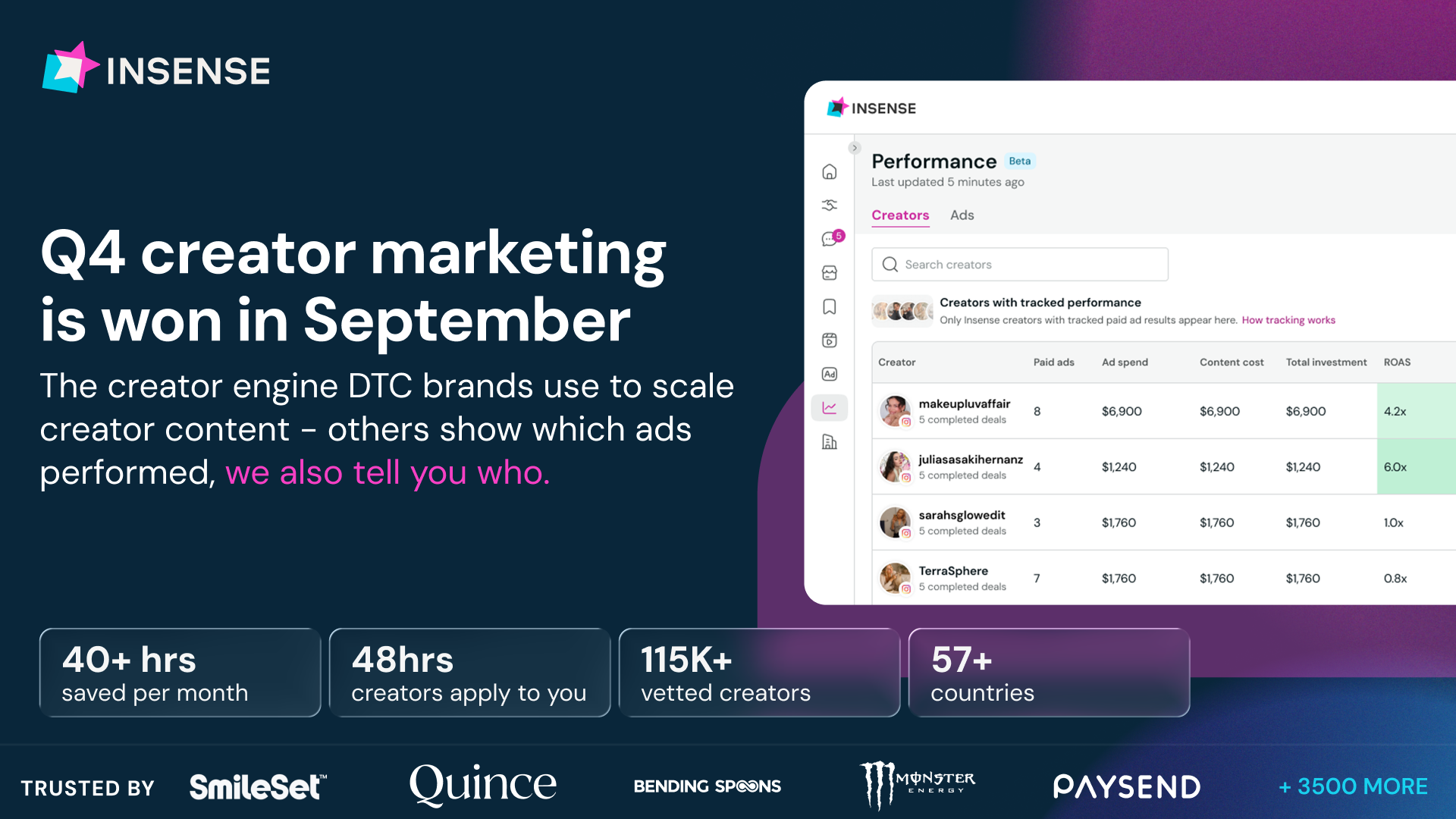
BFCM is an expensive time to discover that a creator cannot sell your product. Late briefs and unusable assets leave your team scrambling as ad spend peaks.
Insense gives brands scaling beyond $2M a faster way to pressure-test their creator bench before peak season.
- Put products in creators’ hands early, so BFCM briefs come with product knowledge and content you already trust.
- Turn a $1,000 budget into up to 20 UGC ads from five creators, creating more hooks to test from every shoot.
- Connect Ads Manager to Insense’s performance dashboard to see which Partnership Ads and creators drive results, then rehire the strongest performers.
Insense provides access to 115,000+ creators across 57+ countries and is trusted by over 3500 brands like Il Makiage, Quince, Huda Beauty, and Monster Energy.
🛍️ Creators and Communities are becoming stronger shopping signals
New data from Instagram and Reddit shows shoppers responding more strongly to creator-led content and real-person recommendations, giving brands more reasons to participate in trusted voices and communities instead of relying only on their own posts.
The Breakdown:
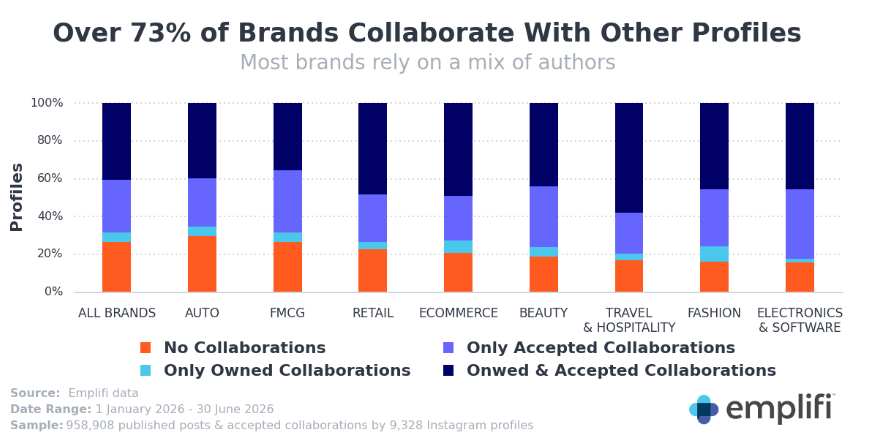
Creator-Led Collabs Win - Emplifi analyzed 520,000+ Instagram posts across 3,791 brands and found creator-published collaborations consistently outperform both standard brand posts and collaborations published by brands themselves.
Reels Get Biggest Lift - More than 73% of brands now use Instagram Collabs. In ecommerce and retail, creator-led collaborations generated 5x+ the amplification of non-collab posts, with Reels seeing the strongest gains.
Reddit Builds Gift Trust - Nearly 70% of Reddit users say they trust gifting recommendations on Reddit more than AI-generated ones, showing why community discussions are becoming an important part of holiday research.
Recommendations Drive Spending - 3 in 4 Reddit users say they are willing to spend more on a gift when it comes highly recommended, connecting trusted community advice directly with purchase decisions.
The common thread is who delivers the recommendation. Instagram performs better when creators lead the content, while Reddit users actively seek opinions from other people before buying. Reddit also says 74% want brands participating in holiday shopping conversations, showing an opportunity for brands to join these discussions rather than only advertise around them.
👨💻 Quick hits
🧵 Meta is adding Threads-specific business permissions, letting companies assign employee access and management roles directly for Threads instead of tying controls to Instagram, with the update rolling out globally.
🔍 Google AI Overviews now appear in 39.4% of U.S. desktop searches, up from 25.8% last July, while YouTube and Reddit are becoming prominent citation sources across AI-generated search results.
🛒 Google is enabling native AI checkout for eligible U.S. Shopify merchants, letting shoppers buy products directly inside Google AI Mode and Gemini, with eligible stores automatically enrolled unless they opt out.
📉 Display ad costs are falling ahead of the holidays, with prospecting CPMs down 45% year over year and retargeting CPMs down 29.1%, giving advertisers cheaper access to shoppers before peak season.
🥳 Events
🔥 What 3 Million Citations Reveal About Winning AI Shortlists
September 29 | 1 PM ET | Virtual Event
Foundation CEO Ross Simmonds and AirOps’ Josh Spilker unpack nearly 380,000 AI answers to show which sources shape B2B recommendations across six AI engines. Learn which prompts to track, where your brand is losing citation share, and which external sites deserve your next content investment.
Can't attend every session live? Register anyway, and you’ll get the recordings in 24 hours.
🔥 How Top Brands Measure, Fund, and Scale Creator Marketing
October 21 | Online | Free Festival
Return on Influence Festival ’26 brings together teams from Adobe, Edelman, ŌURA, Ogilvy, and more to unpack how creator programs actually run. Learn how they measure ROI, justify budget, structure partnerships, and scale from 5 to 5,000 creators without adding chaos.
Can't attend every session live? Register anyway, and you’ll get the recordings in 24 hours.
That’s a wrap for today! Tell us your thoughts about today's content as we line up more Shorts! And don’t hesitate to share this with someone who’d adore it. 🥰