
Your campaign needs enemy
Hey there Smarty 👋
Are you geared up to catch the latest and greatest in quick shorts?
And just a quick heads-up! If you stumbled upon us through a friend, make sure to subscribe here! That way, you’ll never miss out on the trending shorts.

Together with Alison
Your Ad Looks Ready, But Is It Actually Built to Win?
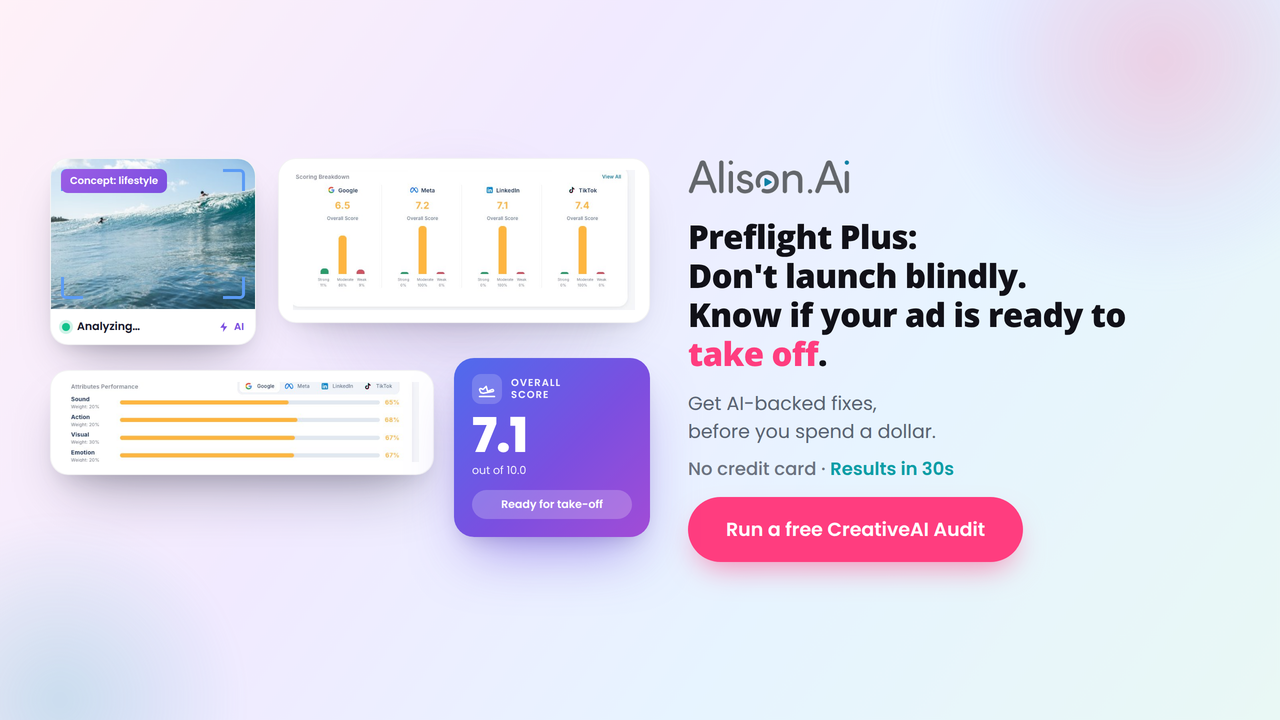
Attention and budget mean nothing if your creative is structurally broken before it ever launches, so why pay to test bad ads?
Alison.ai Preflight Plus runs an instant CreativeAI Audit, validating your video against Google's ABCD, Meta, TikTok, and LinkedIn frameworks, so you know if it's flight-ready before you spend a dollar.
Here's how it works:
✅ Upload your video creative
✅ Alison scores it against industry frameworks in 30 seconds
✅ Get an Adherence Score + specific AI fixes like "Enlarge logo" or "Speed up the hook"
The result? You kill weak assets early and spend media budget only on real contenders.
Brands using Alison are seeing results like +106% ThruPlays (Ferrara), +330% first-time purchases (Tango), and +101% ROI (Sciplay).
Want your next launch ready for take-off?
Run your free CreativeAI Audit now - no credit card.
😈 Your campaign needs enemy
Most performance creative solves a problem. None of it names a villain. That distinction is why ads that test well in isolation fall apart when scaled across channels. The individual pieces are optimized, but they are not in agreement. A villain brief fixes this at the architecture level.
1. Write the Villain Brief Before the Creative Brief
The villain brief is a one-page document written before any production begins. It names the specific, recognizable force your audience already resents, captures what that force is actively doing to your customer right now, and records exactly how your customer describes the situation when venting to someone they trust.
Three questions that anchor it:
- What is the villain doing to your customer without your product in the picture?
- What does your customer call it when complaining to someone they actually trust?
- What argument does the villain make that keeps your customer from acting?
The answers govern every creative decision downstream.
2. Assign the Villain a Different Role in Each Channel
Once the villain is defined, the channel strategy becomes about where they appear and what they're doing. In video, the villain's behavior plays out in real time. Static creative shows the aftermath, the evidence already sitting on the table. Email is where you expose the logic the villain uses to rationalize your customer staying stuck.
Audit your current creative by channel. Wherever the product is doing all the work, the villain is absent. Replace product-led framing with villain-led framing in that slot and run a clean test against the control.
3. Test Villain Resonance Before You Test Hook Lines
Hook line testing is a symptom of not knowing which villain your audience recognizes. When the villain is correctly identified, multiple hooks work because the underlying tension is already real. The more valuable variable is which depiction of the villain drives the highest hold rate.
Run three villain variants in the same format: same product promise, same CTA, different villain framing. The version with the highest hold identifies the enemy. All future creative in that channel expands from that anchor.
Campaign coherence does not come from a brand bible or consistent visual language. It comes from a shared enemy. When every channel is fighting the same villain, the campaign reads as a single argument regardless of format.
🔍 Microsoft Gives Marketers Better Data
Microsoft rolled out a trio of updates aimed at helping marketers understand AI visibility, manage ecommerce catalogs, and target business buyers more precisely. The changes span Bing Webmaster Tools, Merchant Center, and Microsoft Ads.
The Breakdown:
AI Citation Insights - Bing's AI Performance dashboard now includes Citation Share, showing your percentage of citations for a query, alongside new Intents, Topics, and Compare views. These additions make it easier to spot patterns in how Copilot and Bing AI reference your content.
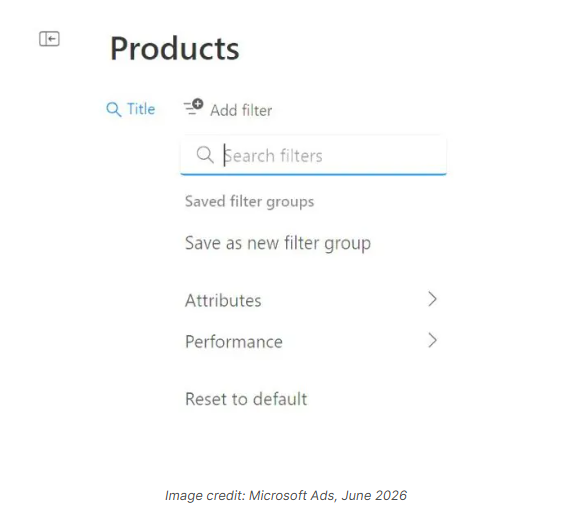
Product Feed Visibility - Microsoft launched Product Explorer, giving advertisers a searchable view of products that are serving, rejected, limited, or underperforming. Teams can filter by impressions, clicks, conversions, spend, CTR, and feed attributes from a single interface.
Faster Feed Optimization - Product Explorer also connects with Recommended Actions, helping advertisers identify issues and improve product eligibility faster. The goal is to reduce time spent jumping between diagnostics, feed tools, and campaign reports.
LinkedIn-Powered Targeting - Microsoft Ads now supports targeting and reporting by LinkedIn job seniority, including CXOs, VPs, Directors, Managers, and Entry-level professionals. Advertisers can use the filters for targeting or observation to better understand who is engaging and converting.
Whether you're tracking AI citations, fixing product feed issues, or identifying decision-makers inside B2B campaigns, these updates provide more visibility into what drives performance and where optimization opportunities exist.
Together with The Operator's Stack
The Decision That Pays for Itself in Days
Every quarter, another channel flatlines. CAC climbs, conversions drop, and the pressure for answers intensifies. The truth? Funnels aren’t broken; the buyer’s journey has shifted under your feet.
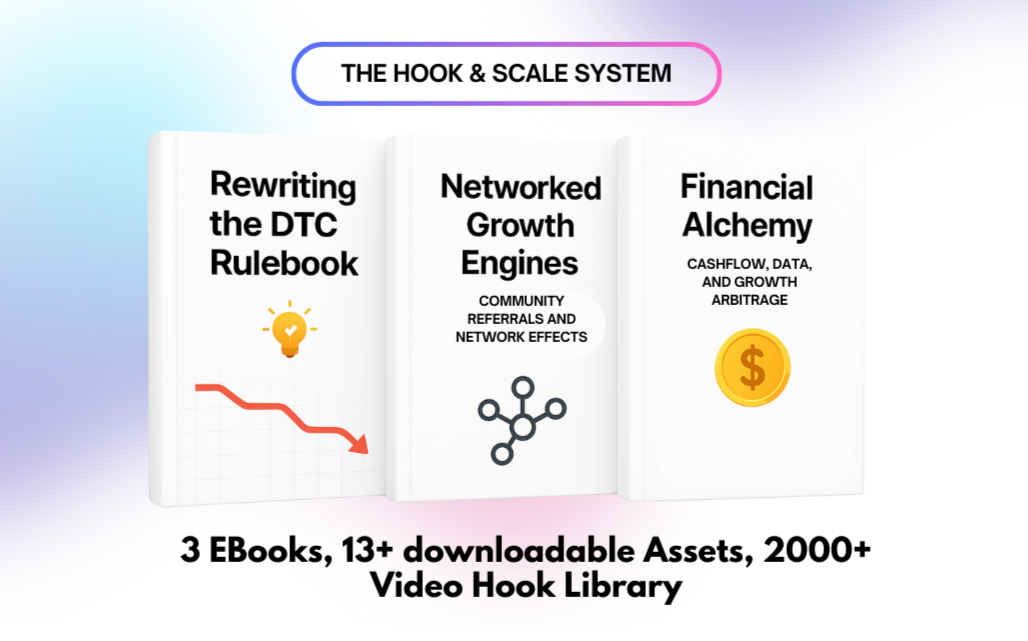
Rewriting the DTC Rulebook is built from campaigns that sold to the most skeptical buyers.
Inside, you’ll see the exact behavioral shifts dismantling funnels and get plug-and-play systems like the Community Cultivation Canvas, Emotional Storytelling Framework, and Owned Media Checklist ready to launch the same day.
Buy now and you’ll also unlock two bonus playbooks plus 2,000+ Viral Video Hooks (updated monthly):
- Networked Growth Engines – Build acquisition loops powered by community, referrals, and partnerships.
- Financial Alchemy – Advanced cashflow and timing strategies to protect margins and scale faster.
These tools were curated after 100+ days of research and are valued at over $900. Today, you can own the complete 3-in-1 bundle.
Get your copy now and fix the leak before next quarter’s numbers land!
👨💻 Quick Hits
🎬 Meta expanded Edits with deeper analytics, including follower activity insights, PDF export reports, and side-by-side Reel performance comparisons. It also added AI-powered restyling tools, new visual controls, sound effects, and extended iOS video exports up to 15 minutes.
🔍 A study of 20,000 ChatGPT responses found that enabling search changed 80.2% of product recommendations. Products cited in search sources appeared more often, suggesting AI visibility increasingly depends on being present in trusted web content.
🔄 Google updated its domain migration guidance, now requiring site owners to submit Change of Address requests for all domain variants (www, non-www, and subdomains).
🛍️ AI-driven retail traffic surged 138% year-over-year in May 2026, with AI visitors converting 54% better than other traffic sources. AI shoppers also spent more, engaged longer, and generated visits worth 53% more, signaling a major shift in online product discovery.
That’s a wrap for today! Tell us your thoughts about today's content as we line up more Shorts! And don’t hesitate to share this with someone who’d adore it. 🥰