
Your best traffic looks invisible
💪Your smallest traffic source might be outperforming every channel you actually report on, Meta automates creator growth while shoppers use Reddit to verify AI recommendations, and more!

Hey there Smarty 👋
Are you geared up to catch the latest and greatest in quick shorts?
And just a quick heads-up! If you stumbled upon us through a friend, make sure to subscribe here! That way, you’ll never miss out on the trending shorts.

✌️ Your smallest traffic source might be outperforming every channel you actually report on
Traffic reports naturally pull your attention toward the biggest numbers. The channels sending the most visitors dominate dashboards, weekly reviews and budget discussions. That works most of the time. It breaks down when a very small channel consistently sends the highest-quality visitors.
Recent Ahrefs research found exactly that. Across the sites it studied, AI search accounted for just 0.5% of traffic but generated 12.1% of signups, making those visitors roughly 24 times more likely to convert than the average site visitor.
The smallest traffic source may also be the most valuable.
Volume and efficiency are telling different stories
A channel contributing half a percent of sessions barely registers in reports built around traffic share.
That creates an easy blind spot.

Neither metric is wrong.
They simply answer different questions.
When reporting focuses only on traffic share, high-performing channels can quietly disappear inside larger buckets.
Pull AI traffic out of the blended view
The first step is making sure you’re actually measuring it.
Many AI referrals don’t appear neatly inside standard analytics reports. Some arrive through identifiable referrers, while others become mixed into direct or organic traffic depending on how the journey unfolds.
Instead of assuming existing channel groupings tell the whole story, isolate visits coming from platforms such as ChatGPT and Perplexity wherever possible, then compare their conversion rate against the site’s blended average.
Also pay attention to unexplained increases in branded search or direct traffic that coincide with known AI citations. Those patterns won’t prove every conversion came from AI, but they often reveal influence that standard attribution fails to connect.
Judge the channel by what it produces
Once AI traffic is separated, the conversation changes.
Instead of asking whether the channel is large enough to matter, ask whether any other source converts at a similar rate. If the answer is no, its small share of sessions becomes much less important than its contribution to revenue.
That’s why visibility should be measured alongside traffic. Semrush’s AI Visibility Toolkit tracks brand mentions and citations across ChatGPT, Perplexity, Gemini, and Google’s AI experiences, making it much easier to connect AI visibility with downstream performance instead of letting those visits disappear into broad reporting buckets. You can try it for free for 7 days.
A channel responsible for half a percent of traffic can still shape a meaningful share of growth. The dashboard only misses that story because it was designed to rank channels by size, not by value.
Together with Omnisend
Everyone’s talking about AI. Here’s how three email marketing experts are actually using it.
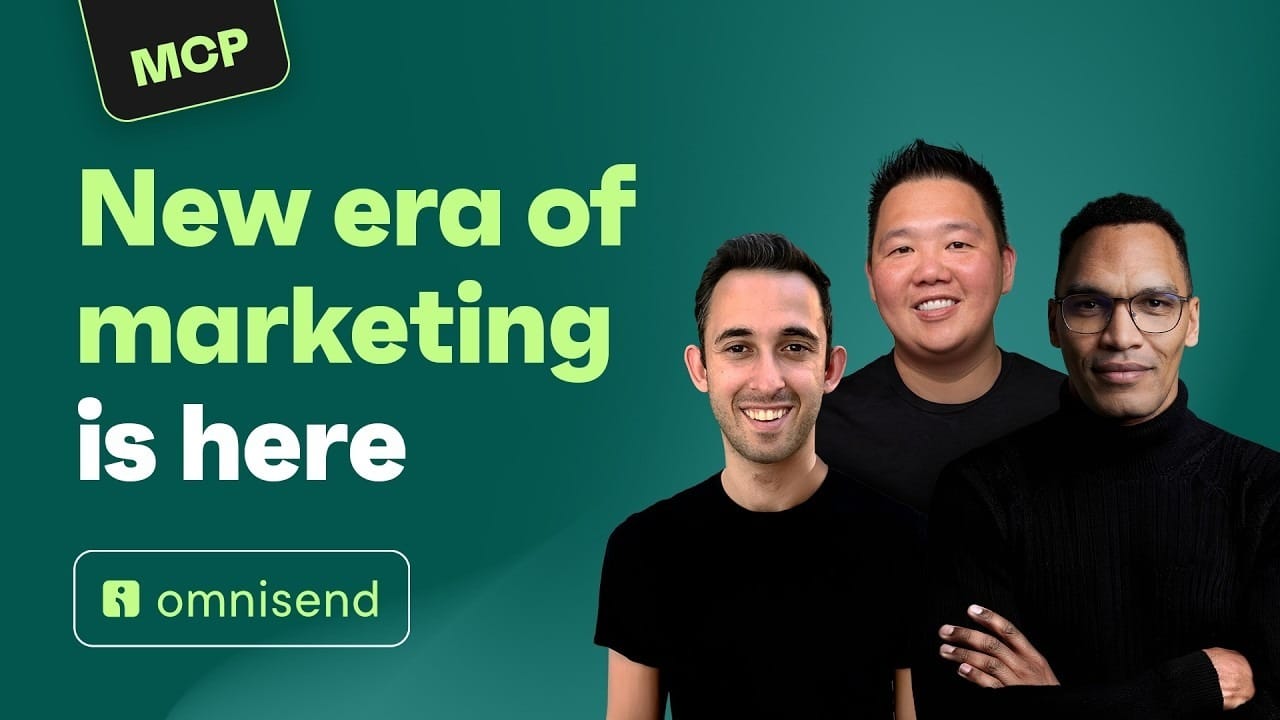
You can read a hundred takes on AI and still have no idea what anyone actually types into it. So, we asked three experts to show us.
Jimmy Kim, founder of eCom Email Marketer, Chase Dimond, co-founder of eCom Email Marketer, and Bernard Meyer, AI Operations Manager at Omnisend, walk through how they use AI in their day-to-day work.
From pulling reports and analyzing campaign performance to spotting missed opportunities, they share the prompts and workflows that actually work. They also explain where AI still falls short and where human experience and judgment still matter most.
The session was recorded in ChatGPT, but Omnisend works with Claude too, so the same workflows carry over.
New to Omnisend? It’s an email and SMS marketing platform used by more than 150,000 ecommerce brands, generating an average of $79 for every $1 spent.
Migration is free, takes up to five business days, and plans cost up to 35% less than Klaviyo’s.
Watch the full 56-minute session, no signup required.
📱 Meta automates creator growth while Reddit becomes AI’s trust check
Social platforms are taking two different routes into the AI-driven discovery economy. Meta wants AI to help creators produce and engage more efficiently, while Reddit is increasingly becoming where shoppers go to validate what AI tells them.
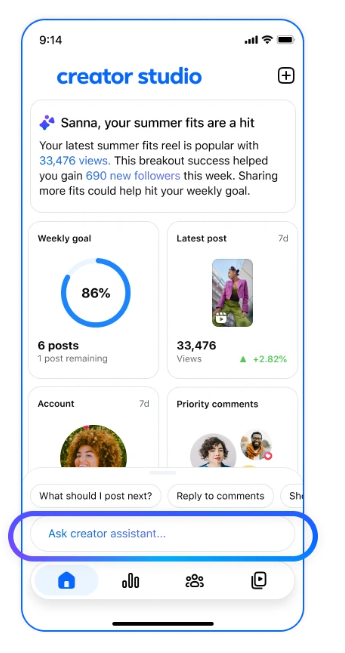
The Breakdown:
Meta wants AI running the creator workflow
Creator Studio gives Facebook creators a distraction-free workspace with personalized AI recommendations based on their content, audience, and patterns working for similar creators.
AI can also identify comments worth answering and draft replies in the creator’s voice. Early testers reported results including 4,000 followers from one recommended video and a 144% earnings increase in seven days.
Reddit is becoming the verification layer for AI shopping
Half of U.S. shoppers now verify AI chatbot product recommendations through Reddit, while more than one-third do so in the U.K. Reddit also ranked first among social platforms for speeding purchase decisions.
More than 1 in 5 shoppers explicitly add Reddit to searches, while half of Reddit users say they want honest perspectives AI cannot provide, making community conversations increasingly valuable near purchase.
AI may accelerate content creation and product discovery, but human credibility remains valuable. Meta is using AI to scale creator activity, while Reddit is benefiting from consumers wanting real experiences to validate increasingly AI-generated recommendations
👨💻 Quick hits
🧱 Why does strong content still fail to appear in AI answers? AirOps’ State of AEO 2026 breaks down how headings, schema, lists, and page structure affect citation potential, helping you identify what needs rebuilding before another content cycle begins. Get the report.
📌 Pinterest advertisers can now target 34 Zillow audience segments using 200+ housing signals, helping brands reach buyers, renters, homeowners, and renovators based on real housing intent.
🤖 YouTube is expanding to U.S. users, letting viewers ask conversational questions, receive contextual answers, plan activities, and continue with follow-ups across desktop, mobile, and TV.
📊 Google added a new Campaign Manager 360 API endpoint that returns structured campaign data instantly, making it easier to build live dashboards and custom analytics without generating downloadable reports first.
📍 Performance Max can now prioritize nearby, high-intent customers across Google Maps, Waze, and Search, helping physical businesses drive more store visits, directions, and local conversions.
That’s a wrap for today! Tell us your thoughts about today's content as we line up more Shorts! And don’t hesitate to share this with someone who’d adore it. 🥰