
You need to license a future star
🙂The creator was a nobody when you licensed that content. They aren’t now, ChatGPT ads meet Microsoft's AI traffic math, and more!
Hey there Smarty 👋
Are you geared up to catch the latest and greatest in quick shorts?
And just a quick heads-up! If you stumbled upon us through a friend, make sure to subscribe here! That way, you’ll never miss out on the trending shorts.

🙂The creator was a nobody when you licensed that content. They aren’t now.
UGC licensing is usually treated as a finished task. The contract gets signed, the content goes into the library, and everyone moves on to the next campaign. That works until the creator changes faster than the agreement does.
A creator with a few thousand followers today can become a major voice in their niche a year later, while the same ad keeps running under terms negotiated for a completely different level of influence.
The content stayed the same. The commercial value didn’t.
When a licensing agreement is signed, pricing reflects the creator’s profile at that moment.
If that creator’s audience or reputation grows substantially, the brand is still using content tied to a much more valuable public figure than the original agreement anticipated.

Nothing about the original agreement was wrong.
The assumptions behind it simply became outdated.
Review creators, not just content
Most brands audit creative performance every month.
Very few audit the people appearing in that creative.
A simple quarterly review can catch issues before they become expensive conversations. Compare each creator’s current audience, visibility and public profile with where they were when the agreement was signed.
If someone has grown meaningfully, treat it as a decision point rather than an administrative task.
Sometimes the existing agreement is still perfectly appropriate. Other times, proactively revisiting the relationship is far easier than waiting until renewed visibility turns into a rights negotiation or usage dispute.
Build creator reviews into your content lifecycle
Creative libraries often receive regular performance reviews but almost never licensing reviews.
Adding one recurring checkpoint helps ensure the commercial assumptions behind your content remain aligned with reality as creators continue building their own careers.
The ad may be exactly the same one you licensed months ago. The person appearing in it may now be a completely different asset.
Together with AirOps
Why your AI visibility keeps disappearing overnight
Only 30% of brands stay visible in an AI answer from one run to the next. Run the same prompt five times and just 20% show up in all five. That's not a ranking problem.
Rankings barely move day to day. AI visibility does, and most teams are still measuring it with a dashboard built for the old game.
AirOps broke down what's actually driving citations in 2026:
- Freshness compounds. Pages updated in the last 3 months are 3x more likely to get cited.
- Structure matters more than design. Clean heading hierarchy alone lifts citation odds 2.8x.
- Most of it happens off your site. 85% of brand mentions in AI search come from third-party sources, not your domain.
Five metrics replace the old scorecard: citation rate, mention rate, share of voice, sentiment, and source attribution. They need a weekly review, not a quarterly one.
If your GEO (Generative Engine Optimization) strategy still lives inside your SEO report, you're measuring last quarter's game.
Want the full breakdown on where citations come from and how to track them weekly?
📊 AI traffic is getting a reality check
Two new developments are making AI visibility more measurable. ChatGPT’s advertising data exposes the growing pains of conversational ads, while Microsoft is giving publishers a way to quantify what AI crawlers actually return.
The Breakdown:
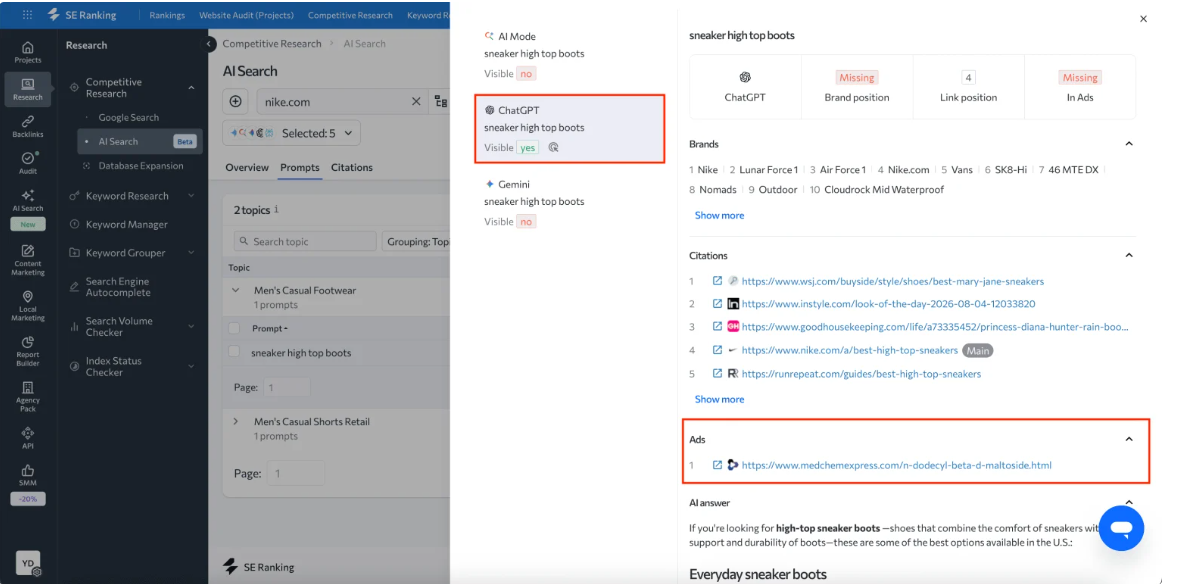
1. ChatGPT ads have scale, but targeting needs work - Ads already appear on roughly one in four commercial prompts, yet 14.35% are effectively off-topic. Paying also rarely translates into being cited organically above the sponsored placement.
2. The audience may matter more than the CPC - SE Ranking generated substantial traffic but few sign-ups. With ads limited to Free and Go users, advertisers may struggle when their highest-value customers predominantly use paid ChatGPT plans.
3. Microsoft is putting a price on AI crawling - Clarity’s AI Scrape-to-Referral Ratio compares how much an AI platform extracts from a website against the referral traffic it sends back, turning an abstract tradeoff into measurable data.
4. Publishers can now judge traffic quality too - Clarity lets sites compare AI operators and inspect referred visitors through session recordings, revealing whether those users actually scroll, engage, sign up, purchase, or quickly leave.
AI visibility is moving beyond impressions and citations. Advertisers and publishers can increasingly ask the harder question: Is the AI platform actually sending the right people and creating enough value to justify the exposure?
👨💻 Quick hits
⏱️ How many AI tutorials have changed what your team does on Monday morning? This 56-minute Omnisend session replaces theory with real prompts for campaign analysis, reporting, opportunity detection, and better next-step decisions, with no signup standing between you and the workflows. Watch the session for free.
🔍 X is open-sourcing more of its For You ranking code and testing tools that reveal visibility-limiting labels on posts and accounts. Creators can inspect restrictions from the past month, potentially explaining sudden drops in reach.
📉 A Scrunch study found only 1.1% of post-AI-chat publisher visits came directly from AI referrals, while roughly three-quarters were direct. The takeaway is bigger than referral metrics, AI visibility may influence readers who return later through search or direct visits.
🤖 Many brands think poor AI visibility requires new GEO tactics. In reality, AI retrieval is exposing problems Google previously compensated for, including fragmented content, weak internal linking, messy architecture, and inaccessible answers.
🛒 77% of consumers would let AI agents help them shop, especially by tracking price drops and comparing products. But only 6% would allow fully autonomous purchases, showing that shoppers want AI doing the legwork while keeping control of the final decision.
That’s a wrap for today! Tell us your thoughts about today's content as we line up more Shorts! And don’t hesitate to share this with someone who’d adore it. 🥰