
Your dashboard can't see this traffic
📊 Sessions and bounce rate don't measure what AI shopping agents do. Found rate, and catalog completeness are the metrics that apply, AI agents are changing who visits, buys and clicks on the web, and more!

Hey there Smarty 👋
Are you geared up to catch the latest and greatest in quick shorts?
And just a quick heads-up! If you stumbled upon us through a friend, make sure to subscribe here! That way, you’ll never miss out on the trending shorts.

📊 Your analytics dashboard doesn't measure the traffic you're actually losing
Sessions, bounce rate, and cost per click were built to describe a human clicking through a page.
They describe almost nothing about how an AI shopping agent evaluates a catalog, because an agent that never returns your product to a shopper never generates a session, a bounce, or a click for that lost sale to show up in.
The traffic you're losing to agentic commerce is, by definition, traffic your current dashboard cannot see.
The metrics that actually describe agentic performance are different in kind, not just in name: found rate, whether your product gets surfaced by an agent's query at all, position quality, whether it's a primary recommendation or a buried footnote, and catalog completeness, a direct measure of how much structured data an agent can parse with confidence.
None of the three exists in a standard ecommerce analytics setup, because none was needed before agents started doing the evaluating.
Establish a found-rate baseline before assuming you have a demand problem
A category with declining organic traffic and flat AI-referred conversion could be losing demand, or it could be a catalog agents simply aren't finding, and those require different fixes.
Run your top twenty category queries the way a shopping agent would, checking whether your products actually surface in the response, not just whether your brand gets mentioned. A found rate you've never measured is a found rate you have no way of knowing is declining.
Score catalog completeness the way an agent scores it, not the way your CMS does
A CMS marking a listing "complete" because every required field has something in it is a different bar than an agent needing dimensions, materials, current pricing, and real-time availability specific enough to filter and compare confidently.
Audit a sample of your catalog against the fields an agent actually needs to make a confident recommendation, not just the fields your platform requires to publish.
A listing that passes your CMS check and fails an agent's confidence threshold is invisible in exactly the channel this metric exists to catch.
Build the reporting stack before the gap gets larger
These three metrics don't exist in most standard reporting setups today, which means most teams are flying blind on a channel that's only growing, with no baseline to notice decline against.
Checking every title, spec, image, and price against your source of truth continuously, then ranking what's actually costing revenue first, is what Zenyt's AI shopper agents are built to do, giving you the completeness signal these new metrics depend on.
Caudalie generated €700K in incremental revenue within 12 weeks running this kind of continuous check. You can get your free store analysis before this gap grows larger than it already is.
A metric you've never tracked isn't a metric that's fine. Nobody's been watching it.
Together with Billo
Your competitor already knows their category's Q4 benchmark. Do you?
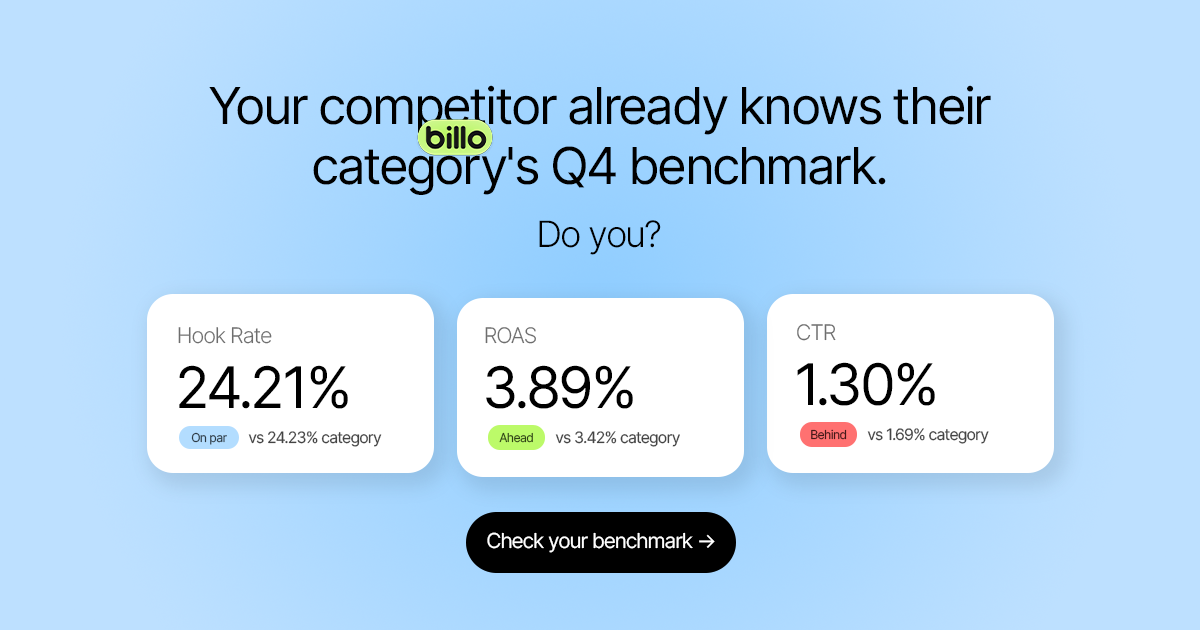
Every "Black Friday guide" treats Q4 like one big shopping event. It isn't - each category peaks on its own calendar.
- Apparel treats Black Friday as a volume play, trading ROAS for total revenue as it scales into December.
- A 30% hook rate looks strong - for Health & Beauty, that's just above average during Q4.
- Business & Industrial's best month last year was December, proving even B2B brands catch a Q4 lift.
Missed your category above? Wondering where your own numbers actually land?
Billo built a free calculator on 80,069 sales-objective Meta video ads across 14 categories from Q4 2025 - see your own category's peak month, benchmark, and fix in under a minute.
🤖 AI agents are changing who visits, buys and clicks on the web
AI agents are moving from answering questions to shopping and completing transactions, while AI search is keeping users inside results for longer. Together, those shifts are changing website traffic, conversion measurement and the value of traditional search clicks.
The Breakdown:
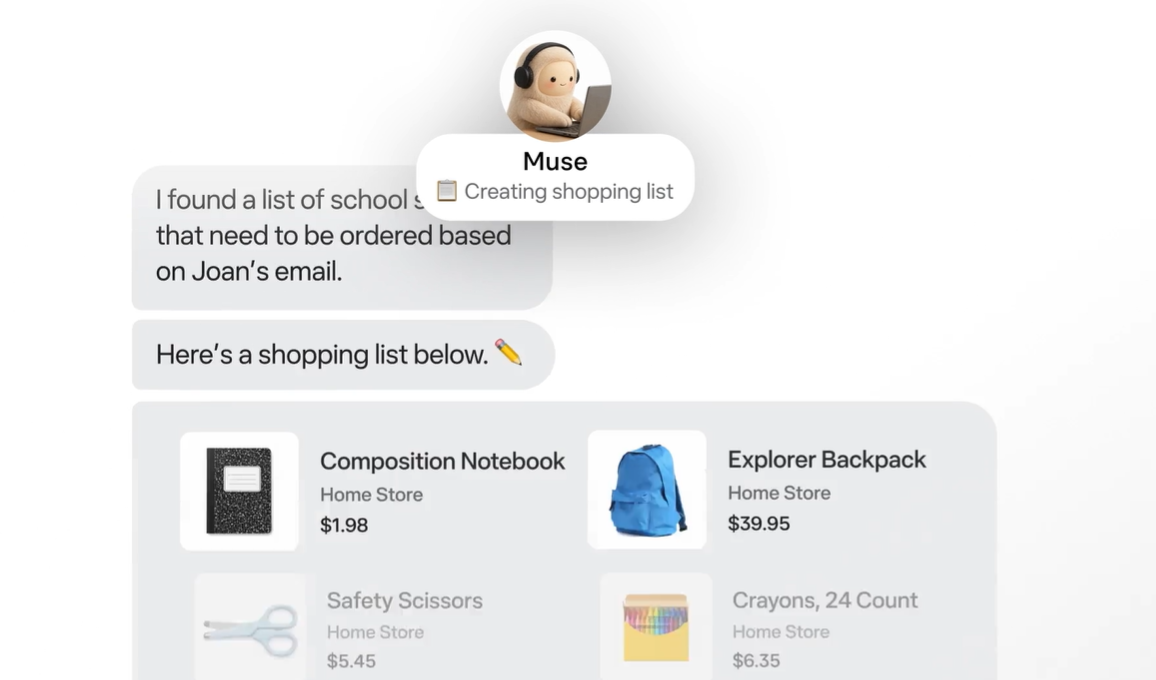
Meta’s Muse can complete purchases: Muse can browse sites, fill forms, negotiate and check out using Stripe Link. It is the first agent covered by Link’s purchase protections, with Shop Pay support coming next.
Bots now account for over half of web requests: Mellow Sleep says AI-assistant visitors convert several times better than average, but another agency saw bot traffic rise 80% YoY and contaminate retargeting pools, contributing to 20% higher CPMs.
Search engines want users to keep asking: Bing is testing “Ask follow-up” inside Copilot results, while Google AI Mode is experimenting with table-based follow-ups and paginated answers that continue qualifying user intent without requiring a website visit.
Publishers could get less visibility from citations: Google is testing smaller link cards in AI Overviews and AI Mode that remove site descriptions, potentially giving cited websites less context even when their links remain present.
AI is changing both sides of web traffic. Agents can arrive ready to transact, while AI search can answer more questions before anyone visits a site. Marketers increasingly need to distinguish valuable agent traffic from unwanted bots while measuring visibility beyond traditional clicks.
👨💻 Quick hits
🔎 Google is testing traditional Search campaigns in AI Mode, allowing exact and phrase match keywords to trigger text ads when queries show clear intent, without requiring AI Max or Performance Max.
🤖 Meta launched Muse, its latest AI-powered personal assistant that can handle background tasks and persistent conversations, reviving a concept the company previously attempted with its discontinued M assistant.
⚖️ X updated its terms to require disputes to be handled under Texas law while adding a jury trial waiver and reaffirming restrictions on users joining class or representative lawsuits.
📍 Google updated its Location asset requirements with clearer terminology and troubleshooting guidance for advertisers. The company says the changes are purely for clarity, with no changes to existing policy enforcement.
🥳Events
🔥 How to Turn Bigger Growth Targets Into a Stronger Budget Case
September 17 | Virtual Event
Krithika Shankarraman, the first marketing hire at Stripe and OpenAI, joins AirOps CMO Christy Roach to unpack findings from 300+ marketing leaders. Learn how to connect investment to growth, defend the work that moves pipeline, and make resource asks that leadership can evaluate quickly.
Can't attend the session live? Register anyway, and you’ll get the recording in 24 hours.
That’s a wrap for today! Tell us your thoughts about today's content as we line up more Shorts! And don’t hesitate to share this with someone who’d adore it. 🥰