
The metric agents actually weight

Hey there Smarty 👋
Are you geared up to catch the latest and greatest in quick shorts?
And just a quick heads-up! If you stumbled upon us through a friend, make sure to subscribe here! That way, you’ll never miss out on the trending shorts.

🎯 The metric AI agents actually weight, and nobody's buying media against it
Shopping research found that when someone asks an AI assistant a comparison question, close to nine times out of ten it triggers a shopping response with product cards and retailer links.
What decides which products make that card isn't just price or availability. Brand recognition and trust are factors the models weight directly, the same way a human shortlisting options leans on what they've already heard of.
That is not a new idea in marketing. It is an old idea showing up inside a system nobody is currently measuring it against.
Search and social spend gets judged constantly against last-click and assisted-conversion data. The channels that build the kind of broad recognition an AI agent seems to draw on when it forms a shortlist rarely get judged against that outcome at all, because nobody built a way to test it.
Run a recognition audit before you defend the budget
Pull ten comparison queries your category actually gets asked, the kind a shopper would type into an assistant rather than a search bar. Run them and record which brands appear on the shortlist and in what order.
Cross-reference that list against your unaided awareness data, if you have it, or against a quick panel survey if you don't.
Brands with high unaided recognition tend to cluster near the top of these shortlists more consistently than brands relying purely on paid placement to appear in the same category. That correlation is not proof of causation, but it is the first real test connecting a channel to an outcome that used to be unmeasurable.
Treat linear and CTV reach as a shortlist input, not just a reach number
If recognition feeds the shortlist, then the channels built specifically to produce broad recognition deserve a line in that argument, measured by outcome rather than exposure.
That is the case for pairing reach data with something closer to attribution, which is where a platform built to connect TV and streaming exposure to downstream conversion outcomes, rather than reporting reach alone, does work a media plan built on GRPs can't.
Tatari runs that measurement for 300+ brands buying linear and streaming together, and you can schedule a demo to see how the connection gets made.
Watch the gap, not just the position
Track the shortlist audit monthly rather than once. What matters is whether your position moves as your reach investment moves, or stays flat regardless.
A flat line despite rising spend is diagnostic information a channel review usually never surfaces, and it is worth more than another quarter of defending the budget on reach alone.
Together with Levanta
Your Best Holiday Creators Are Choosing Brands Now
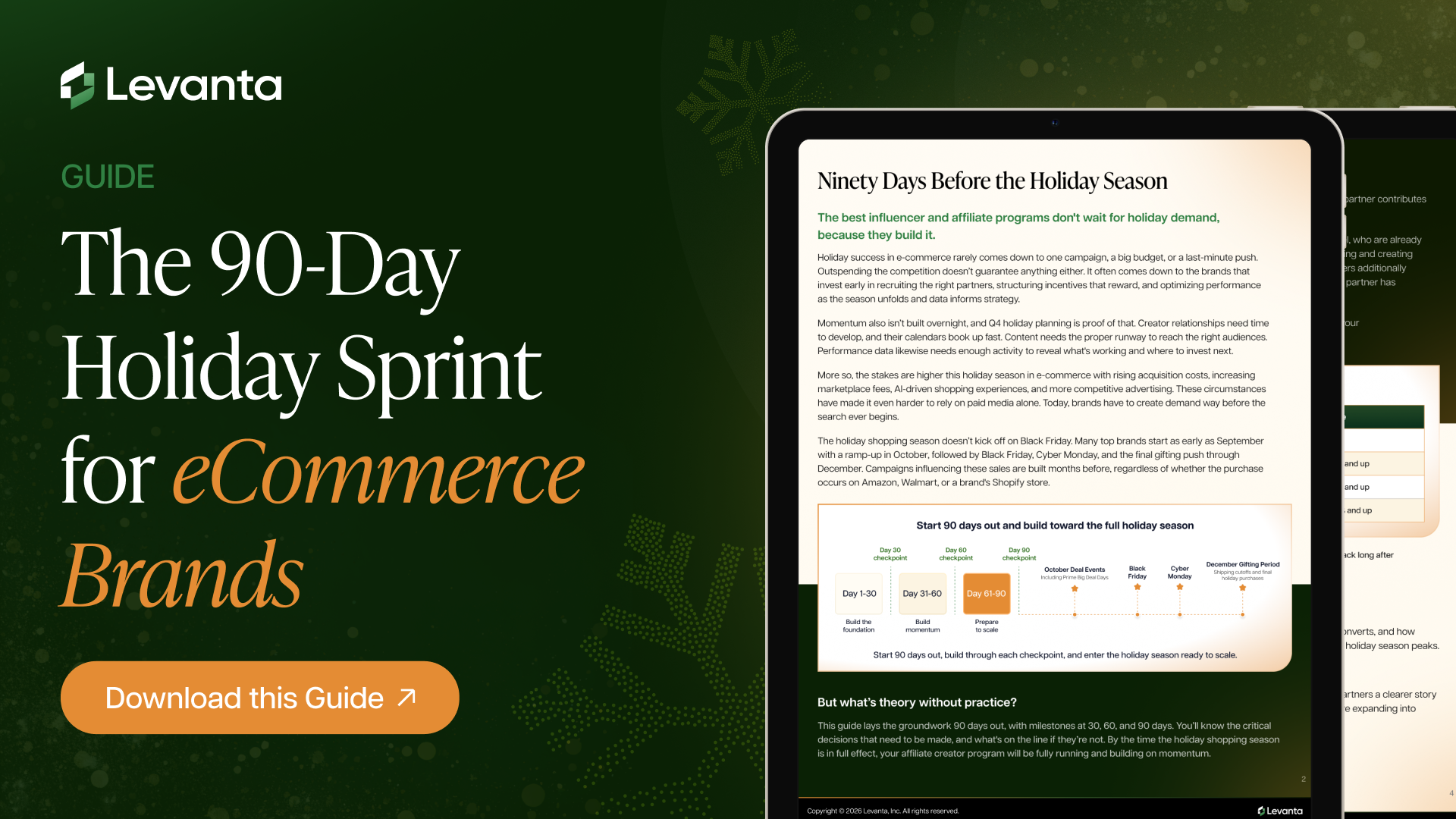
Holiday performance is often decided before the promotion goes live. Creators commit to brands offering attractive economics and strong audience fit, so delayed outreach leaves your team competing for whatever attention remains.
Levanta built The 90-Day Holiday Sprint to turn that shrinking window into measurable momentum. Inside, you’ll learn how to:
- Set commissions around customer lifetime value, protecting margin while attracting stronger partners.
- Recruit with proven products that give creators better conversion potential.
- Use 30, 60, and 90-day checkpoints to identify winning relationships before seasonal budgets rise.
A 90-day runway gives you time to see which creators convert before holiday budgets climb. That evidence makes every commission increase easier to defend.
Don’t wait until November to build the creator program you will wish you already had. Your 90-day countdown starts now.
📺 The fight for the TV screen is expanding
TV viewing is shifting fast. Ad-supported streaming is taking more viewing share, while Instagram and YouTube are building new ways to move creator content from phones onto the biggest screen in the house.
The Breakdown:
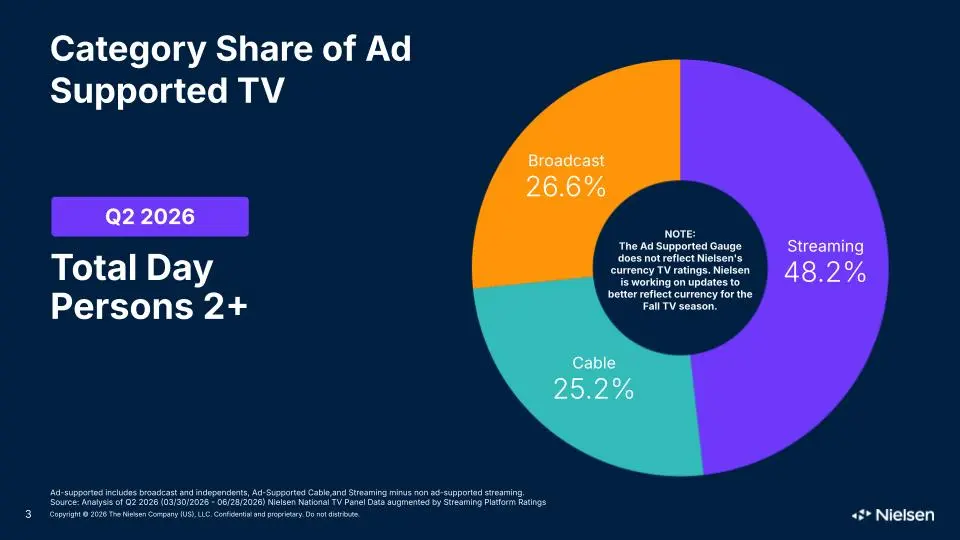
Ad-supported streaming hit 48.2% of viewing - Nielsen’s Q2 2026 Gauge shows ad-supported streaming gained 1.6%, continuing to take a larger share of total TV viewing.
Broadcast slipped despite major live sports - Broadcast fell from 28.2% to 26.6% even with the NBA Finals and opening World Cup stages, both of which were also available through streaming.
Instagram is bringing creator content to TVs - Instagram enlisted four creators to showcase its TV app, testing how creator-led content translates from personal phone screens to shared big-screen viewing.
YouTube is turning creators into 24/7 channels - YouTube expanded its Stations experiment, letting selected creators, podcasters, and musicians run continuous programming with live chat attached.
The living-room screen is becoming another battleground for digital platforms. For marketers, that could mean rethinking creative built exclusively for vertical feeds as social content increasingly reaches shared, horizontal screens.
👨💻 Quick hits
⚡ Solawave did not solve creative fatigue by hiring a larger team. It shipped products through Insense and received 180+ ad-ready assets in one month, giving paid social enough volume to kill weak concepts quickly and scale winners. Book a free strategy call by August 28 and get $200 platform credits towards your first campaign.
⚖️ Meta has agreed to a landmark settlement worth up to $18 billion over teen social media harms. The deal brings two-hour daily limits, overnight blocks, muted school-hour notifications, and non-personalized feed options to younger Facebook and Instagram users.
🤖 Meta is adding new AI subscription tiers as it looks for more ways to monetize its AI investment. Meta AI Core and Premium give users expanded image and video generation alongside Facebook, Instagram, and WhatsApp verification benefits.
🛠️ Google has upgraded its Ads API Developer Assistant with deeper AI agent capabilities. Version 4.0 works with Claude Code and Antigravity and can validate GAQL, generate code, pull live reports, inspect schemas, and troubleshoot API issues conversationally.
📦 Unexpected shipping fees continue to hurt online conversions, with 71% of consumers saying they have abandoned carts because of them. Meanwhile, 73% have added items to qualify for free shipping and 64% now use AI-assisted shopping tools.
That’s a wrap for today! Tell us your thoughts about today's content as we line up more Shorts! And don’t hesitate to share this with someone who’d adore it. 🥰