
Stop selling to a stranger
😤The reason good products still do not convert, Google is citing you, but recommending your competitors, and more!

Hey there Smarty 👋
Are you geared up to catch the latest and greatest in quick shorts?
And just a quick heads-up! If you stumbled upon us through a friend, make sure to subscribe here! That way, you’ll never miss out on the trending shorts.

Together with Dreem
Your shoppers leave because they couldn't picture it on themselves
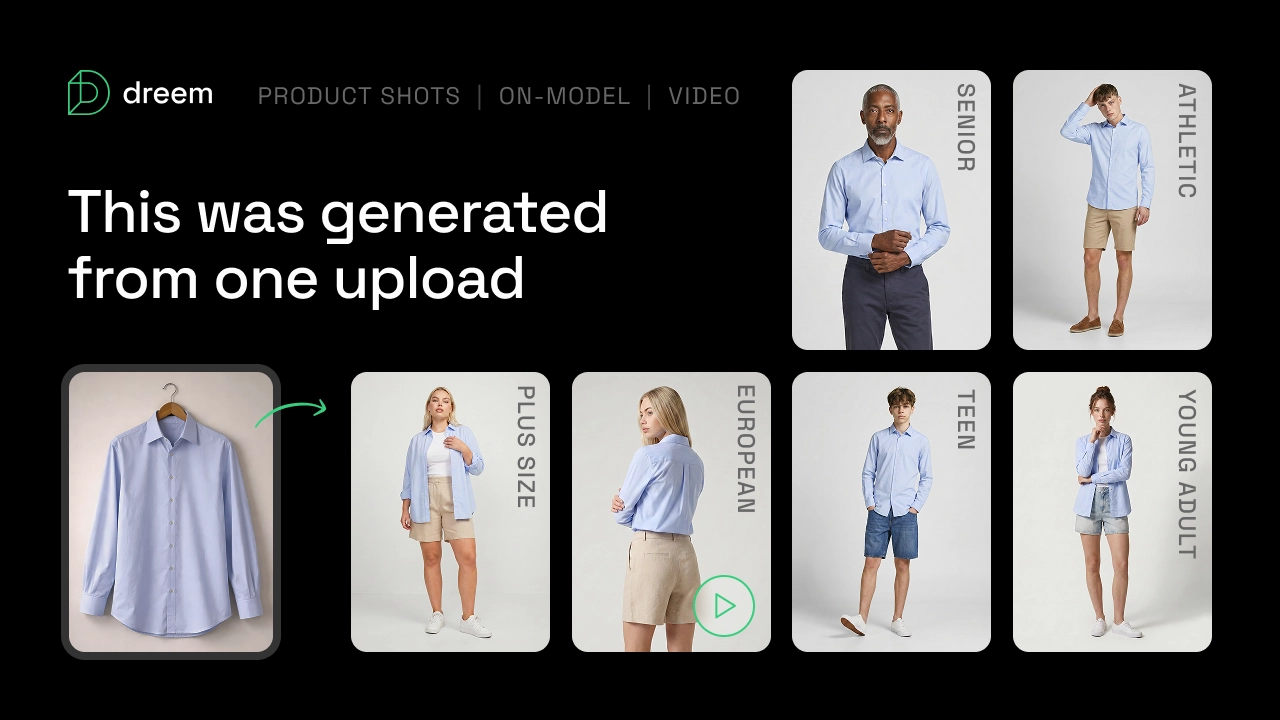
Most product pages lose the sale in the last three seconds. The image doesn't match the person looking at it, and they leave without ever knowing why, and neither do you.
Dreem puts your product in front of the people who are actually browsing. One upload and you have model shots, product shots, and video across 400+ virtual talents that match your actual customer base.
- Show every body type, age, and skin tone without a photoshoot
- Match your visuals to each audience segment automatically
- Around $2 per image; works from a phone photo
The shopper who sees themselves in your product stays longer, clicks add to cart, and doesn't second-guess at checkout.
Our readers get 600 free credits before July 30.
😤The Reason Good Products Still Do Not Convert
UCLA neuroscientist Hal Hershfield put subjects in an fMRI scanner and asked them to describe their future selves.
The brain processed them as strangers, not a future version of themselves but someone it felt no obligation toward. The implication: every time your prospect imagines buying your product and becoming better, they collect a dopamine hit with no motivation to actually spend, because the beneficiary is not someone their brain is wired to protect.
1. Collapse the Distance With Specificity
Hershfield found that when subjects were shown an aged photo of themselves, they stopped treating their future self as a stranger. The marketing equivalent is forcing the prospect to see the concrete reality of what happens if they do not act, not a vague future but the exact present they are about to repeat.
The shift: "Our software saves you hours next month" asks the brain to care about a stranger. "Look at your project management tool right now. Imagine doing that exact data entry again tomorrow. That is what next week looks like without this." makes the present cost real. Specificity is the aged photo.
2. Kill the Tomorrow Escape Route
Because imagining a purchase generates instant relief, customers defer. They add to wishlists or tell themselves they will return next paycheck, and each action feels like progress because the brain already collected its dopamine.
Intercept this with micro-commitments rather than full purchase pressure. A two-minute quiz or a one-click add to cart. Copy that names the pattern: "You are going to close this tab and tell yourself you will come back. You will not." Make the first step smaller than the relief being collected without taking it.
3. Write Copy for the Actual Self, Not the Ideal Self
The Ideal Self is disciplined, motivated, and plans ahead. The Actual Self is the tired, impulsive person holding the wallet at checkout. Writing for the Ideal Self and expecting the Actual Self to complete the purchase is the mismatch most product copy does not survive.
Position the product as what the Actual Self reaches for when motivation fails: "Buy this meal prep kit today so that when Tuesday night rolls around and you are exhausted, dinner is already done."
The future self feels like a stranger until the copy makes the present cost specific enough to matter.
🤖 Google Is Citing You, But Recommending Your Competitors
Google's latest AI search behavior shows that being used as a source doesn't guarantee visibility. At the same time, new Customer Match changes are giving advertisers less flexibility over how audience lists are classified.
The Breakdown:
Cited But Not Recommended - Lily Ray found Google cited self-promotional "best software" pages 323 times across 80 AI Overviews, yet left those brands out of recommendations in 224 cases, or roughly 69% of instances.
Authority Still Wins - For queries like "best LMS for selling courses," Google cited Oasis LMS but recommended competitors instead. Brands with stronger third-party mentions, backlinks, and authority signals were more likely to appear.
Customer Match Changes - Starting August 2026, Google will automatically classify conversion-based Customer Match lists by customer type, removing the option to leave eligible audiences unclassified.
Bidding Impact Ahead - Accurate audience labeling will become more important as Google's automated systems use these classifications to better understand customer journeys and optimize campaign performance.
Google's AI appears to separate citations from endorsements. Meanwhile, advertisers are being pushed toward cleaner audience data as automation plays a bigger role in targeting and bidding decisions.
Together with The Shift
Stop Reading About AI. Start Getting Results From It.
AI is everywhere, but practical, actionable ways to use it are really hard to find.
The Shift fixes this with a focus on a single topic per edition. A real problem AI can solve today.
You’ll see real examples, short workflows, and proven prompts that help you work faster, think better, and automate intelligently under 5 minutes a day.
Once you subscribe, you get access to 3,000+ curated AI tools and 1000+ prompts, so nothing stays theoretical.
If you want AI to work for you in real, practical ways, not just ideas, you’ll love The Shift.
👨💻 Quick Hits
🎨 LinkedIn is testing Brand Kit, letting marketers define brand colors, fonts, and voice so AI-generated ads stay on-brand. The tool automatically builds guidelines from a company’s existing LinkedIn presence.
🤖 Google launched Ask Ad Manager, a Gemini-powered assistant that analyzes campaign performance, troubleshoots issues, generates reports, and provides personalized optimization guidance directly within Google Ad Manager.
🎯 Google Ads is automatically enabling conversion-based customer lists for eligible advertisers using Enhanced Conversions and Customer Match, turning conversion data into audience segments for improved targeting and campaign performance.
🛡️ Google Research unveiled S-CTS, a new AI spam detection system that identifies coordinated generative AI content at scale. It analyzes shared narratives, text embeddings, and infrastructure patterns to rapidly detect and shut down AI-generated spam networks.
That’s a wrap for today! Tell us your thoughts about today's content as we line up more Shorts! And don’t hesitate to share this with someone who’d adore it. 🥰