
Famous creators or small ones
📣 Why small creators may sell as well as big names, OpenAI’s new Target CPA and Target CPC bidding, and more!
Hey there Smarty 👋
Are you geared up to catch the latest and greatest in quick shorts?
And just a quick heads-up! If you stumbled upon us through a friend, make sure to subscribe here! That way, you’ll never miss out on the trending shorts.

Together with Omnisend
Your next customer is already in your comments
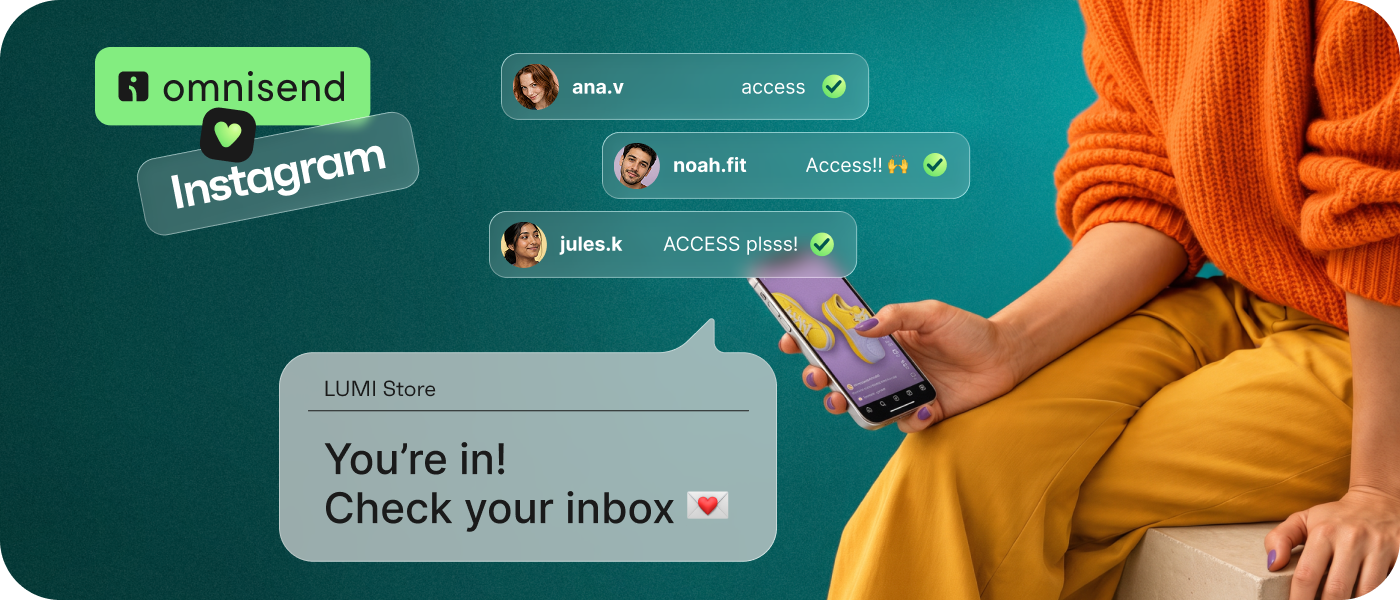
Someone follows your brand because they like what you’re selling. But when your next sale goes live, they could scroll past without ever seeing the offer.
You’ve already earned their interest. Omnisend’s Instagram integration helps you turn it into an email signup, so you can reach them when it’s time to buy.
Ask shoppers to comment a keyword like “OFFER” for a discount. Social Capture automatically DMs them asking for their email. It works with keyword messages, too.
Those who subscribe go straight into your Omnisend list, ready for your welcome series. Your next sale now has an audience you can email directly.
Connect it before your next promotional post to give interested shoppers a reason to subscribe. Social Capture is included in all paid plans.
New to Omnisend? It is trusted by 150,000+ brands for email and SMS marketing, with free migration to get you switched over in up to five business days.
📣 One big-name creator or twenty small ones? Both sides make their case
Your holiday creator budget is fixed. Spend it on one recognizable name, or spread it across twenty smaller accounts?
A Morning Consult survey reported by Net Influencer on October 21 adds fresh data. It covered 6,283 US adults from September 17 to 22. Two-thirds of Gen Z and 60% of millennials bought something in the past year because an influencer endorsed it.
Among Gen Z, creator posts nearly matched search for finding products, 33% against 37%. Trust in influencers among Gen Z and millennials rose from 51% in 2019 to 64%. The headline finding: small accounts convert about as well as famous ones.
Let each side argue.
The case for one big name
"Awareness is the hard part. One post from a name people know can reach millions in a day, and it gives your brand a moment that twenty small posts never will. If you're launching or entering a new category, people need to hear of you before they can trust you. And a single contract keeps negotiation, briefing, and approvals simple in a quarter when your team has no time to spare."
The case for twenty small ones
"The survey says small accounts sell about as well as big ones, and their followers trust them. Twenty creators give you twenty chances to find a hit, plus a library of content to run as ads through December. If one post misses, nineteen are still working.
Putting the whole budget on one creator's timing, audience mood, and one day's algorithm is a bet, and in Q4 there's no second try."
Where I land
If the goal is sales, spread spend across smaller creators and cap any single larger name at about a fifth of the budget. That split is my judgment. It cuts the cost of a miss and fills your ad account with real content. If the goal is pure awareness for something new, the big name earns its place.
One more data point
Interest in following AI influencers fell from 36% to 30% in the same survey. In my judgment, that's a reason to keep holiday creator content human and visibly real.
Brief the small creators properly
Give each one the product, one key message and freedom on delivery. Agree on usage rights up front, so the best posts can run as ads through the season.
Check your concentration
List planned holiday creator spend by creator. If one name holds more than half the budget, decide whether that bet is really worth it.
📊 OpenAI updates ChatGPT ads bidding and tests new business analytics tools
OpenAI is introducing new bidding options for ChatGPT advertisers while reportedly developing tools that let businesses track their visibility, clicks, and customer interactions inside ChatGPT.
The Breakdown:
- ChatGPT Ads is introducing Target CPA for conversion campaigns and Target CPC for click campaigns starting November 9, allowing advertisers to set their desired average cost per result.
- Max Bid and Max CPC bidding strategies will be retired on January 1, 2027, with existing campaigns transitioning to the new options. Advertisers are advised to review performance data and conversion tracking before switching.
- OpenAI is reportedly testing a Business Hub that shows how often businesses appear in ChatGPT responses, including daily impressions and clicks on website links displayed in a dashboard.
- The upcoming tools could let verified businesses update product information and use AI agents to answer customer questions, although the analytics feature is still in development and doesn't reveal user prompts or competitor rankings.
OpenAI is giving businesses more ways to manage advertising and understand their presence inside ChatGPT. The new bidding options focus on controlling acquisition costs, while the proposed analytics dashboard could help brands measure how often ChatGPT recommends them and drives website visits.
Together with New Engen
Before you spend more reaching the same people
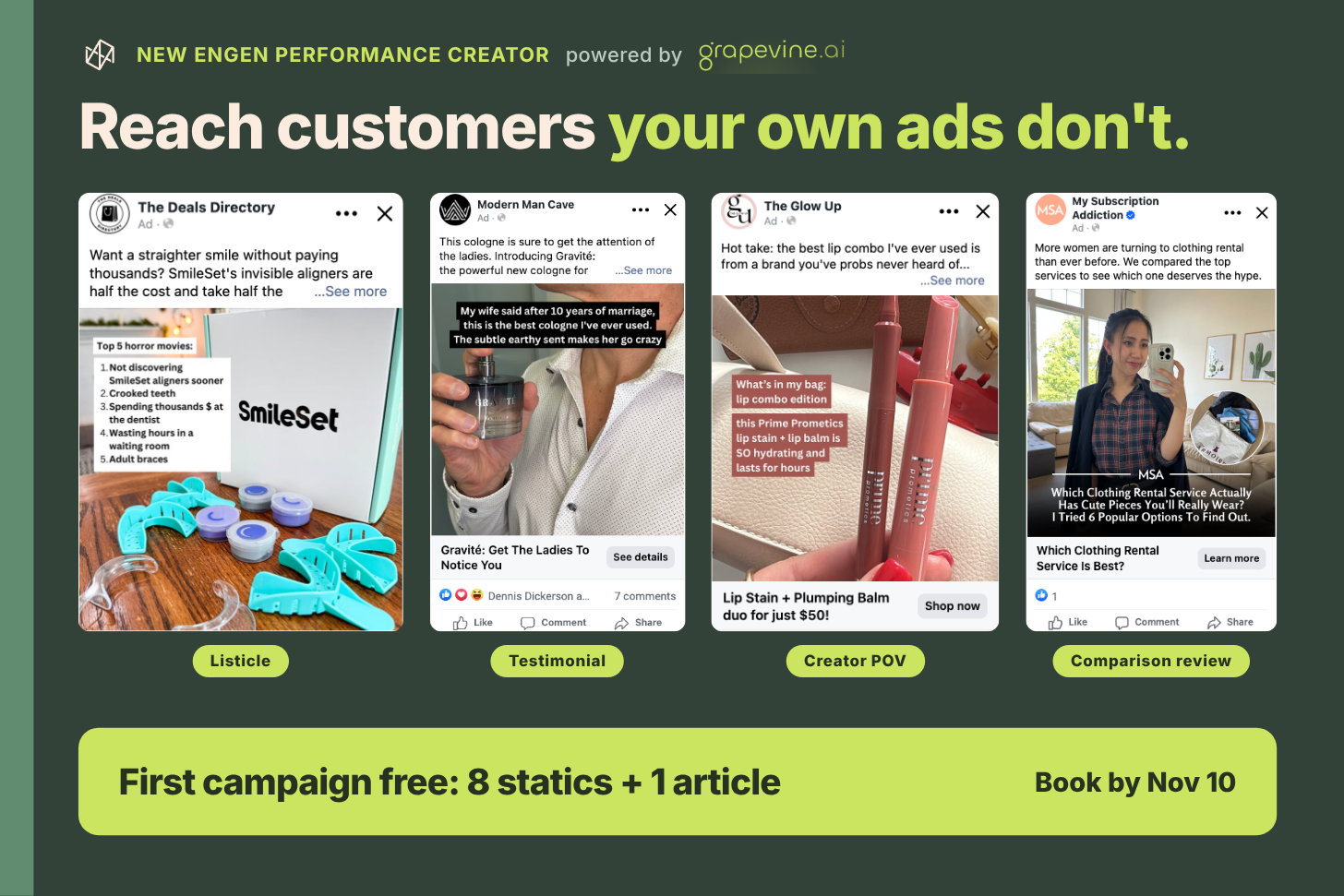
Spending more on Meta without seeing more growth? Your ads may be reaching the same people again.
In a Meta study across 94 marketing mix models, 66% of people reached by partnership ads hadn’t seen the advertiser’s regular ads in the same audience.
Grapevine, now part of New Engen, helps you reach beyond that overlap with whitelisted ads from its publisher handles across beauty, wellness, men’s, parenting, finance, and pets.
- Leave creator sourcing, briefs, and payments to Grapevine.
- Get distinct statics and UGC produced and posted through its publisher handles.
- Keep control of your ad spend while Grapevine supports testing and optimization.
Just Food for Dogs increased Grapevine’s share of its paid media from 15% to 45% in six months.
Your team gets more creative to test without more production to manage.
👨💻 Quick Hits
📱 Meta introduced Muse Spaces, allowing users to create custom mini apps through AI prompts for tracking tasks, deliveries and activities, alongside expanded memory and improved autonomous task completion capabilities.
📈 YouTube videos with updated descriptions saw a 359% increase in AI search retrievals, according to a Peec AI experiment, suggesting structured descriptions may improve visibility, though causation remains unconfirmed.
📊 Four studies found ChatGPT referrals equal just 0.62% of Google’s organic traffic, despite higher conversion rates in some datasets. Researchers also found no reliable evidence linking AI visibility to increased direct traffic.
🛒 Visa tested 22 AI shopping models and found an average success rate of just 57.2%, with 54% of failed attempts still resulting in purchases that didn’t fully meet customer requirements
That’s a wrap for today! Tell us your thoughts about today's content as we line up more Shorts! And don’t hesitate to share this with someone who’d adore it. 🥰