
Gift cards or percent off
🎁 20% off vs. a $20 bonus card for holiday shoppers, Microsoft Clarity’s new AI agent tracking, and more!
Hey there Smarty 👋
Are you geared up to catch the latest and greatest in quick shorts?
And just a quick heads-up! If you stumbled upon us through a friend, make sure to subscribe here! That way, you’ll never miss out on the trending shorts.

Together with AirOps
See what competitors are advertising in ChatGPT
Planning a ChatGPT ads test? Seeing what other brands are running gives you a clearer starting point for deciding what’s worth your budget.
The AirOps ChatGPT Ad Library lists 6,000+ brands. Search by brand name or domain to see competitor ad messaging, then explore the prompts where those ads appeared to understand the conversations behind the creative.
Bring those examples into your next campaign discussion. Use them to choose a messaging angle worth testing and explain why that test deserves budget.
You’ll have real ads to reference when your team asks what you want to run and why.
Before your next campaign brief gets locked, see what’s already out there.
🎁 20% Off vs a $20 bonus card: we ran the math on 100 holiday orders
Gift cards topped the National Retail Federation's holiday wish list this year at 47%. The survey, released October 20, covered 8,094 adults from October 1 to 7. It also found 56% expect the economy to affect their spending, 43% plan to start before November, and 53% plan to shop online.
Shoppers watching money and buying gifts early is a setup for two competing offers. Put them in the same ring with the same 100 shoppers spending $100 each. All figures are illustrative.
In this corner: 20% off
- Revenue: $10,000 becomes $8,000.
- Cost of the offer: $2,000, all of it today.
- Who it suits: self-buyers who compare prices and expect a sale.
- Hidden cost: you discount orders that would have happened anyway.
In the other corner: buy a $100 gift card, get a $20 bonus card valid from January
- Revenue: you keep the full $10,000.
- Cost of the offer: 100 bonus cards carry $2,000 of retail value. Redeemed on products with a 60% margin, the goods cost you $800, paid in January.
- Who it suits: gift buyers, which this survey suggests are many.
- Hidden bonus: some cards never get used, and shoppers redeeming a card often spend past its value.
The scorecard
The discount costs $2,000 now. The bonus card costs at most $800, later and brings a customer back during a quiet month.
On cost alone, the bonus card wins clearly. But cost is half the fight. A self-buyer who wants a deal today won't be moved by a card that works in January.
The deciding question
Is your holiday customer buying for themselves or for someone else? Your order data shows it. Count gift notes, different shipping addresses and gift wrap requests from last December.
The verdict
Run both, aimed at different shoppers. Keep a modest percentage off for self-buyers, and lead gifting emails and pages with the bonus card. In my judgment, the bonus card is the stronger offer for gift-heavy weeks, especially December.
Before launch
Gift card rules vary by state, including limits on expiry dates. Check them, and write the bonus terms in plain language on the offer page.
Your number
Pull last December's share of gift orders. Above a quarter, build the bonus card offer before your Black Friday creative goes final. Below that, the discount probably does more work for you.
📊 Microsoft Clarity adds AI agent tracking as study reveals ChatGPT brand sentiment risks
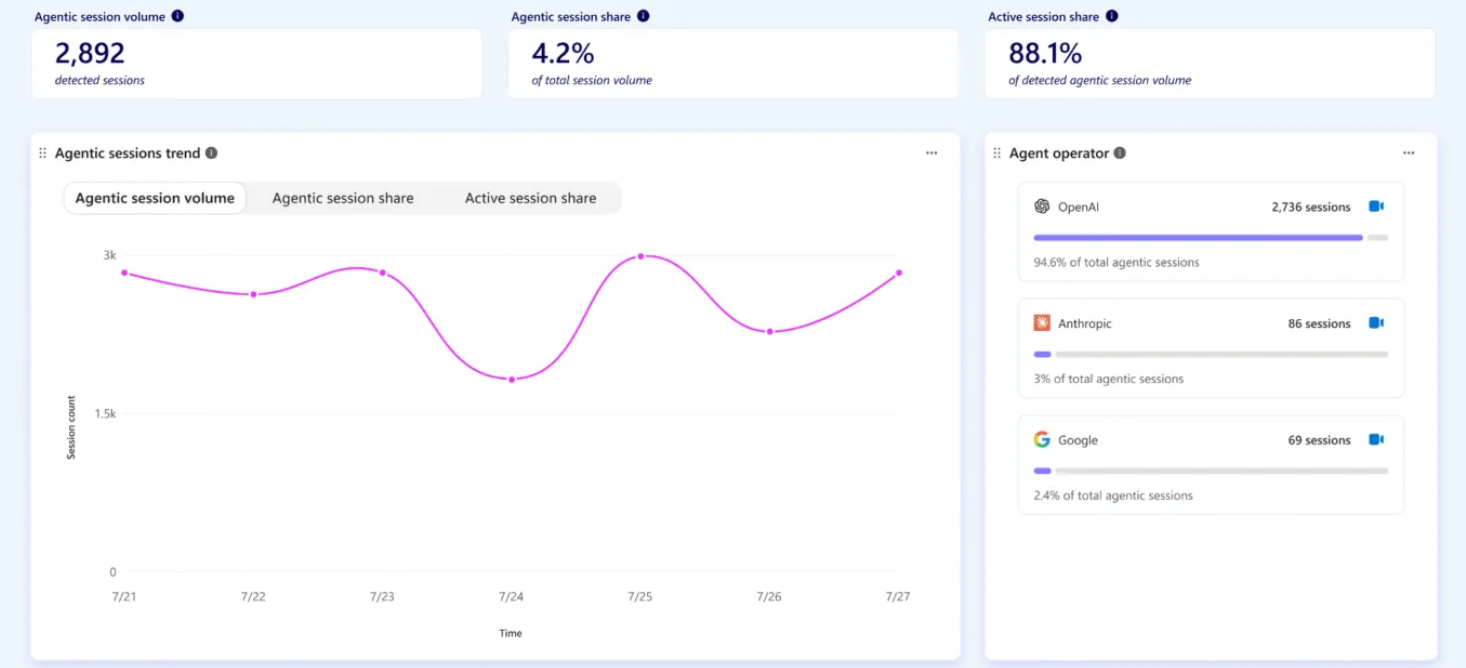
Microsoft has introduced new AI-powered features in Clarity to help businesses track AI agents and understand website behavior, while a separate study reveals how strongly the wording of ChatGPT prompts can influence brand sentiment.
The Breakdown:
- Microsoft Clarity's new Agentic Analytics tracks AI agents visiting websites and their actions, including searches, form submissions, bookings, and checkouts, with simulations to test task completion.
- Microsoft expanded Brand Agents to support business discovery across Copilot, Bing and MSN, while Ask Clarity lets marketers analyze website behavior through natural-language questions backed by session data.
- A study of 900 ChatGPT responses found negative prompts had roughly twice the impact of positive ones, with sentiment scores of -36 for negative prompts, +20 for neutral, and +46 for positive.
- Only 44% of prompts produced consistent sentiment classifications across five runs, while changing the wording of brand comparisons caused sentiment swings of up to 184 points.
As more customers use AI to research brands and interact with websites, businesses need to understand both sides of that experience. Microsoft's new tools help track what AI agents actually do, while the ChatGPT study shows why brands shouldn't judge their AI reputation using just a few carefully worded prompts.
Together with Insense
You don't have a creator problem. You have a workflow problem.
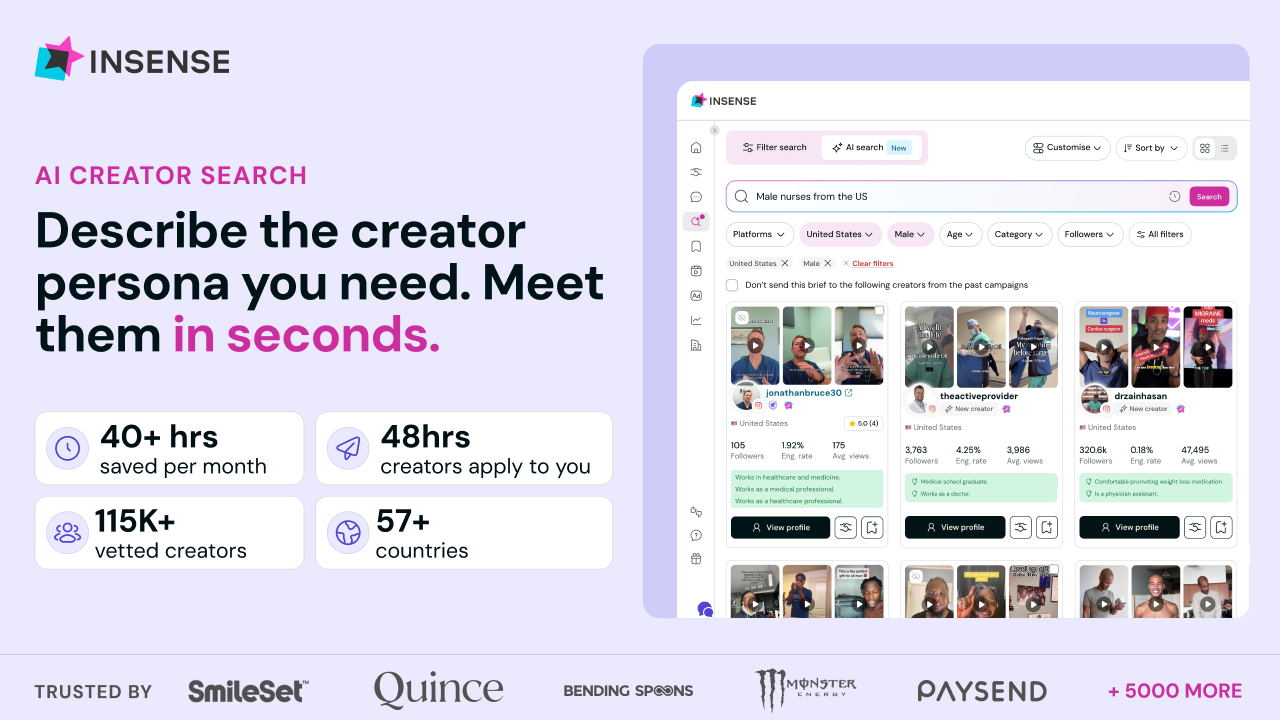
A creator disappears. A shipment stalls. Your paid team waits another week for content while someone tracks contracts and payments across separate tools.
Insense replaces that workflow with one self-serve platform.
One place to receive creator matches from 115,000+ vetted profiles, run briefs, ship product, automate contracts and payments, and own full lifetime content rights.
The results speak for themselves:
- Nurture Life cut turnaround time from 2 months to 2 weeks using just one marketer and Insense
- Solawave received 180+ ad-ready assets in a single month by simply shipping products
- Matys Health achieved 12× reach through Spark Ads on TikTok
More than 5000 brands and agencies use Insense, with first creator applications arriving within 48 hours and teams saving 40+ hours monthly.
Book a free strategy call and get $200 platform credits towards your first campaign.
👨💻 Quick Hits
📱 Snapchat reached 495 million daily active users in Q3 2026, adding just 2 million, while revenue rose 14% to $1.72 billion, driven by stronger monetization despite slowing user growth.
🎬 Instagram is promoting long-form videos through its Explore page and reportedly offering creators up to $500,000, aiming to compete with YouTube while developing a sustainable monetization model for Features.
🔎 OpenAI claims ChatGPT handles 20% of Google’s search volume, potentially exceeding 1 trillion annual queries, though independent estimates suggest 7.5%, highlighting uncertainty around how AI searches are measured.
🛒 Google launched direct checkout in AI Mode and Gemini in Canada, allowing shoppers to purchase from eligible retailers without leaving conversations, with broader Merchant Center integration planned for 2027.
That’s a wrap for today! Tell us your thoughts about today's content as we line up more Shorts! And don’t hesitate to share this with someone who’d adore it. 🥰