
Don’t give just to ask in return
😅 You gifting a customer is not a favour to them so stop calling it in, Pinterest, Snapchat, and Reddit prove better ads beat bigger audiences, and more!
Hey there Smarty 👋
Are you geared up to catch the latest and greatest in quick shorts?
And just a quick heads-up! If you stumbled upon us through a friend, make sure to subscribe here! That way, you’ll never miss out on the trending shorts.

😅The ask that turns a gift back into a transaction
Giving before asking is one of the most consistently supported ideas in relationship marketing. When people receive something genuinely useful with no immediate expectation attached, they’re more likely to develop goodwill and reciprocate later.
The principle is well established. The mistake usually isn’t forgetting to give first. It’s ending the giving phase before the relationship has had time to develop on its own.
The problem isn’t the gift. It’s what follows it.
A genuinely valuable email, guide, or resource creates a different feeling from a sales message.
That changes the moment the next interaction starts asking for something in return.
Whether it’s a purchase, a meeting, feedback, or even a light check-in, the sequence can begin to feel less like generosity and more like a transaction whose conditions were revealed late.
The shift is subtle, but it changes how everything that came before it is interpreted.
What the research actually supports
It’s important not to overstate the mechanism.
Research on reciprocity doesn’t suggest goodwill suddenly disappears the moment an ask appears. It does suggest that trust and commitment grow through repeated, reciprocal interactions over time, and that introducing an ask too early can weaken the goodwill those earlier interactions were building.
The difference looks like this:

The goal isn’t to avoid asking forever.
It’s to avoid changing the nature of the relationship before enough trust exists.
Decide the giving period before the sequence begins
Many nurture sequences drift into asking simply because the engagement looks encouraging.
A few opens, several clicks or a positive reply can create the impression that the relationship is ready for the next step, even when those signals only show that the content was interesting.
A stronger approach is to decide the length of the giving phase before launching the sequence and commit to it unless there’s a compelling reason to change it. That removes impatience from the process instead of letting it quietly dictate the strategy.
Look for signals that reflect trust, not just activity
Campaign metrics tell you whether someone interacted with your content. They don’t necessarily tell you whether the relationship itself has changed.
The more meaningful signals usually come from actions the customer initiates without being prompted: replying with a genuine question, asking for advice, introducing someone else to the conversation or reaching out to continue it.
Those moments are much stronger indicators of trust because they aren’t responses to a campaign. They’re decisions the customer made on their own.
Together with Omnisend
How healthy is your email setup, really?
You probably know your open rate. What is harder to see is where your email setup is quietly losing revenue and what deserves attention first.
Connect Omnisend to ChatGPT or Claude and ask it to review your live account. In under 30 seconds, get a complete health score out of 100 with the highest-impact improvements ranked for you.
The audit shows what needs fixing first. Then ask ChatGPT or Claude to make the changes. It can build a segment or prepare a re-engagement campaign without leaving the chat.
Review the work and request changes naturally. Nothing goes live until you approve it.
You don't even need to write your own prompts. Omnisend built a full library, sorted from beginner to advanced.
Brands using Omnisend generate an average of $79 for every $1 spent. New customers can migrate for free within five days and pay up to 35% less than Klaviyo.
See what your account needs before your next campaign goes live.
📊 Pinterest, Snapchat, and Reddit turn AI into advertising growth
Social platforms are proving that stronger advertising performance can matter more than rapid audience expansion. Pinterest, Snapchat, and Reddit all leaned on AI, improved ad products, and international markets to drive their latest quarter.
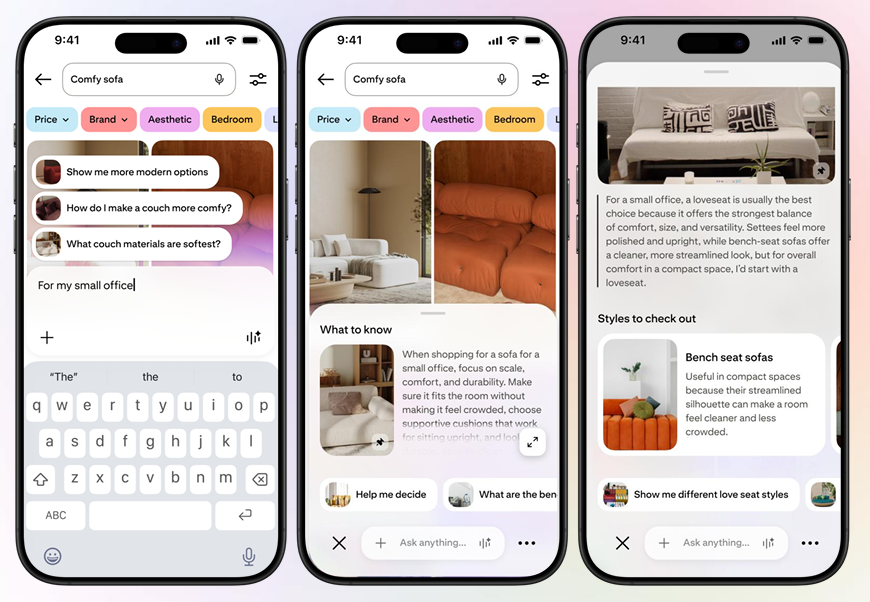
The Breakdown:
Snapchat Expands Internationally - Snapchat finished Q2 with 971M MAUs and 493M DAUs, adding 10M daily users QoQ. Most growth came from Rest of World (303M DAUs), while North America held at 92M and Europe reached 98M.
Pinterest Monetizes Better - Pinterest reached 640M MAUs (+11% YoY) after adding 9M users QoQ. Growth came almost entirely from the Rest of World (+15% YoY), while U.S./Canada (+4%) and Europe (+8%) remained relatively flat, with AI recommendations and Performance+ improving advertiser performance.
Reddit Boosts Ad Results - Reddit reached 130.3M DAUs (+18% YoY) and 514.6M WAUs (+24% YoY) as global usage continued climbing. ML-powered ads delivered 40% higher CTR, 130% higher engaged video views, 71% higher completion rates, 60% growth in Reddit Max adoption, and 22% lower CPA.
Social platforms are entering an efficiency era where AI-powered advertising and monetization matter more than headline user growth. Winning platforms will be those that generate better advertiser results while continuing to expand globally.
👨💻 Quick hits
🚀 Ship, brief, launch in 48 hours. Insense makes UGC that simple. Instead of chasing creators, you tap a global pool of 80,000+ specialists who deliver on-brand content in 48 hours. That’s how Nurture Life cut turnaround from 2 months to 2 weeks with a single marketer. Book your free strategy call and claim your $200 bonus.
🎬 TikTok partnered with Disney to let creators use licensed Disney, Pixar, Marvel, and Star Wars content in videos, while selected creator clips can also appear on Disney+ through a new ambassador program.
🛡️ Reddit is expanding its AI-powered Rules Hub to automate moderation for more communities, while restricting more content to logged-in users to curb AI scraping and protect community data.
🛡️ Microsoft Advertising introduced Excluded Content Terms, allowing advertisers to block Audience Ads from appearing beside specific page titles using up to 1,000 custom keywords or phrases for tighter brand safety control.
🛍️ New research found 72% of consumers now use AI tools like ChatGPT, Claude, and Gemini for shopping ideas, with 55% planning to spend more this holiday season despite ongoing concerns about data privacy.
That’s a wrap for today! Tell us your thoughts about today's content as we line up more Shorts! And don’t hesitate to share this with someone who’d adore it. 🥰