
Demand Gen costs can shift
📒 Google may quietly adjust your Demand Gen costs for up to 60 days after launch, Google Ads adds new bidding modes for first-time and loyal customers, and more!

Hey there Smarty 👋
Are you geared up to catch the latest and greatest in quick shorts?
And just a quick heads-up! If you stumbled upon us through a friend, make sure to subscribe here! That way, you’ll never miss out on the trending shorts.

📒 Demand gen costs can now shift for 60 days. Keep your own ledger
In mid-October, reports noted that Google Ads Help now says Demand Gen cost adjustments can apply for "up to 60 days," up from the three weeks previously reported.
Here's how they work, according to that coverage. For qualifying new Demand Gen campaigns using target CPA or target ROAS, Google may lower the final cost if conversions fall short of what the system predicted. Adjustments can start within five days of launch.
There's no separate credit, notification or line item. The adjusted cost simply appears in reporting, sometimes days later.
Why that matters in Q4
If you launch a Demand Gen campaign in early November, the cost you see on day three may not be the cost you see on day ten. Decisions made on early numbers can be wrong in either direction.
Who qualifies
Eligibility depends on factors such as account age, activity history, tracking setup and bidding and budget practices. It isn't guaranteed, there's no published minimum and the window can end early if a campaign hits a duration or cost limit.
So assume it might apply, and plan as if it might not.
Build a daily ledger
From launch day, record these numbers every day in your own sheet:
- Spend as shown that day
- Conversions and conversion value
- Bid strategy and target
- Budget
Then re-pull the same days a week later. Any difference in spend is an adjustment.
Judge on settled numbers
Wait until costs for a given week stop changing before you call a campaign's performance. In my judgment, give each week of data about seven days to settle.
Keep settings steady early
Frequent target or budget changes in the first weeks make it harder to tell what moved results. Eligibility also depends partly on bidding and budget practices, so steady settings are the safer choice.
Time your launch
If you want a Demand Gen campaign stable by Black Friday, launch it by early November. That leaves a few weeks of settled data before the peak.
Report clearly
When you share results, note which figures came before and after adjustment. Finance will notice if last week's cost per acquisition quietly changes.
What to track
- Daily spend, first pull against re-pull
- Settled cost per acquisition by week
- Whether adjustments appeared at all
Set up the ledger before the campaign goes live. The first five days are the ones you'll most want to compare later.
Together with Omnisend
Imagine beating a month’s email revenue with one send
You’d probably double-check the numbers.
Enflow Digital did exactly that for a skincare client ahead of BFCM. One plain-text email sent through Omnisend to 1,676 recipients generated nearly $18,000, beating the previous month’s broad-audience campaigns combined.
Omnisend helped the team find the right customers to send it to. Its segmentation and MCP capabilities let them uncover purchase patterns in minutes.
Co-founder Karolina shares how they pulled it off with Omnisend, from choosing the audience to making the offer worth opening. Worth a read (or a watch) before you hit send on your own BFCM campaigns.
New to Omnisend? It's an email and SMS marketing platform for ecommerce used by more than 150,000 brands, generating an average of $79 for every $1 spent. Migration is free and takes up to five business days.
📢 Google Ads expands customer targeting controls while automatically adding creative assets to PMax
Google Ads is introducing new customer lifecycle bidding options across Performance Max, Search, and Shopping campaigns, while making automated video and landing page image sourcing the default for eligible PMax campaigns.
The Breakdown:
Google Introduces High-Value Customer Bidding - Shopping campaigns are gaining New Customer High Value Mode, allowing advertisers to bid more aggressively for first-time customers predicted to generate higher spending.
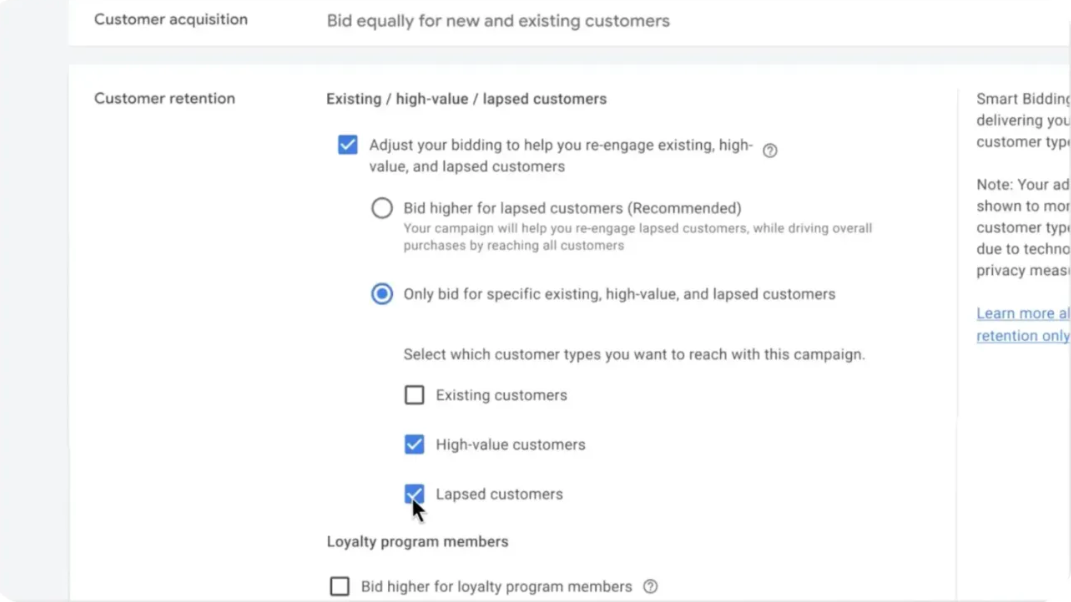
New Retention Modes Target Existing Customers - PMax, Search and Shopping campaigns are getting Re-engagement, Loyalty and Retention Only modes, enabling advertisers to adjust bidding for lapsed customers, loyalty members and selected customer segments.
Percentage-Based Bid Boosts Expand - Advertisers can now apply percentage-based bid boosts across Search, Shopping, PMax and Demand Gen, allowing adjustments to scale with purchase value rather than relying on fixed amounts.
PMax Automatically Sources Videos and Images - Google is making sourced videos opt-out, while landing page image sourcing becomes enabled by default for all new PMax campaigns starting December 4, even when account-level dynamic images are disabled.
Google's updates give advertisers more control over customer acquisition and retention bidding while increasing automation in creative selection. Advertisers will need accurate customer segmentation data and should review PMax asset optimization settings to prevent unauthorized or unsuitable images and videos from appearing in campaigns.
👨💻 Quick Hits
📢 Google released Display & Video 360 API v5 in public beta, adding YouTube exclusion controls, Digital Out of Home support and updated targeting. Customer Match management moves to the Data Manager API.
🌐 Google CEO Sundar Pichai expects AI agents to access websites through browser navigation and dedicated protocols, predicting protocols will scale better but take longer to develop.
🛍️ 90% of US shoppers purchased secondhand goods in the past year, according to OfferUp. Financial concerns drove adoption, with the resale market projected to reach $246.7 billion in 2026.
📺 Netflix’s ad-supported tier reached 46.9% of subscribers across 12 markets in June 2026, but users watched just 84 minutes daily, compared with 124 minutes for Premium subscribers.
That’s a wrap for today! Tell us your thoughts about today's content as we line up more Shorts! And don’t hesitate to share this with someone who’d adore it. 🥰