
The budget line top teams ask for
📊 Top-quartile marketing teams reserve 18% for mid-year reallocation. Bottom-quartile teams reserve 3%. That gap is the whole story, Google is connecting ads more closely to local intent, and more!

Hey there Smarty 👋
Are you geared up to catch the latest and greatest in quick shorts?
And just a quick heads-up! If you stumbled upon us through a friend, make sure to subscribe here! That way, you’ll never miss out on the trending shorts.

📊 The budget line top-quartile teams ask for and nobody else does
Marketing teams that consistently rank in the top quartile for ROI share a specific habit that rarely shows up in how everyone else builds a budget: they reserve roughly 18% of total spend for mid-year reallocation.
Bottom-quartile teams reserve about 3%. That gap isn't a rounding difference in planning discipline. It's the difference between a budget that can respond to what actually happens this year and one that's locked into assumptions made before the year started.
Most annual budget asks are built as a fixed allocation: this much to paid, this much to content, this much to headcount, approved once and defended for twelve months.
That structure looks disciplined in the planning meeting and becomes a liability the first time a channel underperforms or a new opportunity appears mid-year, because there's no funded mechanism to move money without reopening the entire approval process.
Build the reserve into the ask itself, not as an afterthought
A budget request that only lists fixed line items gives finance nothing to say yes to except the full fixed number. A request that explicitly carves out a reallocation reserve, framed as a specific, defensible percentage rather than a vague contingency, gives finance a controlled mechanism instead of an open-ended one.
Propose the reserve at somewhere between 10 and 18% of total budget, scaled to how volatile your specific channel mix has been over the last two years.
A team running mostly stable, proven channels needs less flexibility than one still testing new ones. This is exactly the kind of operating discipline Krithika Shankarraman and AirOps CMO Christy Roach unpack on September 17.
Define the reallocation trigger before you need it
A reserve with no rules attached is just an argument waiting to happen the first time someone wants to move it.
Write the trigger conditions in advance: what performance threshold on an existing channel releases reserve funds toward it, and what evidence is required to fund a new opportunity instead.
Having that framework agreed before the year starts turns a mid-year budget conversation from a negotiation into an execution of something already approved.
Report reserve usage as a discipline metric, not a spending line
A reserve that gets treated like slush fund money undermines the case for having one next year. A reserve tracked and reported against its own trigger rules builds the track record that makes the next ask easier.
A fixed budget defended for twelve months isn't more disciplined than a flexible one. It's just less honest about how much actually changes in a year. You can reserve your free spot here to hear more from a survey of 300+ marketing leaders navigating this exact tension.
Together with Zenty
You don't have a catalog problem. You have a coverage problem.
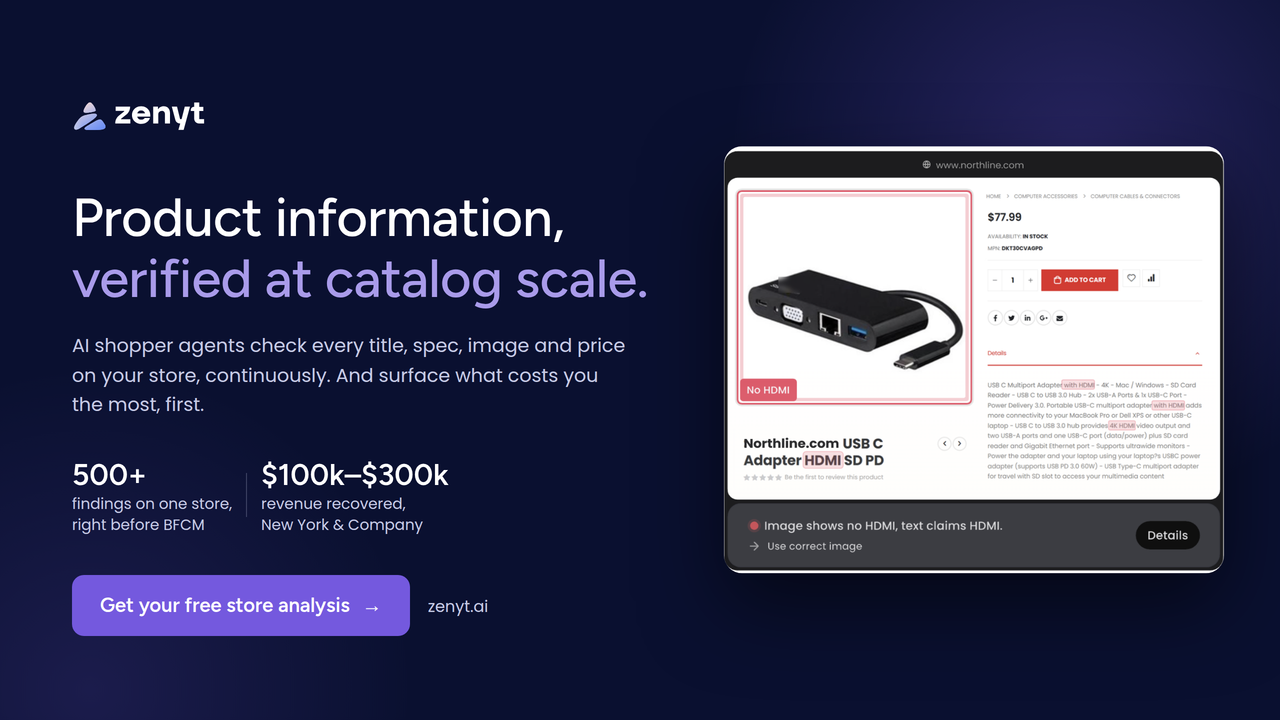
Right now, somewhere on your store, a photo shows pockets while the description says none.
A midi dress is labeled full length. A price reads one thing on the page and another in the cart. Across thousands of SKUs and variants, no team can browse every page before customers do.
Zenyt's AI shopper agents review your entire store the way a customer would, checking every title, spec, image, and price against your source of truth, continuously. Then they rank what is costing you the most first.
- New York & Company identified 500+ findings before BFCM and uncovered $100K–$300K in potential revenue.
- Caudalie generated €700K in incremental revenue within 12 weeks.
- LG protected $900K in EBITDA and saved 2,100 working hours.
Your catalog changes every day between now and Black Friday. Get your free store analysis before peak traffic finds the gaps first.
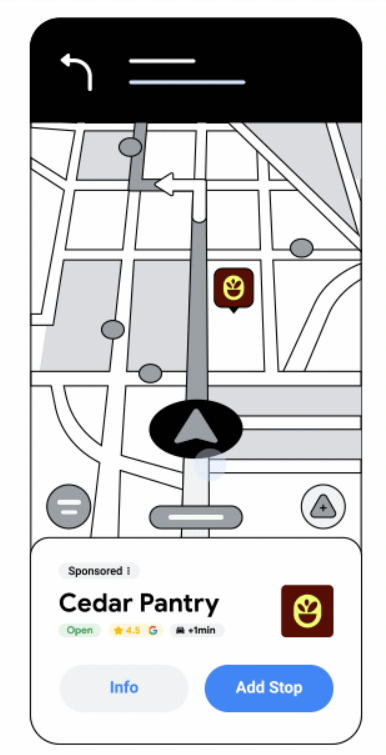
📍 Google is connecting ads more closely to local intent
Google is expanding where local ads can appear, testing more traditional Search campaigns inside AI Mode, and making it easier for physical businesses to connect online advertising with what happens inside stores.
The Breakdown:
Waze Ads expand to 42 countries: Advertisers can now reach drivers across markets including Canada, Australia, the UK, and all 27 EU countries through Performance Max campaigns optimized for store visits, sales, or directions.
Exact and phrase match enter AI Mode: Google is testing regular Search campaigns inside AI Mode, allowing exact and phrase match keywords to trigger text ads when users demonstrate explicit, direct intent.
Google prioritizes nearby customers: A new Local Customer Optimization toggle lets Performance Max shift budget toward in-market consumers nearby, using intent signals across Google Maps, Waze and local Search.
Offline sales become easier to measure: Store Sales in Data Manager will let advertisers connect CRM or Google Sheets data directly, helping Google Ads measure physical purchases and optimize campaigns toward higher-potential walk-in customers.
Google is bringing its ad ecosystem closer to the full customer journey. AI Mode captures high-intent searches, Maps and Waze reach people near physical locations, while easier store-sales reporting helps connect those digital interactions to actual offline revenue.
👨💻 Quick Hits
🛒 REVO generated $1M+ through affiliates, with 96% coming from new-to-brand customers. Levanta shows whether your program is creating incremental demand or paying commissions without expanding its customer base. Download the 7-step checklist and put your roster to the test.
📊 Threads updated profile analytics with AI-generated performance summaries, showing what drives results, how followers versus non-followers engage, which topics perform best, and which communities are discovering posts.
📌 Pinterest renamed several Ads Manager campaign objectives, replacing Conversions and Catalog Sales with clearer options like Leads, Sales and Consideration. Pinterest says the changes won’t affect campaign performance.
📺 YouTube is expanding Watch With, letting more creators broadcast live reactions alongside eligible streams while earning revenue normally. Viewers see the creator and original content together in one stream.
📈 Shopping ad CTRs are rising while impressions decline, with one analysis suggesting AI Overviews may be reducing ad exposure on lower-intent searches while preserving Shopping placements for higher-intent queries.
That’s a wrap for today! Tell us your thoughts about today's content as we line up more Shorts! And don’t hesitate to share this with someone who’d adore it. 🥰