
Make brand personality stick
🫣Your brand lacks a personality that actually sticks, OpenAI is turning ChatGPT into an ad ecosystem, and more!
Hey there Smarty 👋
Are you geared up to catch the latest and greatest in quick shorts?
And just a quick heads-up! If you stumbled upon us through a friend, make sure to subscribe here! That way, you’ll never miss out on the trending shorts.

🫣Your Brand Personality Has No Gravity
A creator-led brand can go slightly off-script and recover instantly. The creator's actual personality is the correction mechanism. The audience stays because the thread is a person.
A retail brand has no such gravity. The personality lives in a style guide nobody reads, a Slack thread from eight months ago, and the heads of whoever is currently on payroll. When someone leaves, a piece of the brand leaves with them. Nobody notices until the feed looks generic and the team is quietly asking, "does this sound like us?" on every single post.
This is not a talent problem. It is a structural design flaw.
Most teams respond to brand drift by writing better guidelines. More adjectives. A tone section. A values page. A "we never say" list buried on page 11. None of it works at the scale it needs to, because guidelines describe the brand. They do not travel with the work.
Two things actually fix it:
Define the brand by its constraints, not its characteristics. What will it never sound like? What aesthetic will it never borrow from a competitor, no matter how well that competitor is performing? What topics will it never touch, even when every other brand in the space is jumping on them?
An adjective list tells people what to aim for. A constraint list tells people what to kill before it ships. The second list is more useful, more specific, and almost nobody has one. Write the constraint list first.
Move enforcement to the creation layer, not the review layer. Review catches drift after it has already entered the work. Enforcement prevents it from entering at all.
The difference compounds fast: every piece of content that skips review because it is already right is one less correction queued, one less "this doesn't sound like us" conversation that slowly erodes the team's shared sense of what the brand actually is.
This is especially urgent now. AI tools have accelerated content production to a speed where drift no longer happens over quarters. It happens across a single afternoon. Every deck, brief, and asset your team prompts without guardrails is a brand liability that ships before anyone can flag it.
Templafy works inside PowerPoint and enforces your brand rules automatically on every AI-generated presentation your team builds, no review cycle required. You can try Templafy here for free
Run the new intern test. Could someone in their first week reject a bad post without asking for permission? If the answer is no, your brand personality has not been operationalized. It has just been documented.
The brands that win in an interest-based algorithm environment will not be the loudest. They will be the most consistent.
Consistency at scale does not come from discipline. It comes from structure.
Build the structure.
Together with Tatari
Meta Didn't Get Harder. You Just Hit the Ceiling.
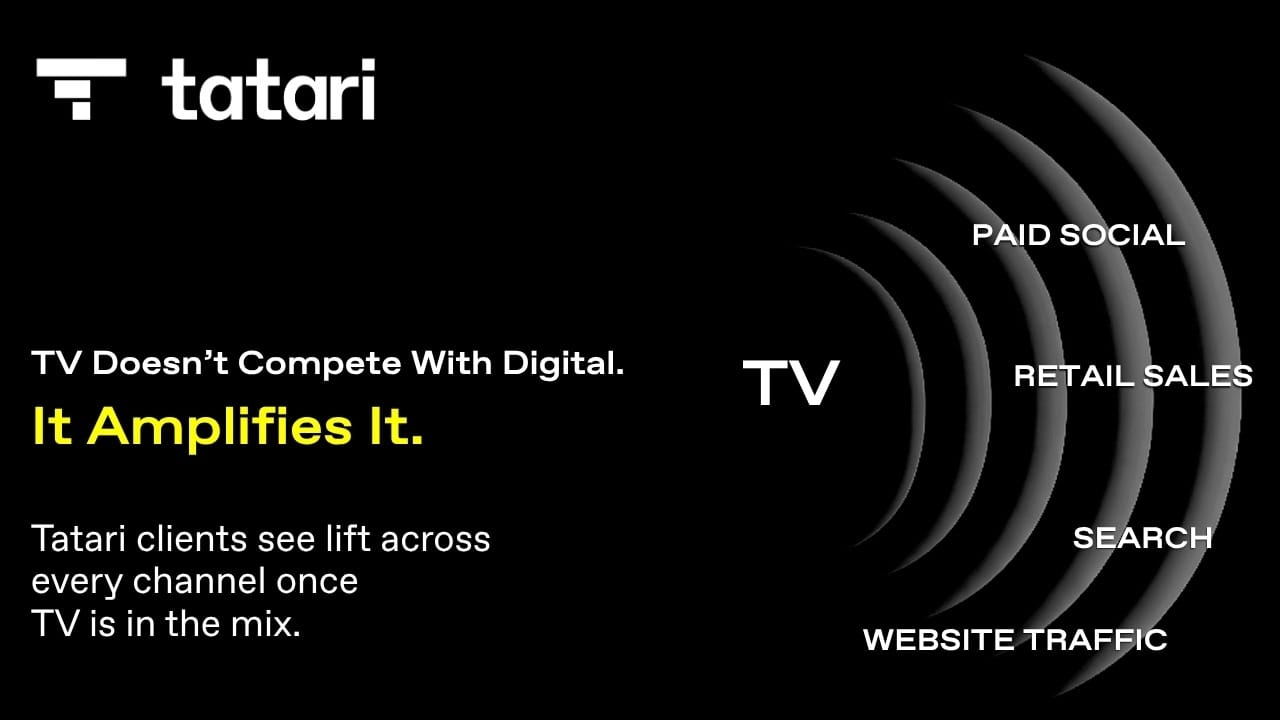
You've been told TV is out of reach. What nobody mentioned is that the measurement gap closed, the minimums dropped, and the brands hitting their numbers right now didn't stumble onto some new creative angle.
They opened a different channel entirely.
Tatari is a TV buying platform that lets you run across linear TV, streaming, and direct publisher buys, all from one place.
You see exactly where every ad aired, so nothing is hidden, and nothing is wasted. Every dollar ties back to actual site visits, signups, and purchases, not impressions that look good in a report and prove nothing in your books.
- Aroma360 cut CPA by 80% and doubled ROAS from a $14K linear pilot
- Knix hit a 70% lower CPA and 9,000 site visits within 5 minutes of a single TV spot airing
- Calm cut CAC by 52% and drove 612K incremental installs running linear and streaming together
Over 400 brands already run TV this way. You're either in that group, or you're funding their growth with every Meta dollar you spend.
Book a free demo and see what your numbers look like on TV!
💰 ChatGPT Is Quietly Building a Serious Advertising Platform
OpenAI made three significant advertising moves this week, launching a real-time Ads Manager, adding cost-per-click pricing, and expanding ads to logged-out users, signaling a rapid push to turn ChatGPT into a full-scale ad platform.
The Breakdown:
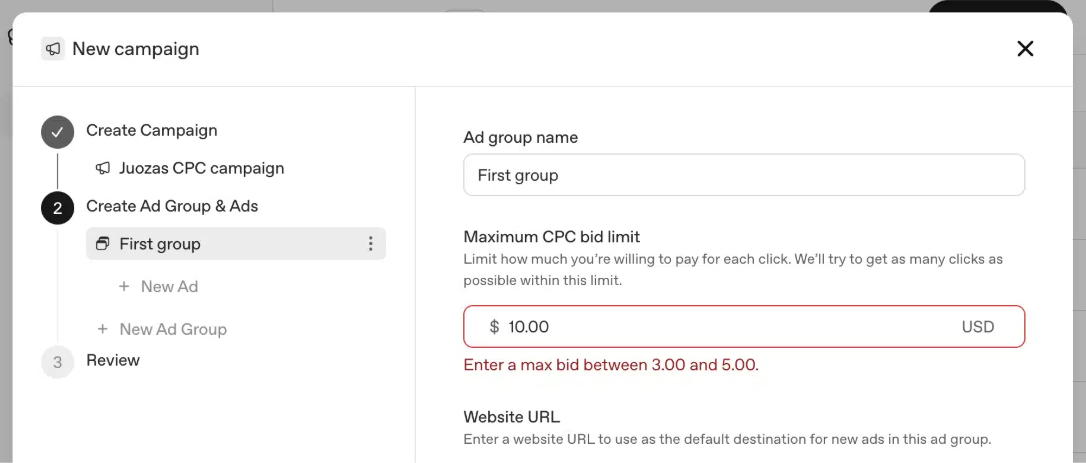
A Real Ads Manager Is Finally Here - OpenAI is testing a proper Ads Manager dashboard, letting advertisers run, monitor, and optimize campaigns in real time. Until now advertisers were relying on weekly CSV files. Brands like Best Buy and Expedia are already appearing in early tests.
ChatGPT Now Has Pay Per Click - OpenAI is testing CPC ads with clicks priced between $3 and $5, letting advertisers pay only when users click. CPMs dropped from $60 to around $25 since launch, and CPC helps offset that decline by tying revenue to measurable outcomes.
Ads Are Now Reaching Logged-Out Users Too - ChatGPT is showing ads to unauthenticated users, quietly expanding available inventory without a formal announcement. Ads are integrated into conversation responses rather than displayed as banners and are described as relatively unobtrusive.
OpenAI is projecting $2.5 billion in ad revenue for 2026. Advertisers struggled to spend due to limited inventory despite the minimum dropping from $200,000 to $50,000; logged-out users fixed that. Proving intent remains the real challenge before serious budget follows.
👨💻 Quick Hits
⚡ Particle for Men cut whitelisting costs by 42% and ran 11 Meta ads in one month after switching to Insense because sourcing, briefs, contracts, payments, and usage rights all live in one place. First creator applications come back in 48 hours, content is ready in 14 days, and no retainer is required to get started. Book a free strategy call before April 24 and get $200 toward your first campaign.
📊 Instagram rolled out an updated Insights UI with new tabs and metrics like share rate, skip rate, and views over time, making it easier for creators to track performance and audience engagement.
🔍 TikTok now lets creators manage keywords added to their videos, enabling them to refine discovery by adding or removing terms to better match search intent and reach relevant audiences.
📉 Google AI Overviews CTR is rebounding, rising from 1.3% to 2.4% in early 2026, with cited pages gaining more clicks while non-cited results see significant drop-offs in traffic.
🛒 New MiQ research shows 42% of consumers now describe their purchase journey as “entirely random,” with constant device-switching, AI usage, and social discovery reshaping how and when buying decisions happen.
That’s a wrap for today! Tell us your thoughts about today's content as we line up more Shorts! And don’t hesitate to share this with someone who’d adore it. 🥰