
The Metric That Reveals Cracks
🛒The customer service metric that reveals which of your post-purchase emails is quietly broken, Gemini now powers Google’s entire advertising and shopping infrastructure stack, and more!
Hey there Smarty 👋
Are you geared up to catch the latest and greatest in quick shorts?
And just a quick heads-up! If you stumbled upon us through a friend, make sure to subscribe here! That way, you’ll never miss out on the trending shorts.

Together with Insense
You don't have a creator problem. You have a workflow problem.
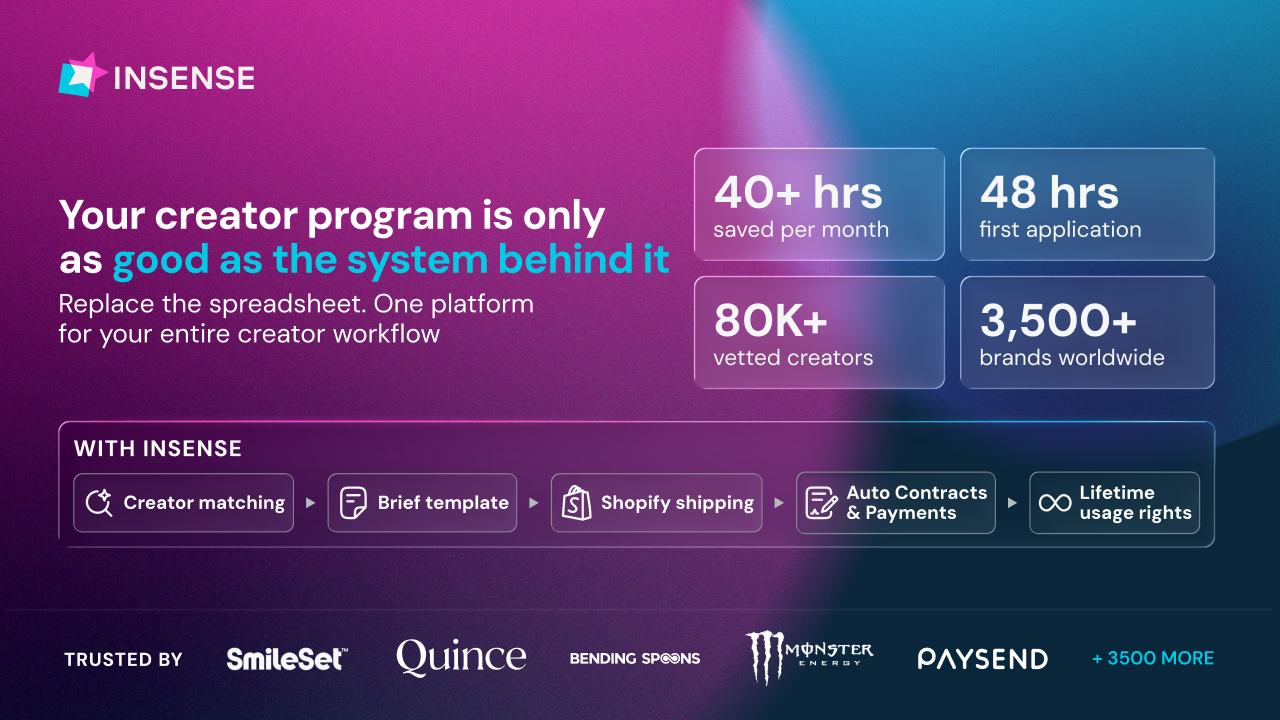
A creator goes quiet. A package gets lost. Someone forgot the contract. You're two weeks behind on the content your paid team is waiting on. The fix isn't hiring another person. It's not doing it manually anymore.
Insense is the self-serve platform built to replace that chaos.
One place to receive creator matches from 80,000+ vetted profiles, run briefs, ship product, automate contracts and payments, and own full lifetime content rights.
The results speak for themselves:
- Nurture Life cut turnaround time from 2 months to 2 weeks using just one marketer and Insense
- Solawave received 180+ ad-ready assets in a single month by simply shipping products
- Matys Health achieved 12× reach through Spark Ads on TikTok
Over 3,500+ brands, like Quince, Monster Energy, and Paysend, get first applications in 48 hours and save 40+ hours a month. That's what fixing the workflow looks like.
Book a free strategy call by May 31st and get a $200 platform credit towards your first campaign.
👀 The Metric That Reveals Cracks
Customer service teams measure tickets resolved per hour, average handle time, and CSAT. None of these answers the question that actually matters: which post-purchase email should have prevented the ticket in the first place?
Tickets per 100 orders, broken down by the upstream email that failed to communicate the answer, is the metric most teams aren't running. It turns customer service from a cost center into a diagnostic for the entire post-purchase program.
Tag Every Inbound Ticket By Which Email Should Have Prevented It
Audit the last 30 days of customer service tickets and tag each by the upstream email that should have answered the question.
"Where's my order" tickets trace back to the shipping notification. "How do I use this" tickets trace back to the how-to email or the order insert. "When will my subscription ship" tickets trace back to the subscription confirmation. "What's your return policy" tickets trace back to the order confirmation or the FAQ link inside it.
The tagging is the diagnostic. Each high-volume tag points to a specific email that's underperforming.
Calculate Preventable Ticket Volume As A Percentage Of Orders
Most brands measure CS volume in absolute terms (tickets per week, tickets per agent). The smarter metric is preventable tickets per 100 orders.
A healthy DTC brand sits at 2-4 preventable tickets per 100 orders. Above 6 indicates the post-purchase email program is structurally failing.
The number is comparable across time and across brand size, unlike absolute ticket volume, which scales with order volume regardless of whether the program is improving or degrading.
Use The Per-Email Tag Distribution To Prioritize Rebuilds
Tag distribution tells you which email to fix first. If 40% of preventable tickets come from "where's my order" questions, the shipping notification is the priority rebuild. If 30% come from "how do I use this," the how-to email needs work.
Most teams rebuild post-purchase emails based on what they think is broken. The tag distribution shows what's actually broken, ranked by ticket volume. The rebuild prioritization is operational and self-funding, because each prevented ticket saves CS labor.
Customer service is a downstream symptom of the post-purchase program. The tickets are telling you which email failed.
🧠 Google Marketing Live 2026: Gemini Is Now Running the Entire Ad Stack
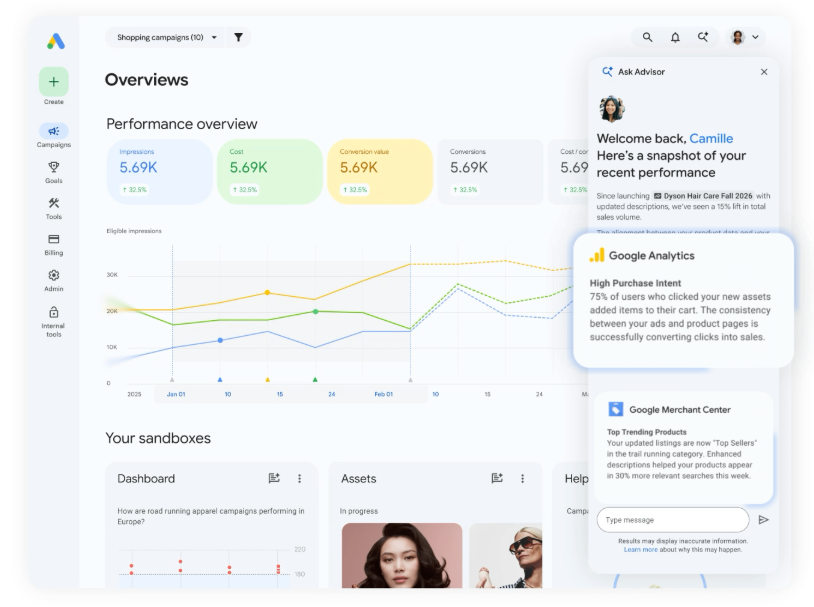
Google Marketing Live 2026 had one clear message: Gemini is no longer a feature; it's the engine behind search, ads, shopping, and measurement. Here's everything that was announced.
The Breakdown:
Search Ads Are Now Conversational - New Gemini-powered formats for AI Mode include Conversational Discovery ads, Highlighted Answers, AI Shopping ads, and Business Agent for Leads.
Ask Advisor Connects the Entire Ad Stack - One AI assistant across Google Ads, Analytics, and Merchant Center, build campaigns, analyze performance, and get recommendations without switching tools.
Shopping Got a Full AI Overhaul - Universal Cart now supports AI checkout, Klarna and Affirm integrations, and cross-retailer experiences across Search, YouTube, and AI Mode.
Asset Studio Now Generates Creative From Prompts - Gemini Omni powers image, video, and text generation inside Asset Studio, plus 1-Click Creative Testing for faster asset optimization.
Demand Gen Expanded Across More Surfaces - YouTube creator tools, Google Maps inventory, dynamic product videos, and AI-assisted campaign setup all added to Demand Gen.
Measurement Gets Smarter With Meridian and QFCs -Meridian marketing mix modeling is now inside Analytics 360, alongside Qualified Future Conversions, a new Gemini-powered predictive revenue metric.
Merchant Center Gets AI Discovery Tools - AI Performance Insights, Conversational Attributes, and Ask Advisor integration help retailers optimize feeds for conversational shopping across Search and AI Mode.
Gemini now touches every part of the Google marketing stack, from how ads are built to how performance is measured and how products get discovered
Together with The Shift
Most AI content is fascinating. None of it is useful.
You’ve read the AI breakdowns. Watched the million AI explainers. Nodded along to the hot takes.
And then opened a blank doc and had no idea what to actually do.
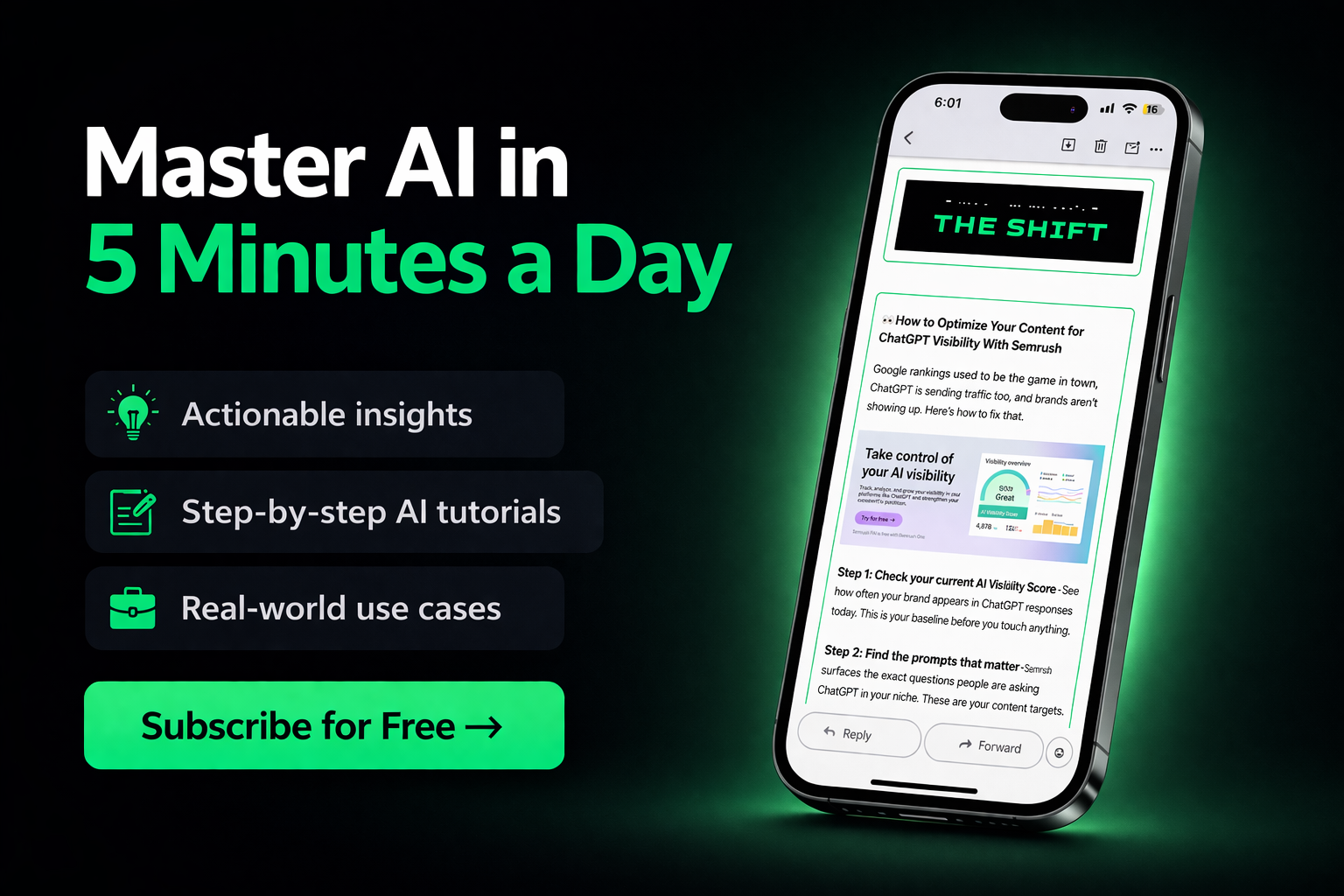
The Shift is a newsletter built to help you in moments like this. Every tool covered works in the real world, and every prompt in the 1000+ library solves something you’ll actually hit.
3,000+ vetted tools. 1000+ tested prompts. Daily newsletter.
And right now, 3 subscribers win a free 1-year Claude Pro subscription. One click to enter.
👨💻 Quick Hits
💼 LinkedIn says it will reduce the reach of low-quality AI-generated posts, comments, and fake profiles, despite aggressively adding AI writing tools across the platform.
🤖 LinkedIn is becoming a dominant source for AI chatbot answers, with personal expert posts, articles, bullet points, and structured text outperforming company pages in B2B AI search visibility.
🤖 Reddit’s AI influence goes beyond training data. Real-time licensing deals with Google and OpenAI, plus Reddit’s human-style product discussions, make it a top source for AI citations and recommendations.
📊 Microsoft Clarity now reveals the “grounding queries” Copilot uses to retrieve and cite content, giving SEOs rare visibility into AI search behavior, Bing ranking correlations, and AI-friendly content structures.
That’s a wrap for today! Tell us your thoughts about today's content as we line up more Shorts! And don’t hesitate to share this with someone who’d adore it. 🥰