
AI Max test timing
🧪 Run Google’s one-click AI Max test now or wait until January, Google and Microsoft introduce new controls for publishers to limit AI content use, and more!
Hey there Smarty 👋
Are you geared up to catch the latest and greatest in quick shorts?
And just a quick heads-up! If you stumbled upon us through a friend, make sure to subscribe here! That way, you’ll never miss out on the trending shorts.

Together with Insense
Your ad account doesn’t need UGC fast. It needs content every week.
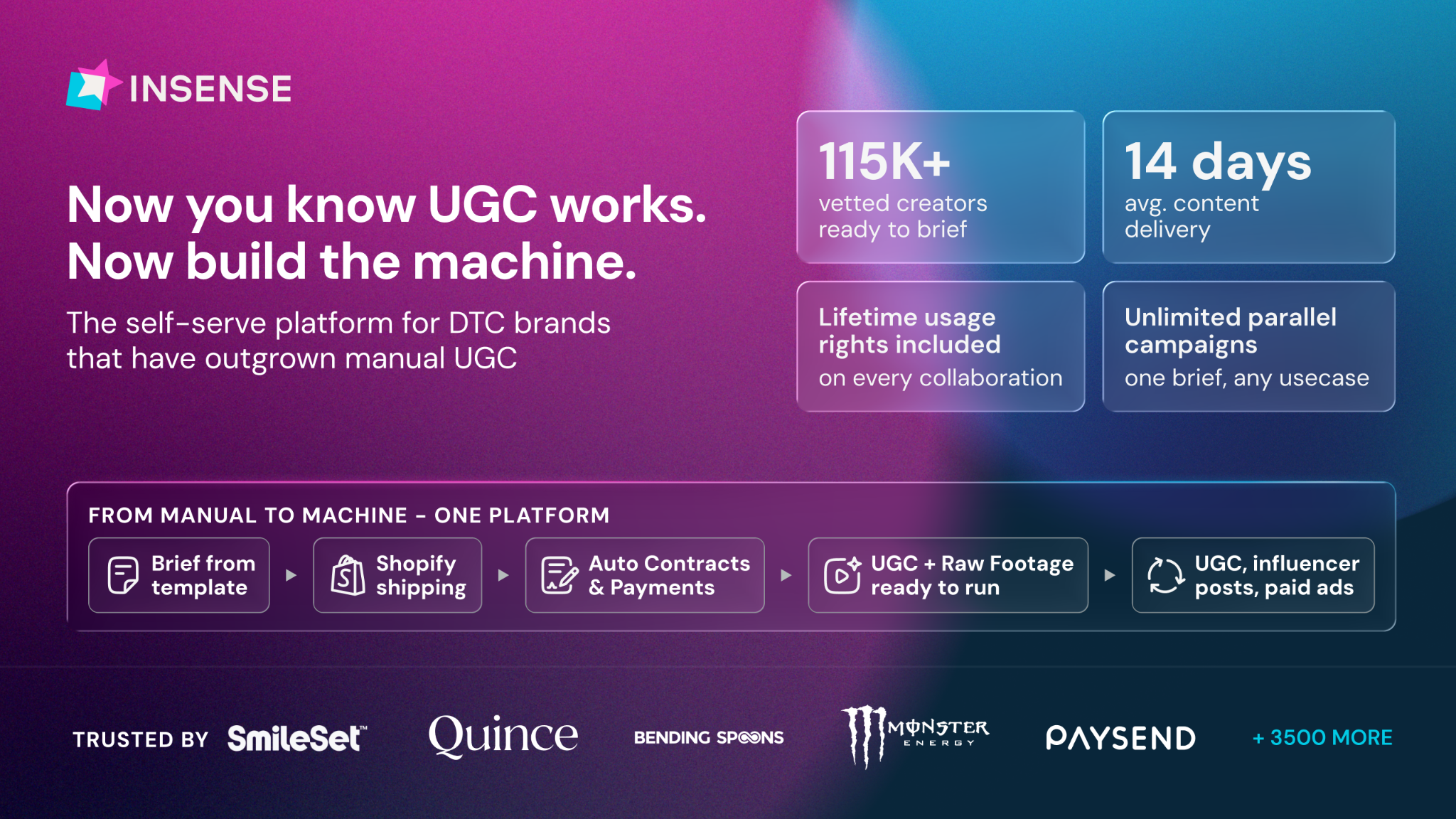
Most brands stall between batches, when the last round of creative is spent and the next one isn’t ready.
Since Meta’s Andromeda update, the algorithm rewards new concepts and new faces. A batch of 16 videos exhausts in weeks, and then it’s another round of briefs, outreach, and chasing.
Insense turns creator content into a monthly flow:
- Brief once, then rehire the creators whose ads performed
- Get 20+ raw clips per creator to cut into new hooks and angles
- Build a roster of vetted creators you can book every month
- Keep lifetime usage rights on everything
Book a free strategy call by November 6th and get $200 toward your first campaign.
P.S. Q5 rewards brands that keep fresh creative coming after the Black Friday rush. Go in with a cadence, not a single shoot.
🧪 Google's one-click AI Max test: run it now or wait until January?
Setting up a clean AI Max test used to take an afternoon of duplicating campaigns. Now it may take one click.
Search Engine Roundtable reported on October 26 that Google's AI Max FAQ mentions a one-click experiment. Eligible accounts may see a recommendation that sets up a 50/50 split between a base Search campaign and an AI Max version. In the AI Max arm, search term matching and asset optimization can be switched on or off per ad group.
Easy setup changes nothing about timing. Black Friday lands on November 27. Here's how to decide.
Test now if:
- You have a mid-sized Search campaign with steady volume and no big sale riding on it.
- The test can end by November 20.
- You can live with half that campaign running on an unproven setup for two to three weeks.
The payoff: real data on whether AI Max finds profitable queries your keywords miss, in time to use it for the holidays.
Wait for January if:
- The campaign drives a large share of Q4 revenue.
- The test would overlap Black Friday or Cyber Monday.
- Your team won't have time to check search terms weekly during the test.
The payoff: steadier demand and cheaper clicks, which make the result easier to read and cheaper to lose.
The tiebreaker
Can the test finish before peak week? A test running through Black Friday mixes the experiment with the biggest demand swing of the year, and you won't know which one moved the numbers.
The call
Do both, on different campaigns. Run the one-click test now on one secondary campaign with an end date before November 20, and leave core revenue campaigns untouched until January. In my judgment, that's the best balance of learning and risk.
During the test, watch:
- Conversion value and cost per conversion in each arm
- New converting search terms in the AI Max arm
- Search terms you'd never pay for, added as negatives the same day
Read it fairly
Compare the arms on conversion value per dollar, and give the test at least two full weeks before judging. Early days swing while the system learns, and a verdict on day five is usually a verdict on noise.
Go check
Open your Recommendations page and look for the experiment offer. If it's there, pick the campaign you'd be least nervous about splitting, and set the end date before you click.
🔐 Google and Microsoft introduce new controls for publishers to limit AI content use
Google and Microsoft have announced new controls allowing website owners to decide how AI companies use their content, joining OpenAI and Anthropic in supporting industry-wide preferences for AI training.
The Breakdown:
- Google plans to support a shared AI training control through robots.txt in 2027, allowing publishers to opt out across participating AI providers without configuring separate instructions for each company.
- Google will interpret the shared opt-out as a Google-Extended restriction unless explicitly overridden, affecting both Gemini model training and content grounding in Gemini Apps.
- Microsoft is introducing three controls: AI Training, AI Grounding and Limited Grounding, letting publishers separately restrict model training, AI-generated answers and third-party grounding services.
- Microsoft will begin honoring the new preferences on February 1, 2027, with publishers using older NoArchive and NoCache directives required to update their settings by March 1.
These changes give publishers more flexibility to protect their content while remaining eligible for traditional search results. However, restricting AI grounding could reduce visibility in AI-generated answers, making it important to balance content protection with potential referral traffic.
Together with Omnisend
Imagine beating a month’s email revenue with one send
You’d probably double-check the numbers.
Enflow Digital did exactly that for a skincare client ahead of BFCM. One plain-text email sent through Omnisend to 1,676 recipients generated nearly $18,000, beating the previous month’s broad-audience campaigns combined.
Omnisend helped the team find the right customers to send it to. Its segmentation and MCP capabilities let them uncover purchase patterns in minutes.
Co-founder Karolina shares how they pulled it off with Omnisend, from choosing the audience to making the offer worth opening. Worth a read (or a watch) before you hit send on your own BFCM campaigns.
New to Omnisend? It's an email and SMS marketing platform for ecommerce used by more than 150,000 brands, generating an average of $79 for every $1 spent. Migration is free and takes up to five business days.
👨💻 Quick Hits
🤖 Meta updated its AI-powered Creator Assistant with proactive trend alerts, AI-generated storyboards, draft feedback, and automated comment replies, helping Facebook and Instagram creators improve content and audience engagement.
🛡️ TikTok launched a Brand Safety Center with new protection resources, including AI safety guidance, brand perception insights, copyright reporting and counterfeit protections, alongside expanded moderation efforts across Asia Pacific markets.
📈 Digital advertising is projected to capture 75% of U.S. local ad spending by 2027 and 80% by 2030, driven by streaming video growth, according to Borrell Associates.
🔎 Google's AI Overviews are turning search into personalized buying journeys through follow-up questions, creating new SEO opportunities for brands that optimize content across every stage of the customer journey.
That’s a wrap for today! Tell us your thoughts about today's content as we line up more Shorts! And don’t hesitate to share this with someone who’d adore it. 🥰