
Could you prove you had the rights?
📄 Only 38% of brands can produce a signed usage-rights document on demand for a whitelisted ad. Most are running exposed right now, YouTube and Google are moving shopping closer to the content, and more!
Hey there Smarty 👋
Are you geared up to catch the latest and greatest in quick shorts?
And just a quick heads-up! If you stumbled upon us through a friend, make sure to subscribe here! That way, you’ll never miss out on the trending shorts.

📄 If a creator disputed a whitelisted ad today, could you prove you had the rights?
Only 38% of brands running whitelisted creator ads can produce a signed usage-rights document on demand. That means the majority of teams currently spending through a creator's handle would struggle to prove, right now, exactly what they were authorized to run, for how long, and on which platforms, if the creator or their representative challenged it.
This gap rarely surfaces during the campaign itself, since everything runs smoothly while both sides remember the original agreement.
It surfaces months later, when a creator's team reviews their whitelisting history, notices an ad still running past the agreed window, and asks for proof of the current terms.
A brand with a real document answers that in an email. A brand relying on a Slack thread or a verbal understanding from six months ago is negotiating from a position of not actually knowing what it agreed to.
Pull your currently live whitelisted ads and check for a real document behind each one
Start with what's actually running today, not your full historical roster. For every whitelisted ad currently live, confirm there's a signed document specifying the platforms, the duration, and the expiration date, not a DM approval or an assumed renewal.
Where that document doesn't exist or can't be located quickly, that ad is running on undocumented terms right now, and the exposure exists whether or not a dispute ever surfaces. Running this check across a growing roster is part of what Insense supports for ecommerce brands, trusted by over 3500 brands and agencies.
Build expiration tracking into the workflow, not a spreadsheet nobody opens
A signed document at the start of a campaign is only useful if someone is tracking when its terms run out, and whitelisting agreements expiring silently while an ad keeps running past the agreed window is one of the most common ways this gap actually turns into a dispute.
Flag every whitelisting agreement's expiration date at the point it's signed, and set the ad to pause automatically or trigger a renewal conversation before that date passes, rather than relying on someone remembering to check a document six months later.
Treat documentation readiness as a standing audit, not a one-time cleanup
A roster that passes this check today can fail it again in three months as new whitelisting agreements get signed under the same informal habits that created the original gap.
62% of brands running whitelisted ads right now can't prove what they're actually authorized to run. The dispute doesn't create that exposure. It just reveals it. You can book a free strategy call to map creator availability in your niche and get $200 toward your first campaign.
Together with AirOps
The Buying Decision Starts on Pages You Don’t Own
Your team may appear strongly in Google AI Mode and disappear when the same buyer asks Claude. That blind spot can cost consideration while your reports still look healthy.
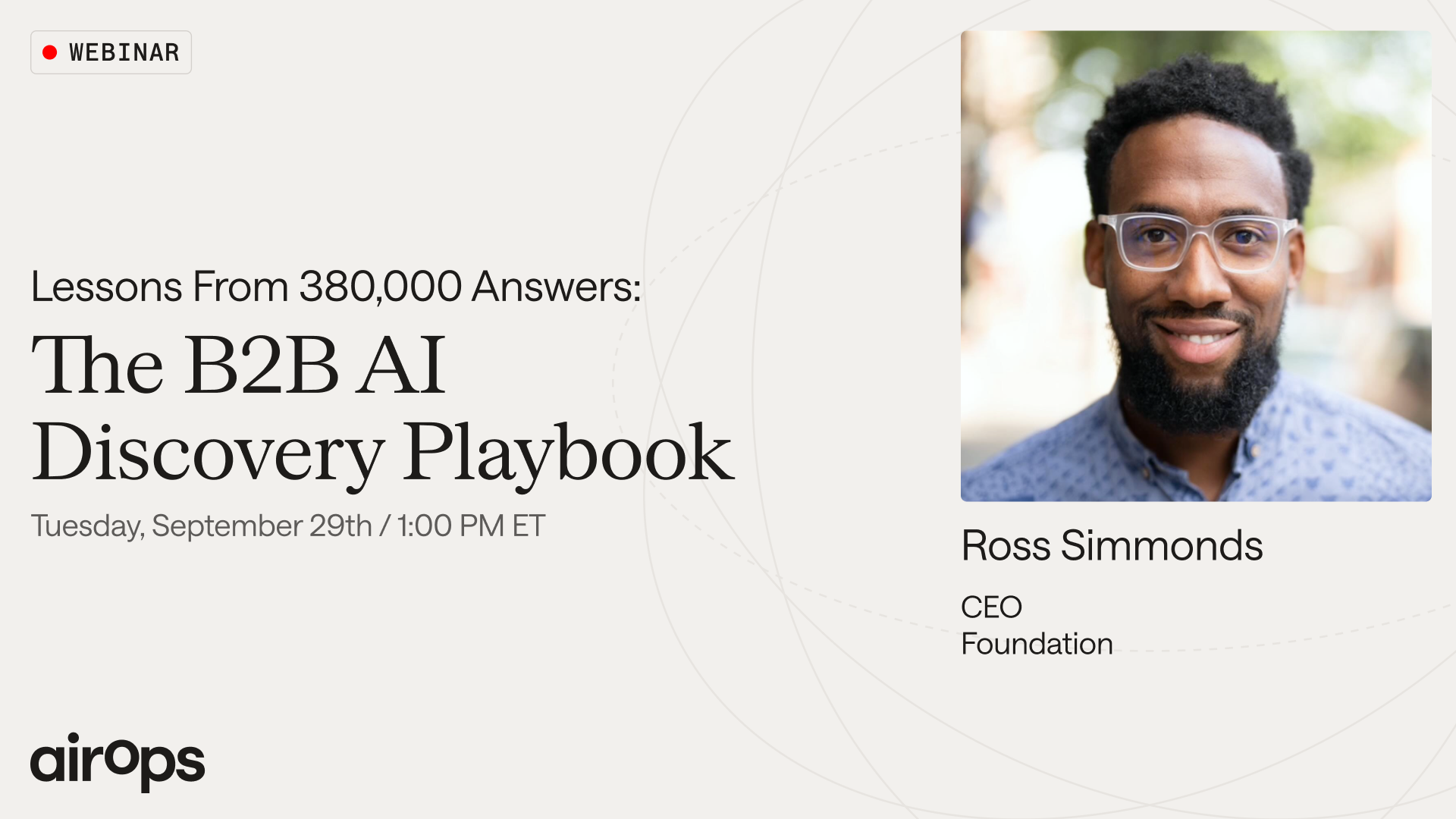
On September 29, Foundation CEO Ross Simmonds and AirOps search marketing lead Josh Spilker will reveal how six AI platforms build software recommendations, using evidence from nearly 380,000 answers and 3 million citations.
By the end of the session, you’ll be able to:
- Decide whether to strengthen your vendor pages or earn more review-site coverage, based on which source type captures the most citation share.
- See how Google AI Overview and AI Mode build recommendations differently from ChatGPT, Claude, Gemini, and Perplexity.
- Rank G2, Reddit, YouTube, LinkedIn, Capterra, and Gartner by their influence before committing your next quarter’s content budget.
You’ll leave with a repeatable way to understand visibility shifts across AI-generated shortlists and decide what your team should fix first.
Can't attend the session live? Register anyway, and you’ll get the recordings in 24 hours.
🛍️ YouTube and Google are moving shopping closer to the content
Google is making product discovery and buying increasingly native to its platforms, with AI-assisted shopping on YouTube, more ways for creators to monetize recommendations, smarter product tags and checkout directly inside AI Mode and Gemini.
The Breakdown:
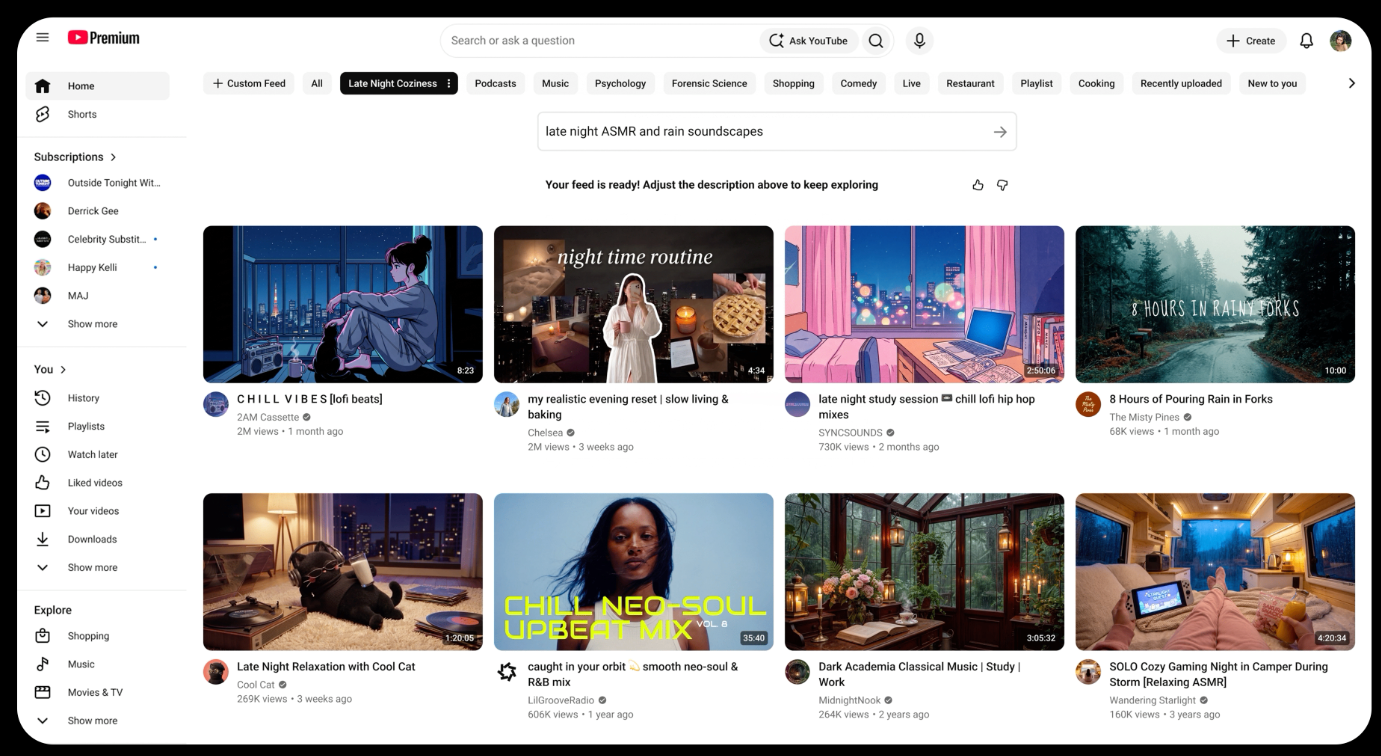
YouTube Becomes a Shopping Assistant - Ask YouTube can turn product searches into comparison tables of relevant videos, then answer follow-up questions directly while viewers watch reviews.
Creator Shopping Goes Global - YouTube Shopping has 1.3M+ creators and GMV has grown 13x in two years. The affiliate program will reach 35 countries, with Amazon tagging expanding to India and Brazil.
Product Tags Get Smarter - YouTube is testing dynamic shopping tags that appear on videos when viewers show buying interest and stay in descriptions when they do not, without affecting reach or recommendations.
Google Moves Checkout Into AI - Eligible Shopify products can now be automatically included in native checkout across Google AI Mode and Gemini, letting shoppers complete purchases without returning to the merchant’s website.
Google is reducing the distance between watching, researching, and buying. YouTube can help shoppers compare products and surface purchase links when interest is strongest, while AI Mode and Gemini can take the journey through checkout, shifting more of the shopping experience onto Google’s own surfaces.
👨💻 Quick Hits
💰 X launched an invite-only Grok Bot Template Rewards program, paying creators through X Money when other users adopt and repeatedly use their AI agent templates for everyday tasks.
🎬 YouTube is introducing AI-powered Conversational Editing, letting creators edit Shorts using natural-language prompts to combine clips, add music and filters, sync cuts to beats, create loops, and refine hooks.
📊 Microsoft Ads is expanding its API with search-term-to-landing-page reporting, device exclusions for Performance Max, and LinkedIn segment targeting, giving advertisers deeper visibility and more control over automated campaigns.
🛒 45% of Americans have used or would consider using an AI shopping agent, while 69% would let one spend up to $100 on groceries or clothing, despite persistent security and privacy concerns.
🥳 Events
🔥 What Makes a Creator Program Worth More Budget
October 21 | Online | Free Festival
See how experienced teams prove creator impact before asking for more spend. Leaders from Adobe, ŌURA, Edelman, Ogilvy, and more will break down the metrics, campaign decisions, and operating systems that help creator programs earn trust, budget, and room to scale.
Can't attend every session live? Register anyway, and you’ll get the recordings in 24 hours.
🔥 Where to Put Your Next Growth Dollar Beyond Meta
October 29 | The Glasshouse, NYC | Free In-Person Event
Hear how Reddit CEO Steve Huffman thinks about discovery, how Cody Plofker helped scale Jones Road Beauty to nine figures, and how brands like Liquid I.V. and MANSCAPED use TV to drive measurable revenue. Bring your hardest acquisition question and leave with a sharper channel plan.
That’s a wrap for today! Tell us your thoughts about today's content as we line up more Shorts! And don’t hesitate to share this with someone who’d adore it. 🥰