
You’re Overfeeding One Feed
🚫 One channel caps growth networks break it, Meta and Shopify expand performance opportunities, and more!
Hey there Smarty 👋
Are you geared up to catch the latest and greatest in quick shorts?
And just a quick heads-up! If you stumbled upon us through a friend, make sure to subscribe here! That way, you’ll never miss out on the trending shorts.

Together with Insense
Turn One Creator Drop Into Weeks of Q5 Ads
This is the week where every ad starts dying at the same time, and teams scramble for anything new to ship. Doing nothing means pouring budget into creatives that stopped converting yesterday.
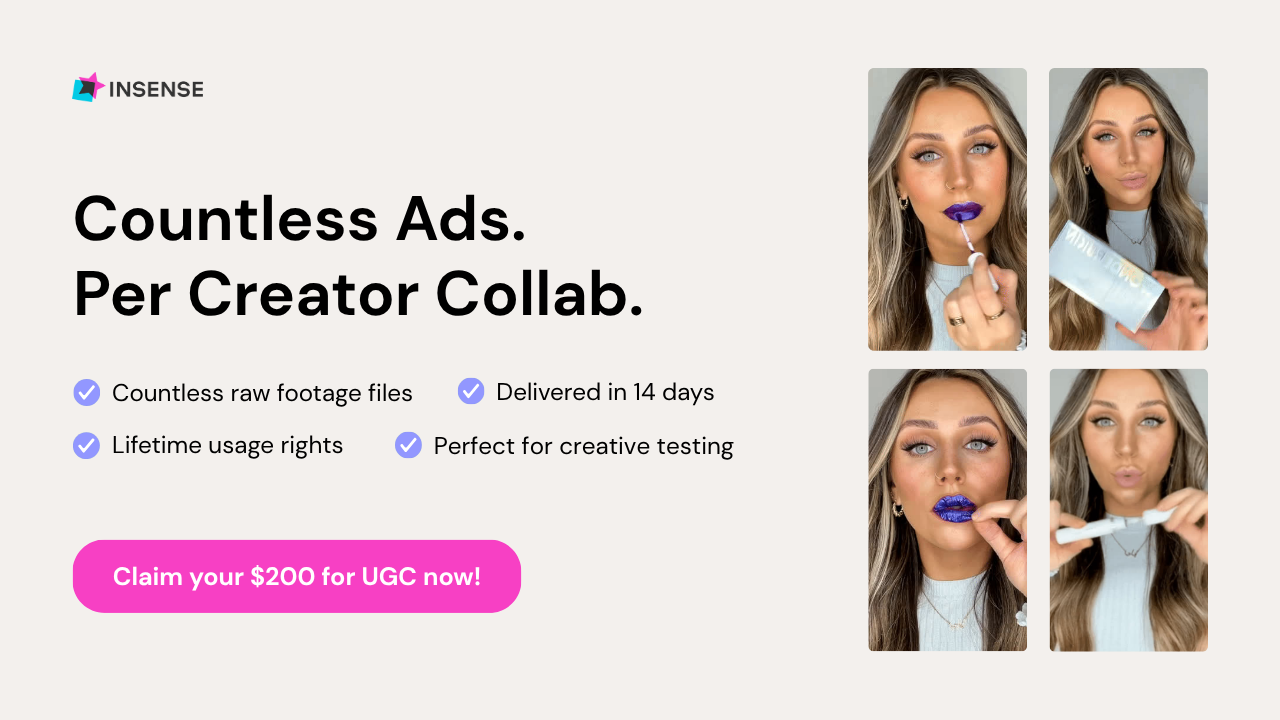
This is exactly where Insense saves you. You get fast, affordable UGC at the volume Q5 demands without blowing up your team’s bandwidth.
- 20+ raw assets from each creator you can spin into dozens of variations.
- 14-day turnaround so you never fall behind rising CPMs.
- Lifetime usage rights, so every winning cut keeps earning for months.
- Cost-efficient sourcing that lets you test aggressively
Over 2,000+ brands like Quip, Revolut, and Matys use Insense for one reason: it keeps creative supply high when everything else slows down.
Imagine finishing Q5 with a full folder of fresh ads ready to deploy instead of praying old winners magically revive.
Book a free strategy call by today and get $200 for your first campaign!
🚫You’re Overfeeding One Feed
Here’s the uncomfortable truth most “growth” talk avoids.
One brand account is a bottleneck. It has one voice, one audience graph, one posting velocity ceiling, and one set of creative blind spots. So brands keep squeezing it harder, and then act shocked when growth turns linear, then declining.
The out-of-the-box move is not “make better TikToks.”
It’s horizontal distribution. Not by shouting louder. By showing up in more places that already have attention.
The core mechanism
Instead of building one branded channel, build a Topic Network: multiple content streams where the content is about the customer’s world, not the product.
If the product is toothpaste, the network isn’t “toothpaste tips.”
It’s “fresh breath facts,” “dentist mythbusting,” “first date rules,” “morning routine upgrades,” “confidence habits,” “health hacks that actually work.”
The product appears late, quietly, almost as a punchline. Slide 4 or 5 energy.
Not hidden. Just not desperate.
That single sequencing change matters because TikTok rewards completion and saves, not brand announcements. And humans do the same.
The spicy part
Most brands are still paying to interrupt people.
This play makes the internet do the pre-selling for free, at scale, while competitors argue about hooks and CPMs like it’s 2019.
But the surgical part is what makes it real.
The Topic Network is built, without sketchy tactics
A god-tier operator does not gamble the company on account hacks or gray-market sourcing. The system has to survive.
Here’s the deployable version:
- Design 8–12 “adjacent channels” like a media portfolio: Each channel has one promise, one tone, one viewer identity. No randomness. No brand voice cosplay.
- Use carousels as high-volume “micro-episodes”: Carousels are a distribution weapon because they are cheap to produce, fast to test, and easy for viewers to save. Treat each carousel like: Hook, context, payoff, subtle product bridge, next step.
- Plug in creators and partners instead of pretending to be third-party: The clean way to scale horizontally is via creator pages, affiliate creators, community pages you sponsor transparently, and brand-owned topic pages. The network is still “unbranded content,” but it is not deceptive.
- Run proof-based routing, not hard selling: The product bridge should be one of three things: a quick demonstration, a before-and-after, or a “why this works” mechanism. Then route to a single destination: a mini landing page built for TikTok traffic, not a generic PDP.
- Measure it like an operator: Not vanity views. Track: profile visits, link clicks, branded search lift, and assisted conversions. Compare weeks with and without the Topic Network running. If the halo is real, it will show up in search and site behavior.
The real edge
This is not a “TikTok trick.” It is a distribution architecture.
Brands that master it stop relying on one channel to do all the work, and they stop mistaking ad optimization for growth strategy.
🤝 Meta and Shopify Expand Performance Opportunities
Meta is making creator partnerships far easier to discover, approve, and activate. Shopify is building a new multi-merchant product network that changes how brands get discovered across stores.
The Breakdown:
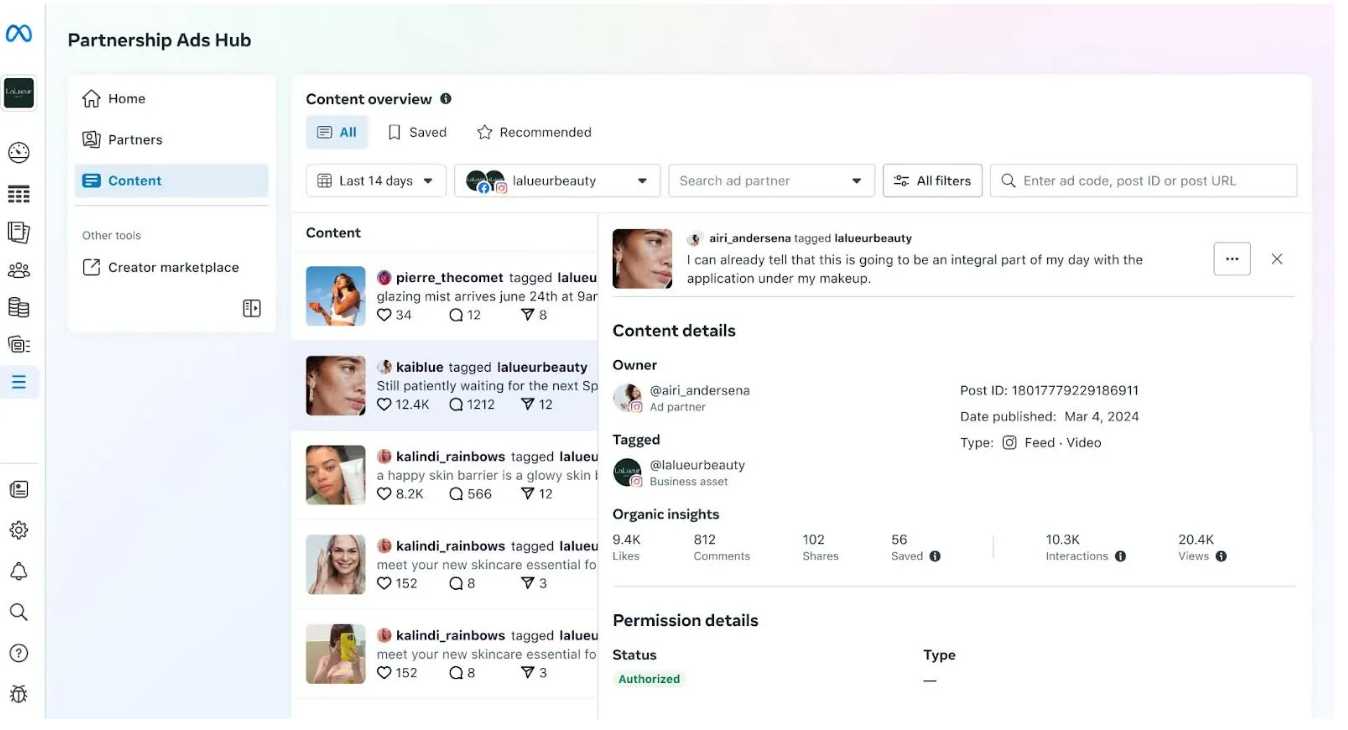
1. Creator Discovery - Meta’s Partnership Ads Hub now surfaces all IG and FB content tagging your brand plus full in-hub metrics, helping marketers identify authentic creator posts faster and convert them into partnership ads that consistently outperform standard campaigns.
2. Streamlined Permissions - Creators can now proactively share ad codes, while Professional Mode profiles enter the partnership pool, giving brands faster approvals and a larger creator supply, reducing CPA friction and accelerating creator-led campaign rollout.
3. Contextual Placement - Shopify’s Product Network will display your products on other merchants’ stores when contextually relevant, letting brands earn high-intent discovery without buying explicit ad slots while shoppers check out everything in one seamless cart.
4. Conversion-First System - Instead of filling ad inventory, Shopify will optimize placements toward purchase likelihood and CPA goals, rewarding merchants with commissions and giving advertisers a new, commerce-native channel that behaves more like PMax but feels more like merchandising.
Performance marketers get two major unlocks: Meta lowers creator activation costs while boosting distribution efficiency, and Shopify opens a conversion-driven discovery channel that expands reach without traditional ad auctions. More scale, less friction, across both creators and commerce.
Together with Lindy
You are not behind on ideas. You are behind on speed.
You know the drill. Competitor research scattered across tabs, unfinished messaging docs, late briefs, and creative that misses the angle. That chaos is not annoying; it is expensive.
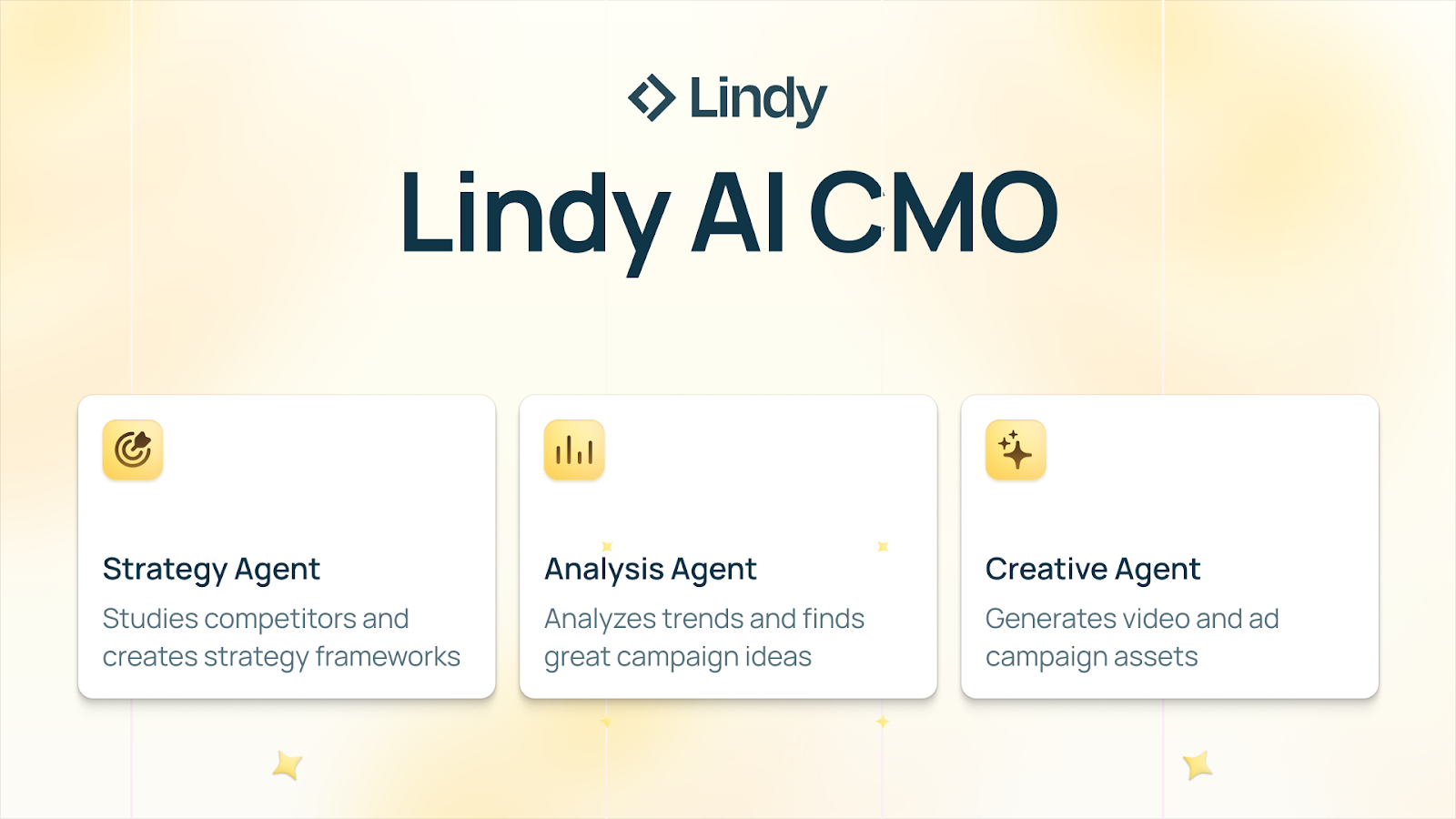
Lindy AI CMO is a suite of powerful agents that ship beautiful marketing campaigns quickly.
Drop in your website, and agents study your competitors, extract angles, draft messaging, create briefs, and generate launch-ready assets, then organize everything in Airtable for a clean approval flow.
- Cut campaign prep from 10 to 14 days down to 1 to 2 days.
- Generate 30 to 80 on-brief variants per angle to accelerate testing.
- Reduce rework and increase weekly experiment volume without extra headcount.
Teams running agent-led workflows consistently ship 2 to 3 times more weekly tests with the same headcount.
🚀Quick Hits
📉 Meta’s latest enforcement report shows less than 1% of content was removed and “precision” hit 90%, but proactive detection of bullying and hate dropped sharply as fake accounts still account for roughly 4%, or over 140 million profiles.
📺 Pinterest is acquiring CTV ad platform tvScientific to bring its 600 million user shopping signals into outcome-based TV ads, adding automated buying, AI optimization, and 15,000 audience segments as it expands Performance+ across new screens.
🔍 Bing is testing Google-style grouped “Sponsored results” blocks where only the first ad is labeled, making paid links blend into organic results and raising concerns after 63% of Google users reported accidental clicks in similar layouts.
🛒 New Bain data shows 70% of U.S. consumers now use AI, 45% daily, with zero click AI overviews handling 65% of product searches, while only 25% trust an agentic AI to manage end-to-end shopping.
That’s a wrap for today! Tell us your thoughts about today's content as we line up more Shorts! And don’t hesitate to share this with someone who’d adore it. 🥰