
You're only seeing 12% of the picture
🔍 ChatGPT and Perplexity share just 11-12% citation overlap, ChatGPT ads hit a $1B run rate, but early advertisers are seeing weak click-through and murky data, and more!

Hey there Smarty 👋
Are you geared up to catch the latest and greatest in quick shorts?
And just a quick heads-up! If you stumbled upon us through a friend, make sure to subscribe here! That way, you’ll never miss out on the trending shorts.

🔍 Tracking one AI engine means missing most of the picture
A brand that carefully tracks its ChatGPT citations and treats that data as a reasonable proxy for "AI visibility" overall is measuring a much smaller slice of the landscape than the effort suggests.
Independent research comparing citation sources across AI platforms found only 11 to 12% domain overlap between what ChatGPT cites and what Perplexity cites for comparable queries. The two engines are pulling from almost entirely different sets of sources to answer similar questions.
That's not a rounding error or a temporary quirk in early-stage AI search. It reflects genuinely different retrieval architectures and source-weighting logic between platforms, which means strong visibility on one engine carries very little predictive value for visibility on another.
A team optimizing against ChatGPT alone is, by this data, blind to roughly 88% of what determines citation on a different major platform serving a meaningful share of AI-driven discovery.
Audit your citation presence across at least three engines before drawing any conclusion
Before deciding your AI visibility strategy is working or failing based on one platform's data, run the same set of category prompts across ChatGPT, Perplexity, and Gemini and compare which sources get cited on each.
Expect the overlap to be low. That's not a sign something is broken. It's the actual shape of the current landscape, and the real value of the exercise is seeing exactly where the gaps sit rather than assuming performance on one platform generalizes to the rest.
Stop treating "AI visibility" as one number
A single blended score across platforms hides more than it reveals when the underlying source sets barely overlap. Strong ChatGPT citation and weak Perplexity citation isn't a wash that averages out to "moderate." It's two separate problems requiring two different fixes, since the sources each platform trusts aren't the same sources.
Report citation presence per platform rather than collapsed into one figure, even though the single number is easier to put in a slide. The collapsed version actively hides which platform needs the actual work.
Build a source strategy that accounts for fragmentation, not one that assumes convergence
Getting cited across genuinely different platforms means diversifying the sources that mention your brand, not optimizing one type of content and assuming it travels.
Tracking citation and mention data across ChatGPT, Perplexity, Gemini, and Google AI Mode in one place, so the fragmentation is visible instead of hidden inside a single averaged score, is what Semrush One is built to surface.
Eighty-eight percent of the picture doesn't show up if you're only checking one platform's mirror. You can see how it works here.
Together with Omnisend
They Switched Before Black Friday and Made $113K
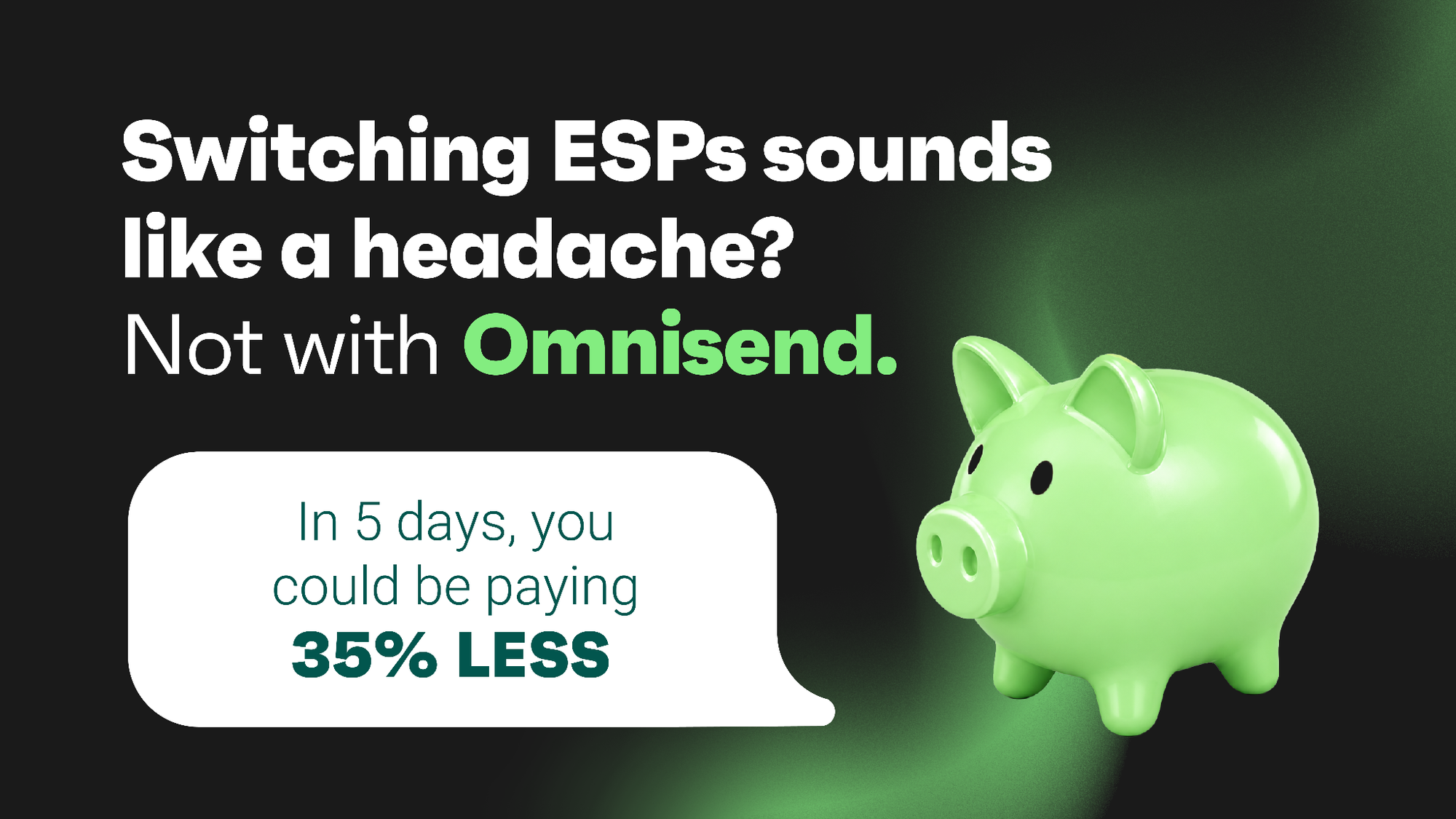
BFCM is the last time anyone wants to risk deliverability or rebuild revenue-driving automations. Yet weeks before Black Friday, Ecom2Win moved a client from Klaviyo to Omnisend.
The migration paid off with $113,000 in attributed email revenue, while email generated 53% of the store’s total revenue during BFCM.
Omnisend made the switch manageable:
- Move without migration costs: Omnisend transfers your setup for free within five business days.
- Protect peak-season revenue: Ecom2Win had the migration completed in 24 hours and its automations rebuilt and checked within four days.
- Reduce ongoing costs: Plans can cost up to 35% less than Klaviyo, while Omnisend customers generate an average of $79 for every $1 spent.
More than 150,000 ecommerce brands now use Omnisend to turn email and SMS into measurable revenue.
With Klaviyo’s SMS pricing increasing, waiting only means paying more while leaving less time to switch safely before peak season.
💰 ChatGPT ads are scaling faster than their performance
ChatGPT’s ad business is growing rapidly, but early advertiser tests show the platform still has work to do on campaign performance and measurement.
The Breakdown:
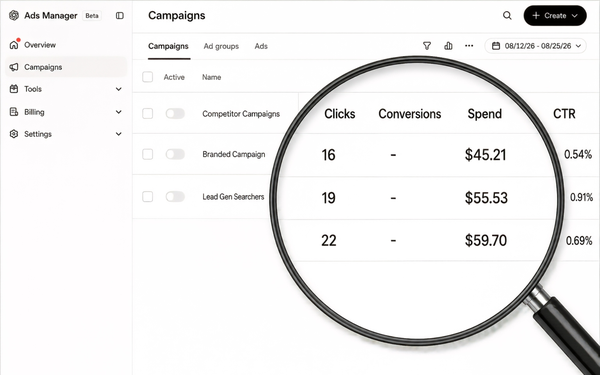
Early ChatGPT Ads are underperforming - One agency reported a 0.6% CTR versus its usual 2%, with clicks costing roughly $7 and generating little meaningful activity afterward.
Advertisers are seeing measurement gaps - ChatGPT’s reported clicks are not always matching Google Analytics, making UTMs important while newer targeting and conversion optimization tools continue to mature.
OpenAI Ads hit a $1B run rate - OpenAI reportedly reached a $1B annualized advertising run rate in roughly 200 days, with self-service ads now expanding across more than 40 countries.
EU rules bring more transparency - The EU designated ChatGPT a Very Large Online Search Engine after reaching roughly 159.1M monthly EU recipients, requiring a public advertising repository within four months.
ChatGPT Ads are scaling quickly, but the ecosystem is still maturing. Better targeting, more reliable measurement, and greater regulatory transparency will determine how valuable the platform ultimately becomes for advertisers.
👨💻 Quick hits
📺 YouTube is letting viewers use their phones as controllers while watching on connected TVs, making it easier to comment, like, subscribe, search, and send videos without interrupting playback. The update also removes the requirement for both devices to share the same Wi-Fi network.
⚖️ Google will keep its AdX advertising exchange after a federal judge rejected the DOJ’s push to force a sale. The court’s earlier finding that Google illegally monopolized parts of the publisher ad tech market remains intact, but behavioral remedies will be imposed instead.
🔎 Google Trends now lets users filter Explore data by predefined categories without entering a search query, making it easier to discover top-searched terms within specific topics, regions, and timeframes while filtering out irrelevant search categories.
📺 YouTube says its larger desktop thumbnails increased engagement with long-form videos despite showing fewer options at once. The company found that reducing choice can make it easier for viewers to decide what to watch rather than abandoning the homepage.
That’s a wrap for today! Tell us your thoughts about today's content as we line up more Shorts! And don’t hesitate to share this with someone who’d adore it. 🥰