
Your welcome flow needs 9 emails
📧 These 9 emails for your welcome flow will close all the gaps, What 13 months of LLM data really shows, and more!

Hey there Smarty 👋
Are you geared up to catch the latest and greatest in quick shorts?
And just a quick heads-up! If you stumbled upon us through a friend, make sure to subscribe here! That way, you’ll never miss out on the trending shorts.

Together with Modash
The Creator Strategy That Finally Scales
Ever wonder how some teams ship endless creator content without studio budgets or production chaos?
It’s rarely bigger teams. It’s co-creation done right.
Most brands rely on standard sponsored posts. One brief. One deliverable. One spike in performance. Then it stalls. That constant reset drains time, budget, and momentum.
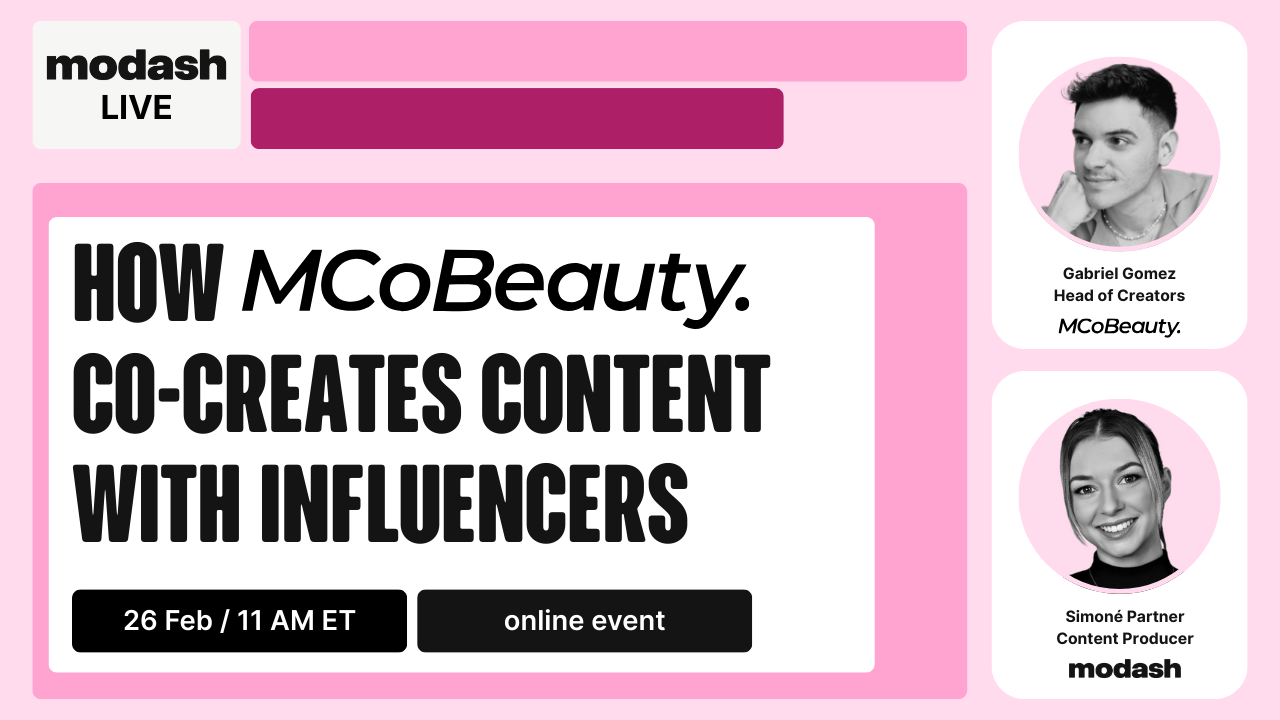
Modash is hosting Gabriel Gomez today, Head of Social and Creators at MCoBeauty, for a behind-the-scenes breakdown of the exact system they use to scale creator output without burning out their team.
In this session, you’ll learn:
- When co-creation beats a standard sponsored post, and why it compounds
- How MCoBeauty selects creators who can actually co-create at scale
- The low-lift production workflow that increases output without adding headcount
- How top teams measure co-creation performance beyond surface metrics
By the end, you’ll see how a clear co-creation model unlocks stronger performance and a creator pipeline that stays full.
No Hollywood crew required. Just a repeatable process that scales.
Can’t make it live? Register anyway, and we’ll send you the replay
📧 Your Welcome Flow Needs 9 Emails
You don’t have an ad problem. You have a belief problem.
Brands we speak to are spending aggressively on traffic. They tweak creatives, test audiences, increase budget, and celebrate small improvements in ROAS. Meanwhile, their welcome flow is three emails long and quietly leaking revenue every single day.
And they think that is normal.
Here is what is actually happening.
Someone lands on your site. They browse. They hesitate. They join your list for 10 percent off.
At that exact moment, they are the warmest they will ever be without buying.
And what do most brands do with that moment?
They send:
- The discount
- A light brand story
- A product highlight
Then they stop. Because they think “we don’t want to overwhelm them.” But the customer is not overwhelmed. They are unconvinced.
They are thinking:
Will this work for me? Is this brand legit? Why is this better than the other three tabs I opened? Should I wait?
A real 9-email welcome sequence does something different. It builds belief layer by layer.
It looks like this:
- Deliver the incentive clearly.
- Establish credibility through a sharp origin story.
- Educate on outcomes, not features.
- Show structural differentiation.
- Layer in contextual social proof.
- Address a different objection or myth.
- Highlight bestsellers as decision shortcuts.
- Provide pure value that builds authority.
- Introduce real urgency tied to the offer.
Each email removes a silent objection before it turns into a lost customer.
Now here’s the part that should make you pause.
Buyers exit the flow the moment they purchase. Which means your best customers never even see most of the sequence.
The only people who move deeper into the nine emails are the ones who need more conviction.
So extending your welcome flow does not annoy buyers. It converts skeptics.
And here is the wow moment most brands miss:
- You are already paying for these subscribers.
- You fought for the click.
- You paid for the traffic.
- You earned the opt-in.
And then you voluntarily stop persuading them after three emails.
When this is built properly, email does not drive 15 percent of revenue.
It drives 40 to 60 percent.
Same ads. Same traffic. Same product.
The only difference is that one brand stops at “welcome.” The other refuses to let warm intent die quietly.
📊 What 13 Months of LLM Data Really Shows
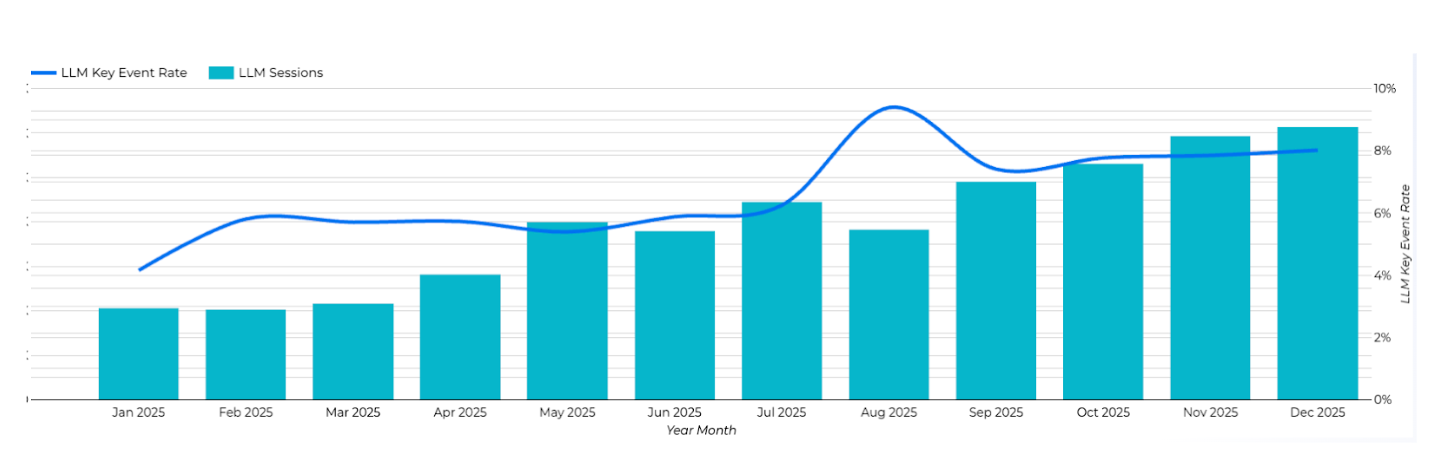
Brands are asking the same question: how much does LLM traffic actually matter? A 13-month analysis of referral data reveals something nuanced. LLM traffic is small today, but growing fast and converting at exceptional rates.
The Breakdown:
1️⃣ LLM Traffic Is Still Tiny - Across brands, LLM referrals account for less than 2% of total referral traffic, meaning fewer than two out of every hundred visitors come from AI platforms.
2️⃣ But Growth Is Explosive - Referral traffic from LLMs grew roughly 80% between the first and second half of 2025, with total monthly traffic tripling over the year, signaling rapid adoption and algorithm shifts.
3️⃣ Citations Are Constantly Shifting - Over 5,000 prompt responses show YouTube and Reddit citations rising, meaning content visibility inside LLM answers is changing quickly and requires third-party monitoring to track accurately.
4️⃣ The 18% Conversion Surprise - LLM referrals convert at approximately 18%, outperforming SEO, PPC, and paid shopping, suggesting that AI-referred visitors arrive highly qualified and close to decision-making.
LLM traffic is still small, but growing quickly and converting at 18%, so brands should establish dedicated monitoring, track growth velocity, analyze citation sources, optimize high-intent landing journeys, and build an AI-focused content strategy before this channel scales further.
Together with Cloudways
Scaling Spend Doesn’t Fix This
You increase the budget, expecting efficiency to improve. Instead, conversion rate softens and paid traffic becomes harder to defend. Sometimes the problem isn’t the ads. It’s how the site performs once real traffic hits it.
Cloud Bootcamp on March 10-11 is a live, free event built around examining sites under production conditions.
You’ll watch real sites analyzed on screen and see where performance starts slipping, from script weight and media load to caching gaps and Core Web Vitals friction.
- A live teardown fixing a slow site in real time
- What actually breaks when page builders, plugins, and scripts stack over time
- 8 live sessions. 20+ expert speakers. 1500+ attendees already registered
If you’re increasing spend without testing how your site behaves under load, you’re making budget decisions without full visibility.
🚀Quick Hits
📺 Instagram’s connected TV app is now available on Google TV devices in the U.S., expanding big-screen access to Reels and boosting short-form video viewing and potential TV-style ad reach.
🎙️ YouTube is rolling out voice replies to all creators, testing new AI-powered Shorts remix tools like “Add an object” and “Reimagine,” and upgrading Premium Lite with background play and downloads.
💬 OpenAI’s COO says ChatGPT’s ad rollout will be gradual and privacy-focused, as the company tests monetization with premium rates while trying to preserve user trust and product experience.
📉 Gen Z preference for TikTok over Google has dropped from 8% to 4%, while 14% of consumers now say they’re more likely to rely on ChatGPT than Google, signaling AI chatbots may be the bigger search threat.
That’s a wrap for today! Tell us your thoughts about today's content as we line up more Shorts! And don’t hesitate to share this with someone who’d adore it. 🥰