
Your test site is silently killing your SEO
🔪How staging environments silently cannibalize your live site's rankings, Pinterest and TikTok just rolled out fresh ad features, and more!
Hey there Smarty 👋
Are you geared up to catch the latest and greatest in quick shorts?
And just a quick heads-up! If you stumbled upon us through a friend, make sure to subscribe here! That way, you’ll never miss out on the trending shorts.

🔪How staging environments silently cannibalize your live site's rankings
A lot of the sites we see have a ghost problem.
Not on the live domain. On the staging one, a near-identical copy of the site sits on a subdomain or separate URL, fully indexed by Google, quietly competing with every page that's supposed to be ranking.
Most teams don't catch it until rankings drop, and nobody can explain why.
How it happens
Staging environments get spun up fast. Developers need somewhere to test. Nobody thinks about search visibility because the assumption is always "it's just staging, Google won't pick it up."
Google picks it up.
All it takes is one crawlable link, a sitemap left accessible, or a robots.txt that never got updated after launch. From there, Google indexes the staging URLs, sees near-duplicate content across two environments, and splits its signals between them.
Your live pages stop consolidating authority the way they should. Rankings soften. Traffic dips. The culprit is invisible unless you know where to look.
What to check
Three things that should be true for every staging environment:
- Robots.txt is blocking all crawlers at the staging domain level
- No-index meta tags on every staging page as a secondary layer
- Staging URLs absent from Google Search Console entirely
If any of these are missing, you have exposure.
SEMrush's Site Audit surfaces indexed URLs across your connected properties, so if staging pages are getting picked up, they'll show as duplicate or crawled content you weren't expecting. Worth running before assuming your indexing is clean. You can try for free for 7 days
The fix
Lock down the staging environment at the server level first. Robots.txt alone isn't enough; crawlers can ignore it. Password protection or IP restriction is the cleaner solution for anything pre-launch or in active development.
For staging URLs that are already indexed, request removal through Google Search Console and implement no-index tags while the deindexing processes. Don't wait for Google to drop them naturally, it takes longer than most people expect.
Then set a standing check: every time a new staging environment gets created, indexing controls go on before a single external link gets placed.
It's a 20-minute fix that most teams skip because the problem isn't visible until it's already done damage. Audit the staging situation before you touch anything else.
Together with Grapevine
📉 Consumers Are More Media-Savvy Than Ever. Here's What Still Converts.
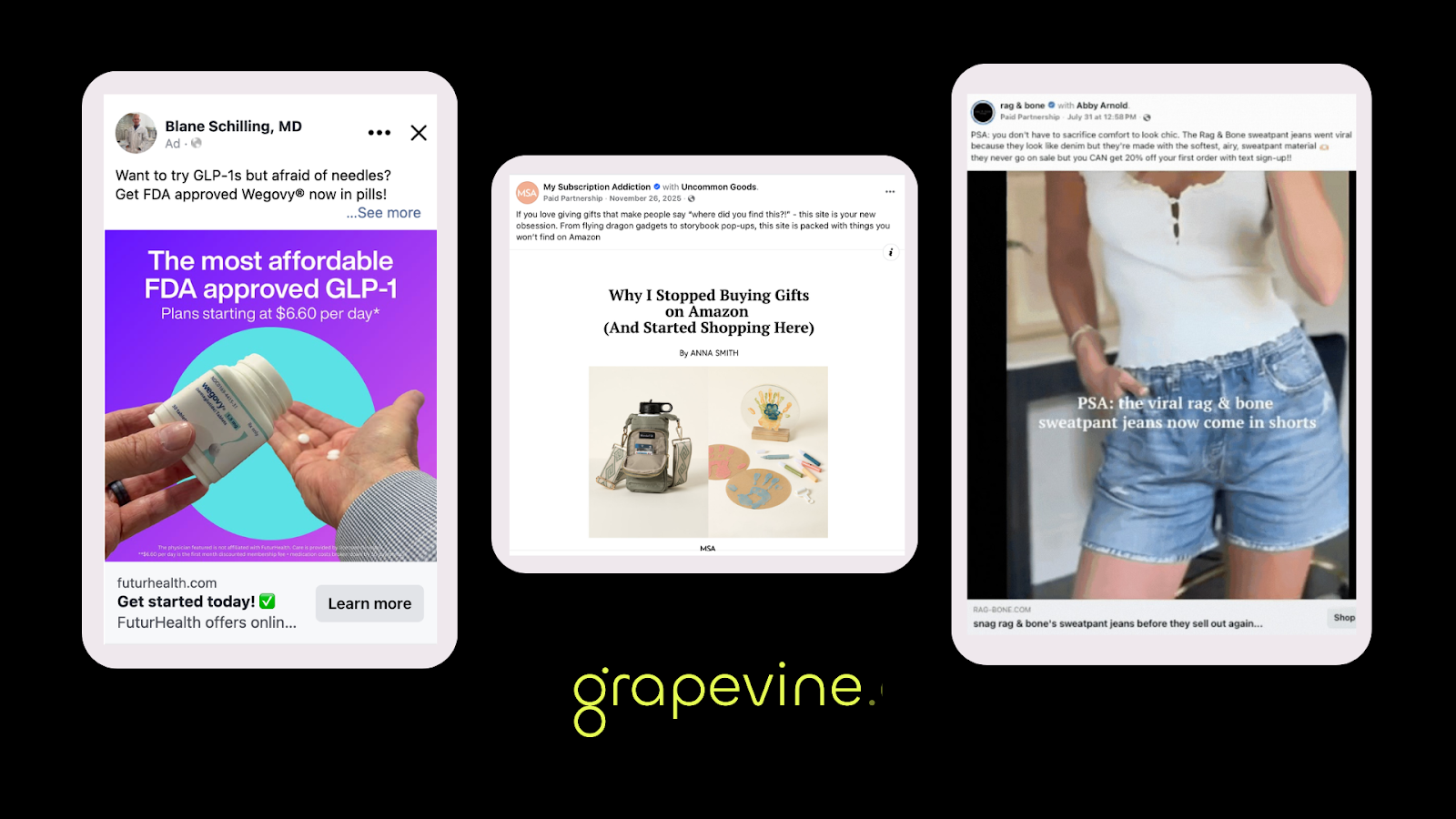
Today's buyer knows the difference between a brand speaking for itself and a credible voice speaking independently. Ads from branded handles are easy to discount.
A clinical pharmacist reviewing scrubs. A veterinarian recommending a supplement. A makeup artist breaking down an ingredient. That's harder to scroll past.
Grapevine works across some of the most trust-dependent categories - GLP-1s (Futurhealth), telehealth (Alloy), finserve (Better), and DTC (Fabletics, Particle for Men, Arrae) precisely because expert creator voice and publisher advertorial move audiences that branded creative can't.
- Just Food for Dogs scaled Grapevine assets from 15% to 45% of paid media in 6 months
- Madison Reed unlocked 20% efficiencies over Target CPA and 50% higher LTV
- Mathnasium cut Meta CPL by 33% in under 30 days
The brands winning right now are running both creator whitelisting and publisher advertorial whitelisting at the same shop, as one fully managed service.
No platform juggling. No separate agency relationships. Brief to launch, handled.
👉 Book a free strategy call for your first campaign strategy session - no commitment required.
📱 Pinterest and TikTok Just Rolled Out Fresh Ad Features
Both platforms have new ad tools out this week. Pinterest is making it easier for smaller brands to get started, while TikTok is giving bigger spenders more ways to show up across the app.
The Breakdown:
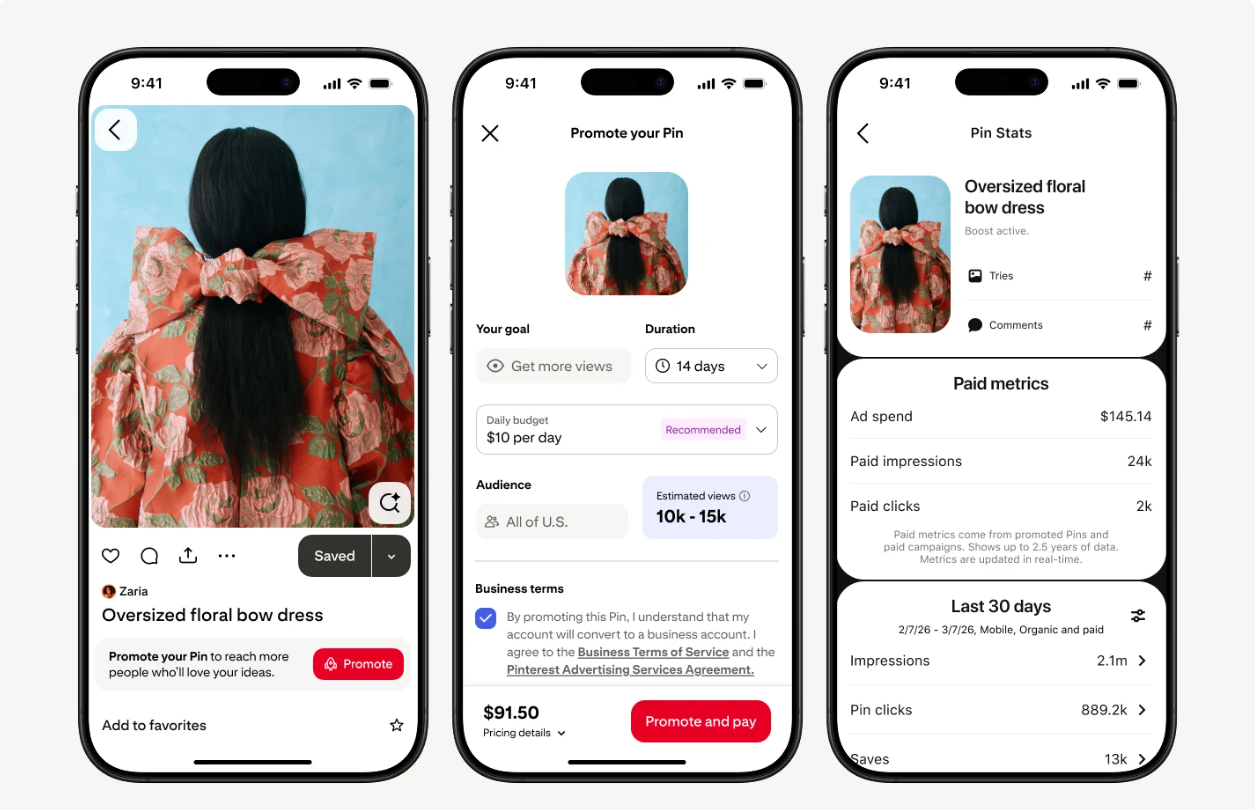
Pin Boosting Simplified - Pinterest launched Promote a Pin this week, a straightforward boost option that lets users put spend behind an existing Pin in a few taps. The feature uses Pinterest's Taste Graph to automatically match the Pin to the right audience.
AI Tools Available - Pinterest also has Performance+, an AI-powered tool that manages the entire campaign setup process. It is designed for brands that are new to Pinterest ads and want to get running without learning the platform from scratch.
Premium App Takeovers - TikTok announced Logo Takeover, which places a brand front and center the moment a user opens the app. TopReach bundles two premium placements, the first ad on app open and the first ad in the For You Feed, into a single one-day buy.
Trend-Aligned Placements Prime - Time allows brands to serve up to three sequential ads to the same user within a 15-minute window during high-engagement moments. Pulse Mentions and Pulse Tastemakers place ads alongside relevant brand conversations and creator content.
Pinterest's updates lower the barrier for smaller brands. TikToks are clearly built for campaigns with serious budgets behind them.
🚀Quick Hits
💡 Email should be your highest-returning channel and your lowest-maintenance one. Omnisend averages $79 back per $1 spent across 150,000 brands, and Kate Backdrop hit 1:300 ROI without a dedicated team running it. Try it free and see what that looks like for your brand.
📸 Snapchat reported users created nearly 2 trillion Snaps in 2025, highlighting massive engagement levels, though overall user growth remains flat or declining in key markets like North America and Europe.
🔍 Google released its March 2026 spam update, rolling out globally to improve spam detection systems like SpamBrain, potentially impacting search rankings and traffic for sites that violate spam policies.
📊 A study of 75,000 AI answers found listicles, articles, and product pages drive over 50% of citations, with content format aligning closely to user intent across informational, commercial, and transactional queries.
📊 A study found ChatGPT citations are highly concentrated, with around 30 domains capturing most visibility, favoring sites with broad topical coverage and long-form content over single keyword-focused pages.
That’s a wrap for today! Tell us your thoughts about today's content as we line up more Shorts! And don’t hesitate to share this with someone who’d adore it. 🥰