
Your SEO Workflow Is Fragile
😬Everyone is building agentic SEO workflows. Most will break in production, Meta makes three moves on ads targeting and subscriptions this week, and more!
Hey there Smarty 👋
Are you geared up to catch the latest and greatest in quick shorts?
And just a quick heads-up! If you stumbled upon us through a friend, make sure to subscribe here! That way, you’ll never miss out on the trending shorts.

😬Everyone is building agentic SEO workflows. Most will break in production.
The demos look incredible. Agent audits 200 URLs, detects cannibalization, delivers a fix list in ten minutes. Everyone wants to replicate it. Then someone runs it on a live client site and half the outputs are wrong.
The gap isn't technical skill. It's data reliability. Here's how to build a workflow that actually holds up.
Design around data layers, not capabilities
Most people build agentic workflows backwards, starting with what the agent should do and figuring out data access later. Flip that. Map every agent action to a specific data input and verify it's live, comprehensive, and updating frequently enough to be actionable.
Separate inputs by refresh rate
Not all data ages the same way:
- Daily: Ranking positions, crawl errors, indexing changes. Agents making tactical decisions need current data or they'll flag the wrong pages.
- Weekly: Backlink profiles, content performance trends. Acceptable latency for strategic decisions.
- On-demand: Keyword gap snapshots, AI Overview eligibility. Pull these fresh at the start of every workflow run.
Build validation checkpoints
Production systems verify before they execute. After every major agent action, cross-reference the output against a second data source. An agent flagging content decay should confirm the drop in Search Console before acting on position tracking alone. One conflicting signal should pause the workflow and route to human review.
Modularize every function
Monolithic workflows break unpredictably and are impossible to debug. Build keyword gap analysis, content decay detection, and cannibalization flagging as separate modules with independent inputs and outputs. When something breaks, you fix one module without touching the rest.
SEMrush's MCP server connects directly to Claude Code, Cursor, and ChatGPT, giving agents live access to Keyword Gap, Organic Rankings, Position Tracking, and AI Visibility data without manual exports. Included in all SEMrush One and SEO Toolkit subscriptions, no setup required. You can try it for free for 7 days.
Ship one module first
Don't build the full workflow before validating the data layer. Start with one function, run it against a real site, and verify every output manually before scaling.
Most production failures happen because someone skipped this step. Build one module. Validate everything. Then scale what works.
The agent is only as good as what you build underneath it.
Together with Funnelish
You fixed the ads. The funnel never got the same attention.
Six months ago, your conversion rate made sense. Now the same traffic, same offer, same price, and something quietly shifted. You don't know exactly where. That's the part that keeps you up.
Most of the time, the gap lives inside the funnel. Funnelish is built to close it:
- Pages load under 1 second, and over half of your visitors leave after 3 seconds of waiting
- Full funnel builder covering landing pages, checkouts, upsells, downsells, and confirmation pages
- Cart recovery via email and SMS is built natively, no Klaviyo workaround required
- 27+ integrations, including Shopify, Google Sheets, Stripe, Klarna, and Facebook Conversions API
Over $2 billion processed across 4,600+ users. This isn't something people are testing on a side project. It's what serious operators run their business on.
Build your first funnel for free. No credit card needed. Cancel whenever.
📱 Meta makes three moves on ads targeting and subscriptions this week
Meta quietly upgraded how Instagram ads find the right people, started letting advertisers describe their audience in plain English, and began testing a paid tier for everyday Instagram users in three countries.
The Breakdown:
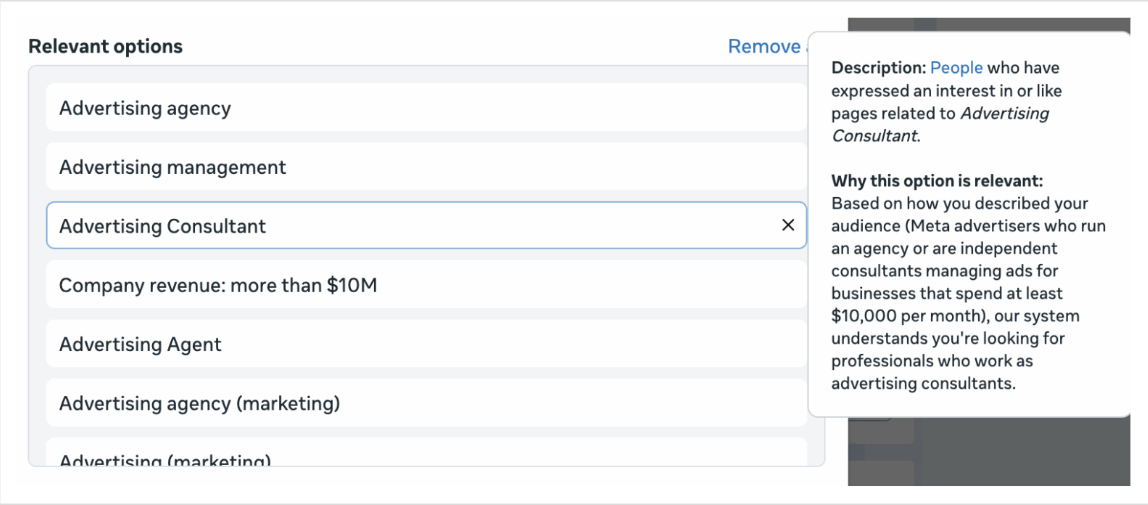
1. Describe Your Audience -A new Describe Your Audience feature lets you type up to 2,000 characters about your ideal customer, and Meta's AI suggests matching interests and behaviours with reasoning for each, surfacing options you might never have found manually.
2. Sharper Ads Automatically - A new ranking model now reads user context and intent in real time instead of relying on basic demographics, and since Q4 2025, it has driven +3% more conversions and +5% higher click-through rates across Instagram.
3. Instagram Plus Launches - For roughly $1-2/month, Meta is testing features like anonymous Story viewing, expanded audience lists, and Story spotlighting in Mexico, Japan, and the Philippines, separate from Meta Verified and aimed at regular users, not creators.
The ad ranking upgrade works in the background so your current campaigns could already be benefiting. The AI targeting tool saves time for anyone running lean. And Instagram Plus is Meta testing whether regular users will pay for small upgrades the way 25M Snapchat+ subscribers already do.
🚀Quick Hits
🎙 Samsung, Adidas, and Kosas are not finding brand moments faster because they have bigger teams. They use Syncly Social to hear every spoken mention and untagged placement across TikTok, IG, and YouTube that a keyword tool would never surface. See what you have been missing and get started free.
📺 YouTube announced BrandCast 2026 for May 13 in New York, where it will unveil new ad products, platform updates, and positioning as a dominant force in streaming and digital media.
📺 YouTube expanded its AI chatbot to smart TVs, allowing users to ask voice-based questions about videos in real time through their remote, adding a new layer of interactive viewing.
📊 Google Ads now auto-applies winning experiment variants by default, speeding up optimization but risking missed performance drops in metrics that aren’t actively tracked.
🛍️ Bing is testing a larger double-row sponsored product carousel in shopping results, giving advertisers more screen space and potentially boosting visibility and clicks for Microsoft Shopping campaigns.
That’s a wrap for today! Tell us your thoughts about today's content as we line up more Shorts! And don’t hesitate to share this with someone who’d adore it. 🥰