
Your LTV Number is Lying
👤 Different customers behave differently after the first purchase, Google Ads removes friction where it hurts most, and more!

Hey there Smarty 👋
Are you geared up to catch the latest and greatest in quick shorts?
And just a quick heads-up! If you stumbled upon us through a friend, make sure to subscribe here! That way, you’ll never miss out on the trending shorts.

👤Your LTV Number Is Lying
Brands think they know their customer value. They have an LTV number. They have a payback window. They have a CAC ceiling that everyone agrees on.
That works until it doesn’t. Because the moment growth starts coming from different entry points, that single number stops describing reality.
Some customers buy at a discount. Some buy through creators. Some buy bundles. Some buy after long education cycles. They do not behave the same after purchase. But finance models treat them as if they do.
This is the blind spot. Brands don’t scale into inefficiency. They scale into averaging.
A low-quality first purchase quietly drags down the LTV of a high-quality cohort. A price-sensitive buyer changes the payback math of a value-driven one. The blended number still looks reasonable, so spend continues. But the signal is already distorted.
When growth slows later, teams blame rising CPAs or weaker demand. In reality, they lost visibility into who was actually worth scaling.
The first sale sets the tone for everything that follows. Cheap first purchases create cheap customers. Not morally. Economically.
If the first interaction teaches the customer to wait for discounts, chase promos, or buy impulsively, retention follows that lesson. Repurchase timing stretches. Price sensitivity increases. LTV compresses.
Brands that anchor value on the first purchase protect optionality later. They earn customers who tolerate price changes, adopt new products, and respond to education instead of urgency. But you can only scale that intentionally if you can see it clearly.
This is where most teams hit friction.
Cohort-level insight exists, but financial decisions are still made on blended reporting. Founders stay close to the numbers early. Later, manual billing, reconciliation, and reporting slow everything down. The business improves faster than the models tracking it.
This is often where moving to a fractional finance model removes the bottleneck. Belay’s Guide to Outsourced Accounting explains how growing teams regain real time clarity on customer value without burying leadership in spreadsheets. You can download your Guide to Outsourced Accounting here.
Scaling is not about asking, “Is this profitable?”
It is about asking, “For which customer, and for how long?”
When you stop averaging customers, growth stops being a guessing game. It becomes a decision.
Together with Thesys
Turn your n8n workflows into intelligent AI apps in minutes.
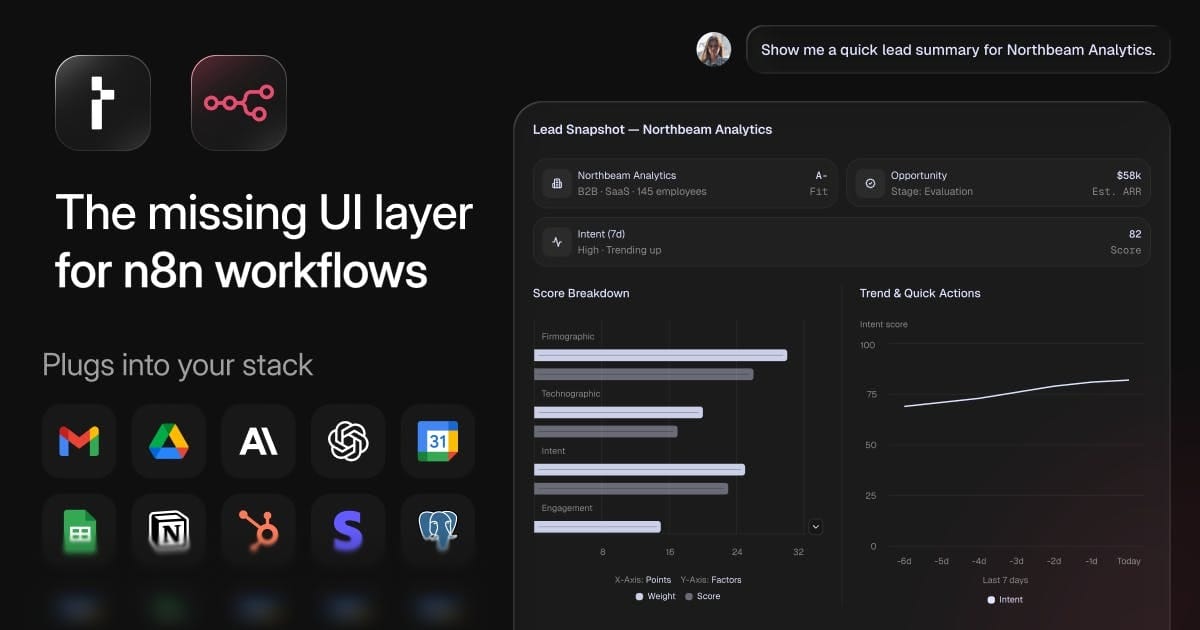
C1 by Thesys turns any n8n workflow into a smart, adaptive AI app - with interactive UIs instead of walls of text.
From chatbots to AI agents for research, analytics, or automation, no coding and no changes to your workflow logic.
Thesys is the UI your n8n workflows have been missing.
Sign up now and get 5M free tokens to get started!
⚡ Google Ads Removes Friction Where It Hurts Most
Google Ads rolled out two quiet updates that fix everyday pain points advertisers deal with constantly. One tackle time wasted on auditing changes. The other finally brings structure to creator partnerships inside Ads Manager.
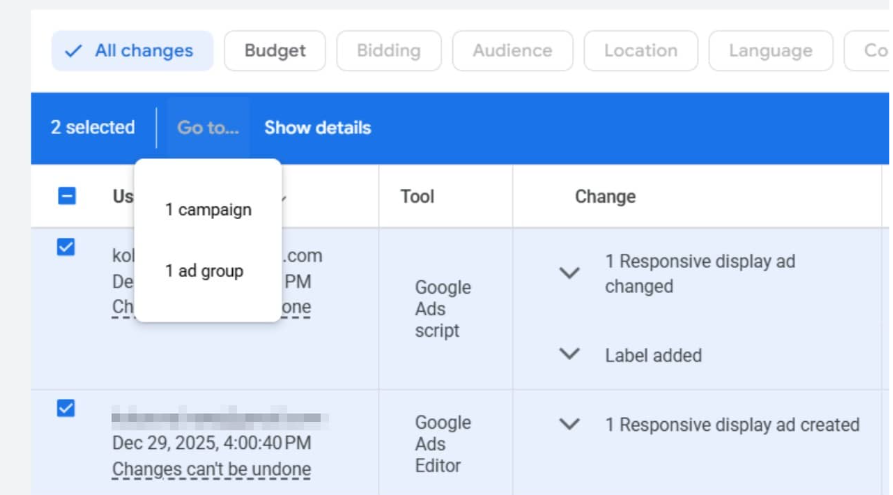
The Breakdown:
1. Change History Shortcut - Google Ads added a “Go to…” shortcut in Change history that jumps straight to the edited campaign or ad group, removing endless clicking during audits, especially when changes come from scripts, bulk edits, or Google Ads Editor.
Instead of hunting through the account structure to figure out what broke, advertisers can now move directly from the change log to the exact issue.
2. Creator Search - Google Ads introduced Creator Search to help brands find YouTube creators by keyword or channel handle. Filters for subscribers, views, location, and contact availability dramatically reduce research time and make creator discovery scalable.
A new management section centralizes creator outreach inside Google Ads. Advertisers can track inquiries, responses, updates, and deadlines in one place.
These updates won’t grab headlines, but they compound daily. Faster audits mean fewer costly mistakes, and better creator tools make partnerships easier to scale. Google Ads is quietly optimizing for how advertisers actually work, not just how campaigns perform.
🚀Quick Hits
⛓️ DIY accounting works right until it becomes the bottleneck. Past $50k a month, complexity compounds faster than spreadsheets and good intentions can handle. BELAY delivers weekly financial truth from U.S.-based experts. Download your Guide to Outsourced Accounting and remove the drag.
🌐 Google launches a one-click Google Cloud Tag Gateway integration, making first-party tagging easier, stronger, and more resilient against ad blockers and privacy restrictions
🤖 37% of consumers now start searches with AI instead of Google as 60% say AI gives clearer answers, 47% use it for purchase decisions, and 80% trust it to be unbiased
🌐 Google deployed a new fraud-detection AI called ALF, boosting detection recall by 40+ points and achieving 99.8% precision by analyzing advertiser text, images, video, account data, and behavioral patterns.
✨ Only 17% trust AI to finish a purchase, even though 58% use AI to research and 37% start shopping with it. Shoppers explore widely but only buy where confidence feels guaranteed.
That’s a wrap for today! Tell us your thoughts about today's content as we line up more Shorts! And don’t hesitate to share this with someone who’d adore it. 🥰