
Why Your TOF Ads Feel Invisible
👀The “Wait, That Exists?” Hook: How to Win Unaware Shoppers, LinkedIn’s user growth story keeps getting bigger, and more!
Hey there Smarty 👋
Are you geared up to catch the latest and greatest in quick shorts?
And just a quick heads-up! If you stumbled upon us through a friend, make sure to subscribe here! That way, you’ll never miss out on the trending shorts.

Together with Insense
Find brand-aligned, global influencers within 48 hours
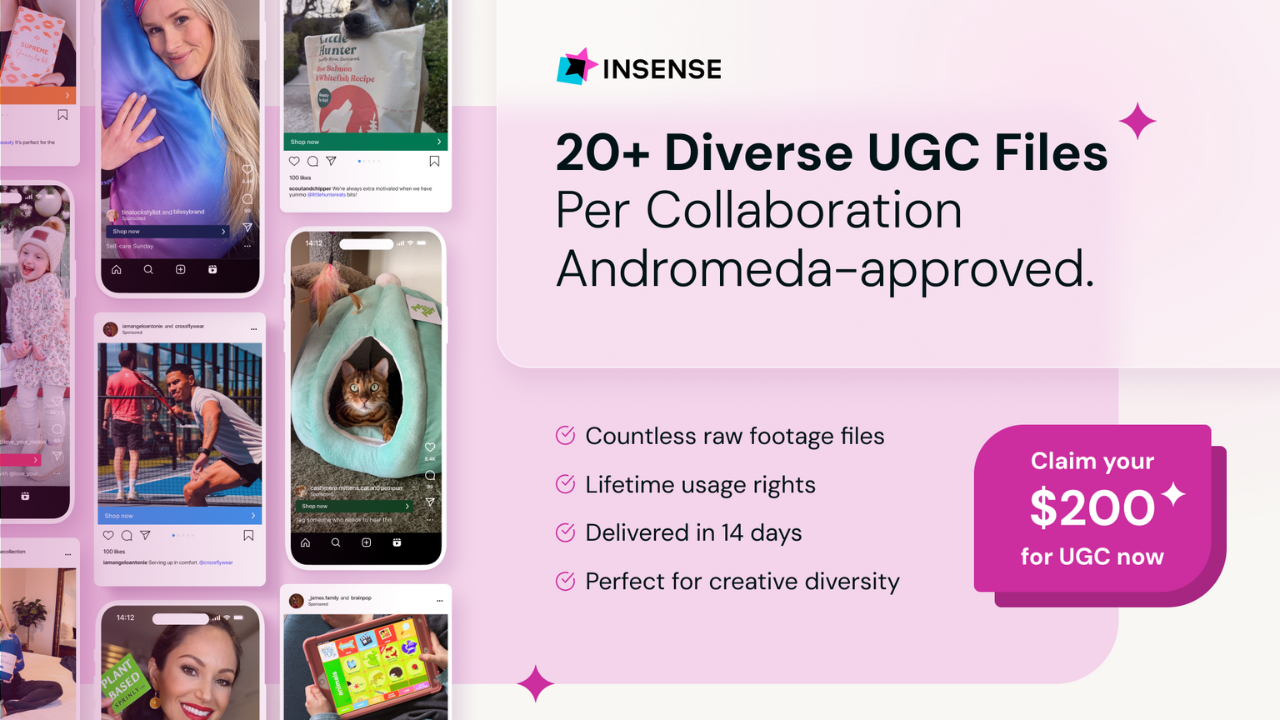
Authentic UGC video ads drive conversions - especially in the Meta Andromeda era!
More than ever, leading eComm brands need high-quality UGC at scale to satisfy Andromeda’s need for fresh, diverse ad creatives.
Enter Insense - the all-in-one UGC and influencer marketing platform to:
- Source multiple raw + edited footage files per creator collab.
- Free lifetime content usage rights for every piece of content.
- Run multiple campaign types from UGC to seeding, TikTok Shop, Meta Partnership Ads, TikTok Spark Ads, and more.
No team or short on time? Insense also offers fully-managed services.
Try Insense now.
Book a discovery call by Feb 6 and get a $200 bonus for your first campaign.
👀 The “Wait, That Exists?” Hook: How to Win Unaware Shoppers
Unaware audiences are not problem-solving.
They are not searching for a better serum or thinking about skin barrier damage. They do not feel broken, so the usual pain-first hook falls flat. “Struggling with irritated skin?” only works when the viewer already has the language for the problem.
That is why the best hooks for unaware buyers do not lead with pain.
They lead with curiosity and identity.
The mechanism is simple. When there is no active discomfort, you cannot interrupt with a diagnosis. You have to invite with a discovery. The viewer needs to stumble into the problem the same way they would in real life, through a moment, a comment, or a social cue.
Your standard hook formula usually carries three ingredients.
Curiosity.
Pain or desire.
Audience callout.
For unaware shoppers, the middle one disappears. There is no pain yet, so you strip it down to two things only.
A spark of curiosity.
A clear signal of who this is for.
A strong example is the organic curiosity hook.
Instead of saying, “Tired of your skin reacting after exfoliating,” you start with a moment that creates unfamiliarity.
“A makeup artist on set once looked at my skin and asked, what barrier serum do you use?”
“I had no idea what she meant. Then she handed me this.”
No direct problem statement. Just social authority, confusion, and an object the viewer does not recognize. By the time they ask, wait, what is a barrier serum, they are already watching.
This style works because it does not accuse. It does not demand attention. It creates a whisper of discovery that feels personal instead of promotional.
To build your own, start with an observed interaction, reveal something unfamiliar, and let the viewer connect the dots before you explain the stakes.
Unaware ads do not win by being louder.
They win by making someone lean in and think, wait, that exists.
📈 LinkedIn’s User Growth Story Keeps Getting Bigger
LinkedIn keeps expanding, even without the detailed reporting it once shared before Microsoft acquired it. Microsoft did confirm one major headline though: LinkedIn crossed $5B in quarterly revenue for the first time. Underneath that, the platform’s user base and activity levels are still moving steadily upward.
The Breakdown:
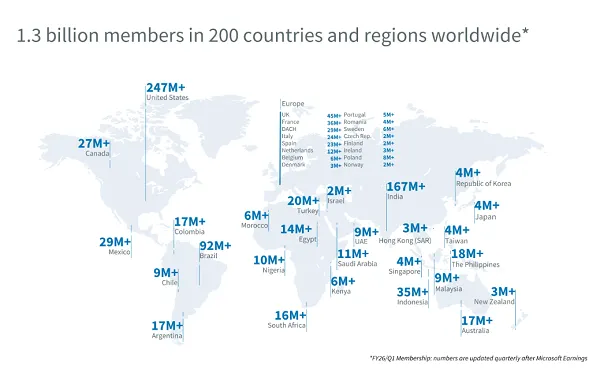
1) Member Growth Is Still a Core Signal - Microsoft reported LinkedIn saw double-digit member growth again this quarter, bringing the platform to roughly 1.3 billion total members worldwide.
“Members” and “active users” are very different, and EU DSA reporting suggests only about 36% of members are active. Video ads also jumped 30% year over year, signaling that vertical and professional video is becoming a bigger engagement driver.
2) AI Search Is Replacing Traditional Discovery - LinkedIn notes that SEO is shifting because 60% of Google searches now end without a click, meaning website traffic alone is no longer the main visibility metric.
LinkedIn says structured content with clear headings and clean HTML is easier for AI models to surface. LLMs also favor credibility signals like expert authorship, timestamps, and conversational insight-driven writing, pushing brands toward “be mentioned, be considered, be chosen.”
LinkedIn’s growth isn’t just about signups; it’s about staying central to professional conversation and now AI-powered discovery. Even with fewer than half of members active, its engaged base remains one of the most commercially valuable audiences online.
Together with The Shift
Turn AI from “Interesting” to “Impactful”
If you’ve ever thought, “That’s cool, but how would I actually use it?”
The Shift is for you. Here’s what you’ll get:
- Easy-to-follow breakdowns of even the most complex AI concepts.
- Real strategies you can apply in minutes, no tech degree required.
- Bonus access to 3,000+ AI tools, free courses, and prompt libraries.
Every edition is built for action, so you can improve campaigns, speed up workflows, or launch ideas faster than ever before.
You don’t just “learn AI” here. You make it work for you.
🚀Quick Hits
🧠 Customers do not experience your funnel; they experience delivery. Shipfusion exposed how fulfillment accuracy outweighs speed in shaping trust across all DTC verticals. The same gaps appear regardless of product. Download the DTC Delivery Files and see where expectations break.
📈 Meta says AI-driven ranking upgrades boosted engagement across its apps, delivering a 7% lift in Facebook organic views, a 20% jump in Threads time spent, and pushing 75% of Instagram recommendations to come from original content.
📉 Google searches per U.S. user fell nearly 20% YoY, suggesting AI answers are reducing repeat searches and shrinking discovery opportunities, even as Google’s overall dominance and user base remain largely intact.
🚫 About one-third of publishers say they’d block Google from using their content in AI Overviews and AI Mode, with 33% opting out, 42% staying in, and 25% still undecided as Google explores an official mechanism.
🛍️ AI is reshaping product discovery, with AI-referred retail traffic up 632% YoY, organic search down 9%, and AI visitors converting 55% more, signaling small but high-intent shifts in how shoppers find and buy.
That’s a wrap for today! Tell us your thoughts about today's content as we line up more Shorts! And don’t hesitate to share this with someone who’d adore it. 🥰