
Tracking Is Your Reward Function
📊You’re not tracking conversions. You’re writing instructions for Google, TikTok finds engagement drives sales per impression, and more!

Hey there Smarty 👋
Are you geared up to catch the latest and greatest in quick shorts?
And just a quick heads-up! If you stumbled upon us through a friend, make sure to subscribe here! That way, you’ll never miss out on the trending shorts.

📊 You’re Not Tracking Conversions. You’re Writing Instructions for Google.
When someone asks, “Do we have conversion tracking set up?” they’re usually thinking about dashboards. Visibility. Attribution.
What they’re not thinking about is control.
Because once you use Smart Bidding, your conversion events don’t just tell you what worked, they tell Google what to optimize for. That makes every conversion you define a steering wheel, not a mirror.
This is where efficiency quietly erodes.
Setting one flat “Purchase” or “Lead” event creates a binary reward system: either the sale happens, or it doesn’t. No nuance. No signal density. No way for the system to learn patterns before the final click.
If your CPA swings wildly or campaigns can’t scale cleanly, this is often where the issue starts.
The fix isn’t more tracking. It's a smarter tracking structure.
Start with the assumption that Google needs layers. A Tier 1 conversion (purchase, demo booked) is the end goal, but it shouldn’t be the only input.
You need middle and upper-funnel intent signals that help Google recognize good traffic earlier, and tools like Semrush One help you align those conversion layers with real search demand and competitive intent signals, rather than guessing what “high-intent” actually looks like. You can start your 7-day free trial here.
Example: In one account, “Viewed Pricing Page” and “Started Checkout” were added as soft conversions, weighted at 0.2 and 0.5, respectively (vs. 1.0 for Purchase). Within a week, Smart Bidding began favoring higher-intent auctions. CAC dropped by 17% without touching creative.
It’s not magic. It’s math. More signal means more predictive precision.
Two traps to avoid:
- Over-tracking irrelevant noise. Logging every micro-event (scrolls, FAQ opens, video views) inflates the signal pool and confuses bidding behavior. Micro-conversions are only useful if they consistently correlate with final revenue.
- Equalizing low and high intent. Treating all events as equal value tells Google that a content download is worth the same as a booked call. That wrecks prioritization. Use value-based bidding or manual weighting to anchor optimization in business logic.
Now for the real unlock: stop thinking of conversions as events.
Think of them as reinforcement weights.
Smart Bidding isn’t optimizing toward “conversions,” it’s optimizing toward whatever signal provides the fastest, cleanest reinforcement loop. If that loop is shallow or noisy, the algorithm latches onto low-value patterns that are easy to hit but hard to scale profitably.
That’s how you end up optimizing for unqualified leads. Or generating cheap purchases that never repeat. Or scaling a top-of-funnel campaign into oblivion.
The move that changes this? Back-propagate post-conversion truth.
Not “Lead Submitted.” Qualified Lead Confirmed.Not “Purchase Made.” High-LTV Customer IDed.
Import final outcomes via offline conversions or CRM integrations. Teach the system that actually drives profit, even if that signal takes a week to mature.
Because in performance marketing, whoever defines the reward function controls the slope of scale.
That’s how the best campaigns win. Not by spending more, but by training better.
Together with Grapevine
📲 Whitelisting That Actually Scales (Creators + Publishers)
Most brands know whitelisting works to lower CPAs and find new audiences. Few can make it repeatable at scale.
Grapevine gives you both creator and publisher networks in one managed service:
Creator Whitelisting - They source, vet, and negotiate with verified creators (doctors, coaches, finance experts, beauty insiders), managing and handling access and production. Authentic social proof without operational chaos.
Publisher Whitelisting - Their network of 14+ niche publishers (including My Subscription Addiction) provides advertorial landing pages and established handles. You get third-party trust plus storytelling space that bridges discovery to conversion.
Whitelisted content outperforms branded ads by 20-30%. Creator + publisher handles deliver signal diversity and testing volume that's hard to replicate independently.
Mapping Q1 creative strategy? Now's the time to test.
👉 Book a strategy call by February 27th for $500 off your first campaign.
📊 TikTok Ad Measurement Shift
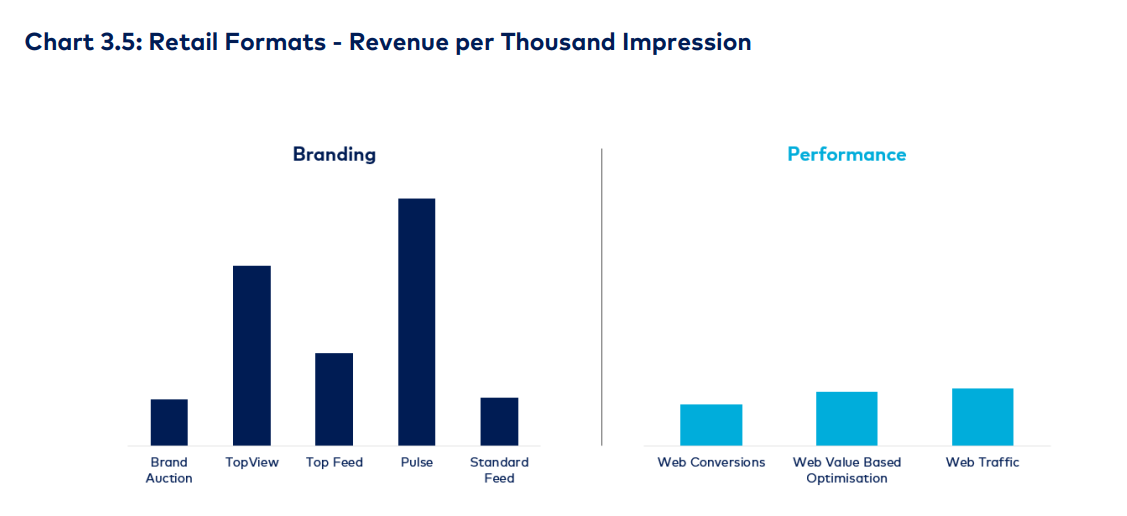
TikTok’s latest study with Ebiquity focuses on how different ad formats contribute to real sales impact. The findings push advertisers to move beyond basic ROI comparisons and evaluate performance based on engagement, revenue lift, and campaign goals.
The Breakdown:
1. ROI Isn’t Enough - Cheap impressions can produce high ROI on paper while driving little true sales growth. Measurement needs to focus on incremental revenue impact, not just cost efficiency.
2. Premium Formats Perform - TopView and Pulse generated 3 - 4 times higher revenue per 1,000 impressions than standard auction ads. These formats deliver stronger breakthrough impact when brands need attention quickly.
3. Engagement Drives Revenue - Average play duration strongly correlates with revenue per impression. Ads that hold attention longer produce better business outcomes than campaigns optimized only for reach.
4 .Creative Rules Still Apply - TikTok recommends ads under 25 seconds, branding in the first 2 seconds, and native emotional hooks. Premium exposure helps only when the offer and creative are strong.
The practical shift is aligning format choice with the objective. Premium placements work best for launches and major moments, while auction formats sustain presence over time. The winning metric is attention that converts, not impressions alone.
🚀Quick Hits
📦 Shipfusion audited five clear protein brands ordering within the same hour and saw wildly different delivery outcomes driven purely by fulfillment decisions. One order traveled 2,092 miles, 57% farther than necessary, adding cost and delay. These insights apply to every DTC category. Download the DTC Delivery Files to see how your post-checkout experience really compares!
📉 Downloads of TikTok alternatives like UpScrolled and Skylight spiked during TikTok USDS instability, but SimilarWeb shows interest is already declining fast.
🕳️ Google says 75% of crawl waste comes from two URL traps: faceted navigation (50%) and action parameters (25%). Infinite filter URLs and useless query strings can overload servers, slow indexing, and trap bots in crawl loops.
📊 Nearly all shoppers rely on reviews: 96% check before buying, 47% always do, and 69% recheck at checkout. Trust is tighter: 72% avoid under-4-star products, while 48% spot AI reviews.
📦 Returns are surging with global e-commerce refund volumes jumping 18.1% in 2025, with refund value up 12.7%. December hit a 2.89% refund rate, and every $1M refunded can cost retailers ~$1.3M total.
That’s a wrap for today! Tell us your thoughts about today's content as we line up more Shorts! And don’t hesitate to share this with someone who’d adore it. 🥰