
The test you’re forgetting
🔢 The brief that was actually two briefs, Gen Z is shopping and searching in new places, and more!

Hey there Smarty 👋
Are you geared up to catch the latest and greatest in quick shorts?
And just a quick heads-up! If you stumbled upon us through a friend, make sure to subscribe here! That way, you’ll never miss out on the trending shorts.

Together with Share Local Media
Direct Mail Didn’t Stop Working. Brands Stopped Testing It.
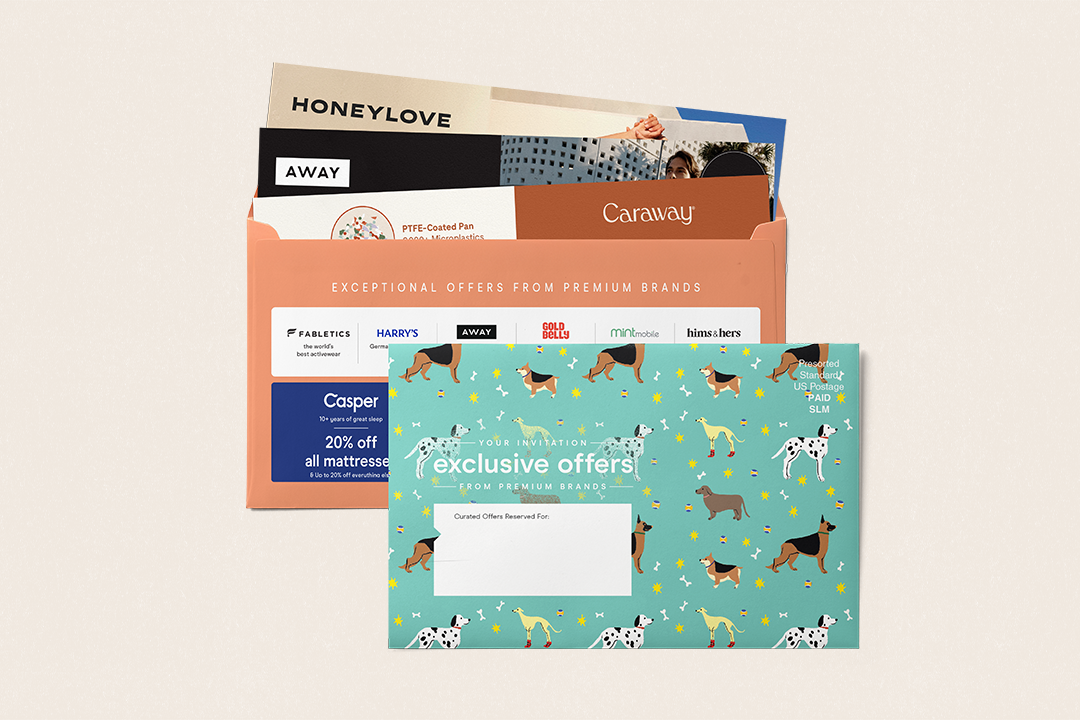
Direct mail still earns attention in a way digital rarely does anymore. The issue is not performance; it is commitment.
Most programs require long timelines, high minimums, and upfront decisions before brands ever see meaningful results. That hesitation keeps direct mail on the sidelines while acquisition costs rise everywhere else.
Shared Mail from Share Local Media offers a simpler entry. Your brand appears inside a premium shared envelope alongside other well-known names, putting you in front of millions at a fraction of the usual spend.
No long setup, no operational drag, and no big upfront commitment required. That is why Shared Mail has become an excellent entry point for brands curious about direct mail.Here’s what brands are actually seeing:
- Knix achieved sub-$20 CPAs and 7-9x ROAS on new customer acquisition with shared mail.
- Primary hit a $45 blended CPA and strong response rates using SLM’s geo-targeted shared mail.
With nearly a billion mailings delivered over the past decade, SLM’s Shared Mail Program is a proven, measurable channel at an all-in cost as low as $0.06 per piece.
April Shared Mailings close on 3/2. Secure your spot now!
🔢 The Brief That Was Actually Two Briefs
Most creative teams think they’re running one test when they launch a new batch. They’re usually running two. And because nobody separated them before the shoot, the results come back interesting but unreadable.
Here’s what’s actually happening. Every ad you put into the world carries two distinct variables inside it. There’s the message, which is the angle, the pain point, the reason someone should care. And there’s the vehicle, which is the format, the visual style, the way that the message gets delivered.
When both change at the same time, and they almost always do, you can’t isolate what the audience actually responded to. You just know something landed. Or didn’t.
That sounds like a small thing. It isn’t.
What Gets Lost When You Test Everything at Once
When a winning ad comes out of a mixed batch, the brief for the next round becomes a guessing game.
Do you make more videos because the video won, or do you push the same message harder because the angle was right?
Most teams default to recreating the whole thing, format and message together, and call it “scaling the winner.” What they’re actually doing is locking in an assumption they never verified.
Over time, this creates a creative strategy that’s built on instinct layered on top of instinct. Nobody on the team can point to a round of testing and say, with confidence, we know this persona responds to this format.
Or we know this message outperforms regardless of how it’s packaged. The knowledge never compounds because it was never cleanly separated to begin with.
The accounts pulling consistent learnings out of their creative are doing something structurally different before anything gets made:
- Message round: one angle, held constant, expressed across multiple formats
- Format round: one format, held constant, testing multiple angles inside it
- Each round answers one question cleanly, then hands that answer to the next round
It sounds simple. Very few teams actually do it.
Why It Matters More Now
The way Meta reads and distributes creative today means the signal inside your ad library needs to be genuinely distinct to be useful.
Running five variations of the same concept with different headlines gives you a noisy pile of data and, under the current delivery logic, can actively suppress the whole group for looking too similar.
But running one message across five genuinely different formats? That’s five distinct pieces of creative intelligence pointing at the same persona from different angles. The platform sees diversity. The team sees clarity. Both things compound.
Where to Start
Look at the last batch that went live and ask one question: if the winner had lost, would you have known why? If the answer is no, the brief had two questions in it.
Pick the next round’s single question before anyone touches a camera. Message or format. One at a time. The learning that comes out the other side is the kind you can actually build on.
🎮 Gen Z Is Shopping and Searching in New Places
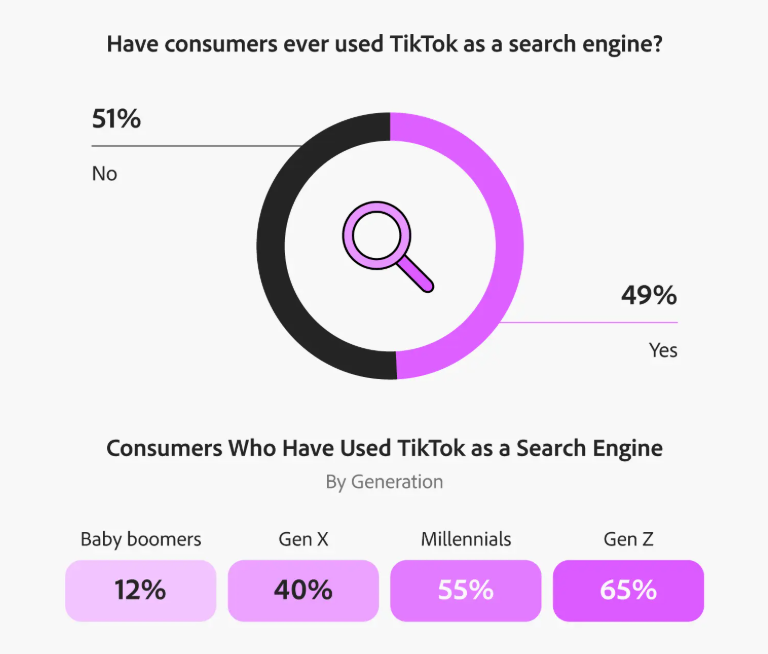
A new report from Adobe Express and research from the Retail Technology Show reveal shifting patterns. Roblox has moved into physical goods, hit 150M+ daily users, and is becoming a real commerce channel. Gen Z's search habits are also moving toward AI, not TikTok.
The Breakdown:
1. Gen Z Stopped Favouring TikTok Over Google - The share of Gen Z who preferred TikTok over Google for search dropped from 8% to 4% since 2024. Usage is still there, but preference and loyalty are clearly cooling.
2. ChatGPT is a Bigger Threat to Google than TikTok Ever Was - 14% of consumers now prefer ChatGPT over Google for search, double that of TikTok. Unlike TikTok, this holds across every age group. Google still leads at 85%, but the shift is broad and steady.
3. Roblox is the fastest-growing Gen Z Commerce Channel - Gen Z averaged 20 purchases on Roblox last year, up 54% YoY. TikTok grew just 10%. The shift into physical goods is what's turning Roblox from a gaming platform into a buying destination.
4. TikTok Leads on Volume, but Momentum Is Fading - TikTok still tops Gen Z order volume at 23 avg purchases. But growth is stalling, and converting engagement into sales remains the biggest challenge, with 38% of business owners saying they still can't crack it.
Don't wait for Roblox to become mainstream; test it now if your buyers are under 25. Shift part of your search strategy toward AI visibility on tools like ChatGPT. And rethink heavy TikTok allocation when both growth and business confidence are clearly cooling elsewhere.
🪩Events
🔥 The Behind-the-Scenes Performance Fixes That Turn Clicks Into Conversions
March 10–11 | Virtual Event
Marketers lose money every day from slow first loads and never see the real cause. At Cloudways Bootcamp, experts will tear down real production sites live and show you exactly what’s killing conversion rate before your offer even appears. If you're buying traffic, this is the intel you never get.
🔥 The Creative Playbooks Top Brands Use But Never Publish
Starts March 17 | Tuesdays at 1 PM EST | Virtual Bootcamp
Every brand you admire is running a structured, repeatable creative system behind the scenes, and most marketers never see it. Motion’s free 8-week Creative Strategy Bootcamp pulls back the curtain: real hooks broken down, real angles dissected, real testing cycles mapped out. If you’ve ever wondered how the top 1% consistently produce winners, this is the first time those systems are being taught live.
🚀Quick Hits
📐 X introduces 4:5 and 2:3 aspect ratio options for in-stream ads, letting advertisers repurpose creatives from other platforms without reformatting, aiming to attract more ad spend amid declining revenue.
🛍️ Instagram creators are frustrated with Meta's AI-powered "Shop the Look" feature, which auto-tags posts with product matches they don't endorse, potentially undermining brand deals and audience trust.
🔍 ChatGPT's ad ecosystem is expanding, with brands like Best Buy and Expedia appearing in responses. Analysis of 1,500+ prompts reveals commercial intent keywords like "best" and "new" trigger most placements.
🌐 The U.S. e-commerce market hit $1.38 trillion in 2025, ranking second globally behind China's $3.45 trillion. With only 16% penetration, significant growth potential remains across untapped categories.
That’s a wrap for today! Tell us your thoughts about today's content as we line up more Shorts! And don’t hesitate to share this with someone who’d adore it. 🥰