
The Seven-Day Rule Is Dead
🥲 The Andromeda-to-Muse-Spark transition means your old creative testing logic just stopped working, AI is becoming a gatekeeper that recommends fewer businesses than search, and more!
Hey there Smarty 👋
Are you geared up to catch the latest and greatest in quick shorts?
And just a quick heads-up! If you stumbled upon us through a friend, make sure to subscribe here! That way, you’ll never miss out on the trending shorts.

🥲Stop running the same old logic
Here is what Andromeda needed from you: wait seven days, let historical signal accumulate, read the conversion data, decide. The logic was sound because the system was blind. It could not see your creative. It could only measure what happened after someone saw it.
Muse Spark is not blind.
The multimodal layer reads your frames on day one. It forms an opinion about who your ad is for before a single person converts. Then it acts on that opinion. By the time your seven-day window opens, the algorithm has already made its targeting decision, run with it, and handed you results shaped by a read you never knew happened.
You are not running a test anymore. You are auditing a decision that already got made.
The Window Moved, And Nobody Told You
Day-one data used to be noise. Now it is the most honest signal in your account.
What to read on day one, and what it actually means:
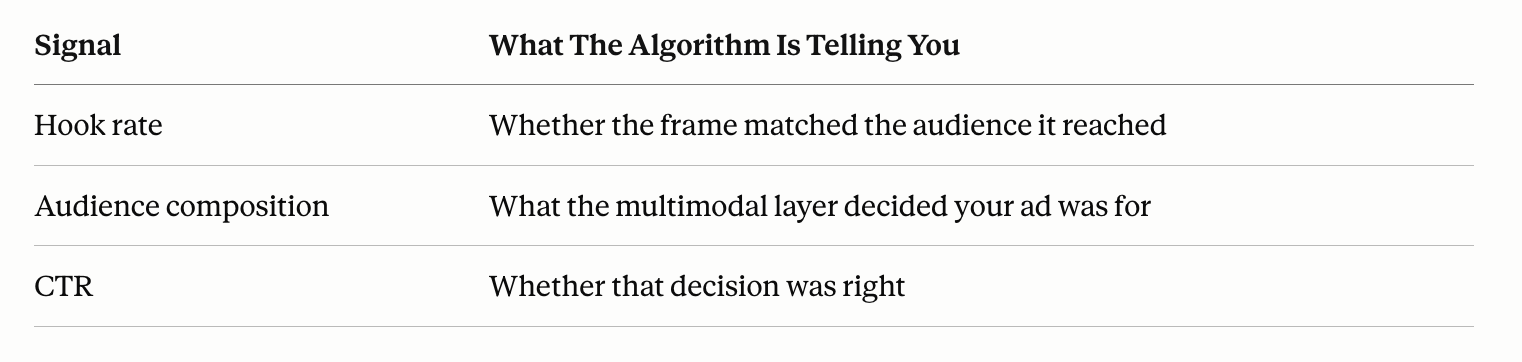
A creative reaching the wrong audience on day one was not unlucky. It was misread. The frame sent a signal the algorithm acted on, and the signal was wrong. No amount of budget or patience fixes a targeting decision that happened before your morning coffee.
Two Ads With Different Headlines Are The Same Ad Now
The multimodal layer does not read headlines first. It reads frames. Two creatives with identical visuals and different copy produce nearly identical reads and nearly identical performance, because to the algorithm they are the same ad wearing different shoes.
The variants worth testing are structurally different: first frame, creator presence, setting, product framing. If the frames look the same, you are not running a split test. You are running the same ad twice and waiting for a signal that will never come.
The Question You Should Be Asking Has Changed
It is no longer: did this creative convert?
It is: did this creative reach the people it was built for?
Wrong audience on day one means the frame is broken, not the targeting setting. Fix the frame. The algorithm already told you what it saw. Most teams just never thought to ask.
Together with Planable
70+ practitioners cracked the AI visibility code. They're teaching it live.
A buyer chose a competitor last quarter because the AI recommended them. Not because of price. Not because of product. Because their brand showed up where the decision was already being made and yours didn't.
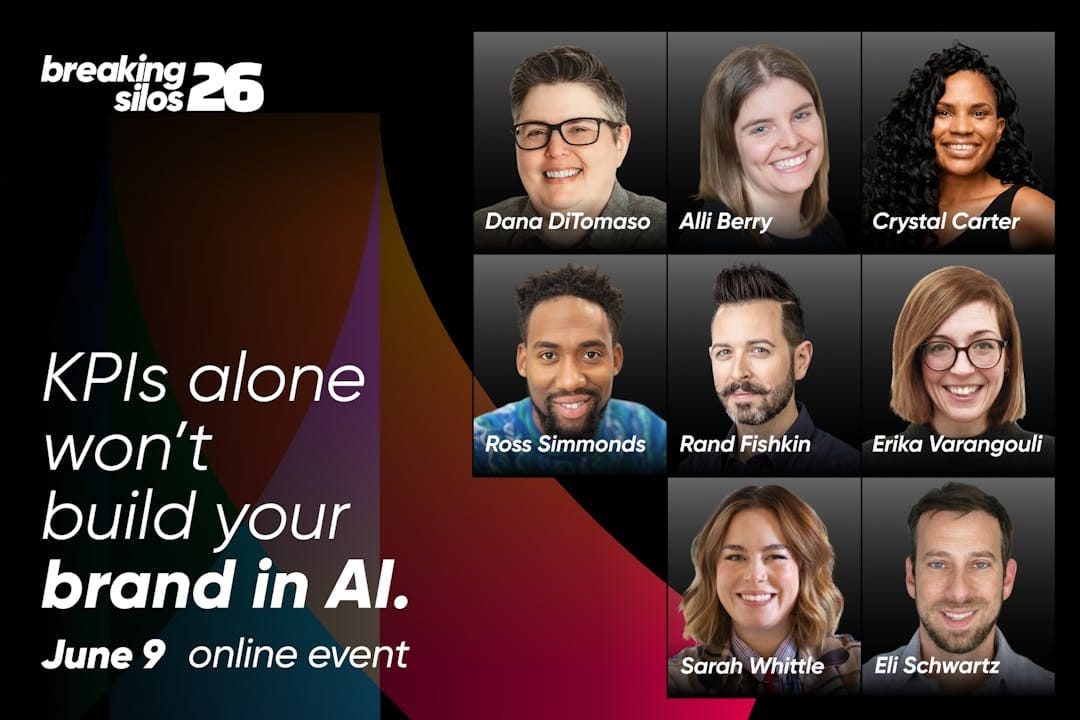
BreakingSilos 2026 is built for the leaders who don't want to find out that way. Free. Online. June 9th.
You'll walk away with:
- Which signals AI uses to decide which brands surface and which don't
- A strategy that connects your SEO, social, content, and PR so they build on each other
- The language to get your org moving on this before your competitors do
The people teaching this have already built it. Rand Fishkin (Co-Founder and CEO, SparkToro), Ross Simmonds (CEO, Foundation Marketing), and Crystal Carter (Head of AI Search and SEO Communications, Wix) are among the practitioners on stage across 30+ sessions. Zero vendor pitches.
The frameworks here take months to figure out alone. You can skip that part.
Can't make it live? Register anyway and get the recording in your inbox within 24 hours.
⭐ Reviews are becoming business infrastructure, not marketing
New research suggests that actively managing reviews and online reputation has a stronger connection to business performance than star ratings alone, while AI-powered discovery is making reputation signals even more important.
The Breakdown:
Management matters more - Researchers found businesses practicing active online reputation management consistently reported stronger performance, while Google star ratings alone showed no meaningful relationship with business outcomes.
Execution becomes an advantage - The study found reputation management delivered bigger benefits in highly competitive markets, suggesting ORM is evolving from a marketing activity into a core business capability.
Discovery is becoming selective - BrightLocal found 45% of consumers now use AI tools for local recommendations, while SOCi reported AI platforms recommend far fewer businesses than traditional Google local search.
Multi-location brands struggle most - Review volume continues growing, but response speed and consistency vary widely, with high-visibility brands responding significantly faster than lower-performing competitors across multiple locations.
The study suggests reviews are no longer just reputation signals for customers. As AI increasingly acts as the gatekeeper for recommendations, businesses may need to treat reputation management as operational infrastructure that supports visibility, trust, and long-term growth.
👨💻 Quick Hits
🛍️ Google expanded Commerce Media Suite to Demand Gen, letting brands use retailer first-party data to target high-intent shoppers across YouTube, Discover, and Gmail, with sales-focused measurement and AI optimization.
🤖 Google’s John Mueller says LLMs.txt is still speculative, as major AI systems don’t use it. He recommends focusing on WebMCP and ensuring AI agents aren’t blocked.
🏳️🌈 Authentic Pride Month participation still matters: 48–57% of consumers say brand involvement is important, rising to 69–78% for Gen Z and Millennials, and 76–85% among LGBTQ+ consumers. Year-round support matters far more than rainbow logos.
📈 OpenAI is launching conversion-optimized campaigns in ChatGPT Ads Manager, adding purchase-focused bidding alongside CPM and CPC options as it rapidly expands advertising capabilities.
💃Events
🔥 How the Creator Marketing Lead at Edelman Predicts Whether a Creator Will Drive Sales or Just Impressions
June 11 | Virtual Event | Free
Most brands only find out a creator was wrong for them after the budget is spent. Brooks Miller, EVP of Creator Marketing at Edelman, and Eric Ford, formerly Global Communications at L'Oréal, share the exact framework brand-side teams use to call that before the contract is signed.
✅ Reserve Your Free Spot
🔥 The AI System Chime Built That Runs Their Entire Search Workflow Without a Single Daily Prompt
June 11 | Virtual Event | Free
Most marketing teams are still manually running every AI task they have. Bridget Nelson built something different at Chime, and it runs without daily input. June 11, she's on stage with Tyler Roehmholdt from Bitly, showing exactly what that system looks like inside a real org.
✅ Reserve Your Free Spot
That’s a wrap for today! Tell us your thoughts about today's content as we line up more Shorts! And don’t hesitate to share this with someone who’d adore it. 🥰