
The Q2 lie we all believe
💸 The delusional transition is costing you bucks, The creative choices that actually move the needle on Facebook reels, and more!
Hey there Smarty 👋
Are you geared up to catch the latest and greatest in quick shorts?
And just a quick heads-up! If you stumbled upon us through a friend, make sure to subscribe here! That way, you’ll never miss out on the trending shorts.

💸Your Q2 ROAS is a lie you're paying to believe
Everyone's numbers look clean coming out of Q1.
That's the problem.
April is a strange month for paid media. The post-holiday correction has settled, budgets are refilling, and every brand in your vertical is quietly re-entering the auction at the same time. Nobody calls it a flood season because there's no single cultural moment driving it.
But the pressure to show Q2 momentum is organizational, and it's everywhere, which means the auction is getting crowded again, for reasons that have nothing to do with actual demand.
CPMs are climbing. They're just climbing politely enough that nobody's flagging it yet.
What's actually happening: you're paying a premium to look active in a window where looking active is the baseline. Your competitors are hitting similar numbers at similar costs and calling it recovery.
Nobody's asking whether the same budget held for three weeks and deployed in late May, after the Q2 push normalizes and half the market pulls back to reassess, would have landed harder for less.
It would. Almost always.
The attention that's expensive to buy during a soft flood is significantly cheaper on the other side of it. Feeds breathe. Inboxes clear. The audience that's been retargeted through the Q1-to-Q2 transition is less defended, less fatigued, and more reachable by the brand that didn't show up during the obvious window.
This isn't a contrarian take for the sake of it. It's an arbitrage play that most media buyers skip because the pressure to show Q2 activity is real, and the case for waiting is hard to make without data. Clients want momentum on the board.
Nobody wants to explain a quiet April. So everyone re-enters simultaneously, margins compress quietly, and the reporting gets built around volume numbers that hide what the window actually costs.
The fix is a calendar decision, not a creative one. Model your CPMs across April, May, and early June. Find where the curve softens. Build the re-entry case with numbers and make it before the budget gets committed to the obvious window.
The data is almost always there. The conversation almost never happens.
Grapevine's whitelisting model sidesteps the auction entirely, your message runs inside content the audience already chose to open, which means you're not fighting the feed at all.
Trusted placement during a quiet window is a completely different product from paid inventory dropped into a crowded Q2 cycle. If you want to build that into your next campaign, book a free strategy call, no commitment required.
Your April numbers aren't lying to you. They're just not telling you everything.
Together with Planable
The agency playbook you're following is built on myths.
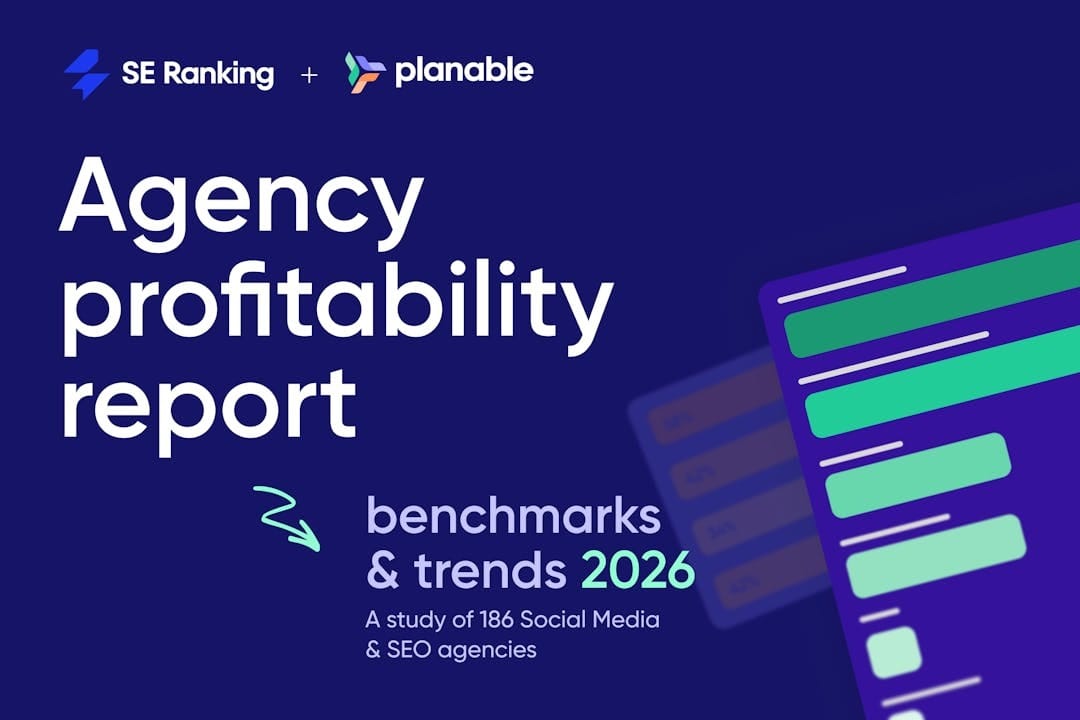
Most agency founders are making the same structural mistakes and have no idea because the mistakes look like strategy from the inside.
Planable surveyed 186 SEO and Social agencies to find exactly what separates the ones bleeding money from the ones clearing 41%+ margins.
The gap is smaller than you think, and it starts with knowing where you actually stand.
Download this report, and you'll walk away knowing:
- Which pricing models are quietly killing margins, and the exact configurations replacing them
- Why 36.6% of agencies calling themselves AI-first are actually losing money
- Why raising prices is the most common tactic among low-profit agencies and what high-profit ones do instead
One structural shift from this report could be worth more than any new client you close this quarter.
Download the report for free today!
🎬 The Creative Choices That Actually Move the Needle on Facebook Reels
New data across brand Facebook Reels reveals which creative elements drive retention, engagement, and reach. The results favour structural decisions over trendy editing or popular audio.
The Breakdown:
Talk in the First Three Seconds - Speech-led Reels see 24.7% higher 10-second retention and 5.6% more engagement than music-only videos. Yet 61.8% of brand Reels still go out without a single spoken word.
Show a Face Early but Know Its Limits - A person in the first three seconds lifts short-term retention by up to 10%. But the effect fades fast, with reach and replays both dipping. Audio hooks matter more than visual ones for keeping people watching.
Shoot Vertical and Loop Short Clips - Vertical Reels outperform every other format, with 30-second retention jumping 38.5%. For videos under 7 seconds, seamless loops boost replays by 18.7% and reach by 23.6%.
Skip the Fast Edits and Rethink Text - Slower-paced videos actually hold viewers slightly better at 30 seconds. Text overlays help music-based Reels but hurt speech-driven ones. When someone is talking, extra text competes for attention instead of adding to it.
The pattern is consistent: speak early, show a face, go vertical, loop short videos, and slow down. These structural choices beat creative tricks across every metric that matters.
🚀Quick Hits
📩 Your email tool should be the lowest-maintenance line on your growth stack, not the one that needs the most oversight to justify its cost. Omnisend averages $79 back per $1 spent across 150,000 brands, with 17.3% higher CTRs and 69% of revenue running through automations set once. Try it free and be up and running in 30 minutes.
🔄 Instagram now lets users rearrange carousel post order after publishing with a long-press and drag function. New media still can't be added post-publish, but creators can now test different content sequences freely.
🤝 YouTube merged BrandConnect and Creator Partnerships Hub into a single platform called YouTube Creator Partnerships, adding AI-powered brand deal matching, channel insight sharing, and direct brand outreach for YPP creators.
🔧 Google Ads API will block duplicate Lookalike user lists starting April 30, returning error codes for lists sharing the same seed, expansion level, and country targeting. Advertisers using automated scripts should update integrations now.
🐛 Multiple competing Google paid search ads are displaying identical website statistics, raising questions about a potential bug or test. Google hasn't commented, but the issue could undermine trust signals that drive click-through rates.
That’s a wrap for today! Tell us your thoughts about today's content as we line up more Shorts! And don’t hesitate to share this with someone who’d adore it. 🥰