
The power of about page
💪Your about page is doing one job. It should be doing two, Meta and Pinterest are using AI to shorten the path from discovery to purchase, and more!
Hey there Smarty 👋
Are you geared up to catch the latest and greatest in quick shorts?
And just a quick heads-up! If you stumbled upon us through a friend, make sure to subscribe here! That way, you’ll never miss out on the trending shorts.

💪 Your about page is doing one job. It should be doing two.
Every about page is written for humans. Company story, founding moment, values statement. Readable, relatable, and completely invisible to every AI system trying to figure out what your brand actually is.
AI retrieval systems scan for entity signals, explicit declarations of what your brand is, what category it owns, who it serves, and what it's authoritative on.
When those signals aren't present, AI systems infer your entity from scattered page-level signals across your site. Inference produces weaker citation confidence than declaration. Weaker confidence means fewer citations.
One structural addition fixes this.
Add an entity block above the fold
Four lines. Not a paragraph. Not a brand story. Four explicit statements positioned above the fold:
- What your brand is in one sentence using the exact language your category uses in AI-generated answers
- What category you own, not your tagline, the specific category term AI systems use when generating answers about your space
- Who you serve, audience, use case, and context specific enough to match a real query
- What primary outcome you deliver, one concrete result, not a value proposition
The difference between "We help businesses grow" and "We help DTC brands reduce customer acquisition cost through performance email" is the difference between an entity signal AI systems can map to a query and noise they ignore.
Write the entity block in the language AI systems already use for your category. Run your top queries through ChatGPT and Perplexity. Note the exact language used to describe brands like yours. That language belongs in your entity block, not your marketing team's preferred positioning.
Extend entity blocks to every key page
An about page entity block establishes your brand entity. Page-level entity blocks extend it to individual topics and services.
Every product and service page gets its own four-line block: what this page covers, who it's for, what query it answers, and how it connects to your brand's broader entity. Every page becomes independently citable for a different sub-query while reinforcing topical authority across your entire site.
Track whether entity block additions are moving citation rates. SEMrush's AI Visibility Toolkit shows visibility across ChatGPT and Google AI Mode so you can confirm entity signals are translating into actual retrieval. You can try it for free for 7 days.
Match category language, not brand language
The most common entity block failure: writing in internal brand vocabulary instead of category language.
Before finalizing any entity block, run every key term through ChatGPT with this prompt: "How would you describe a brand that does X?" If the language in the AI response doesn't appear in your entity block, rewrite it until it does.
Your about page has been working for humans for years. It's never worked for AI. Four lines changes that.
Together with Insense
You know UGC works for you. Now build the machine.
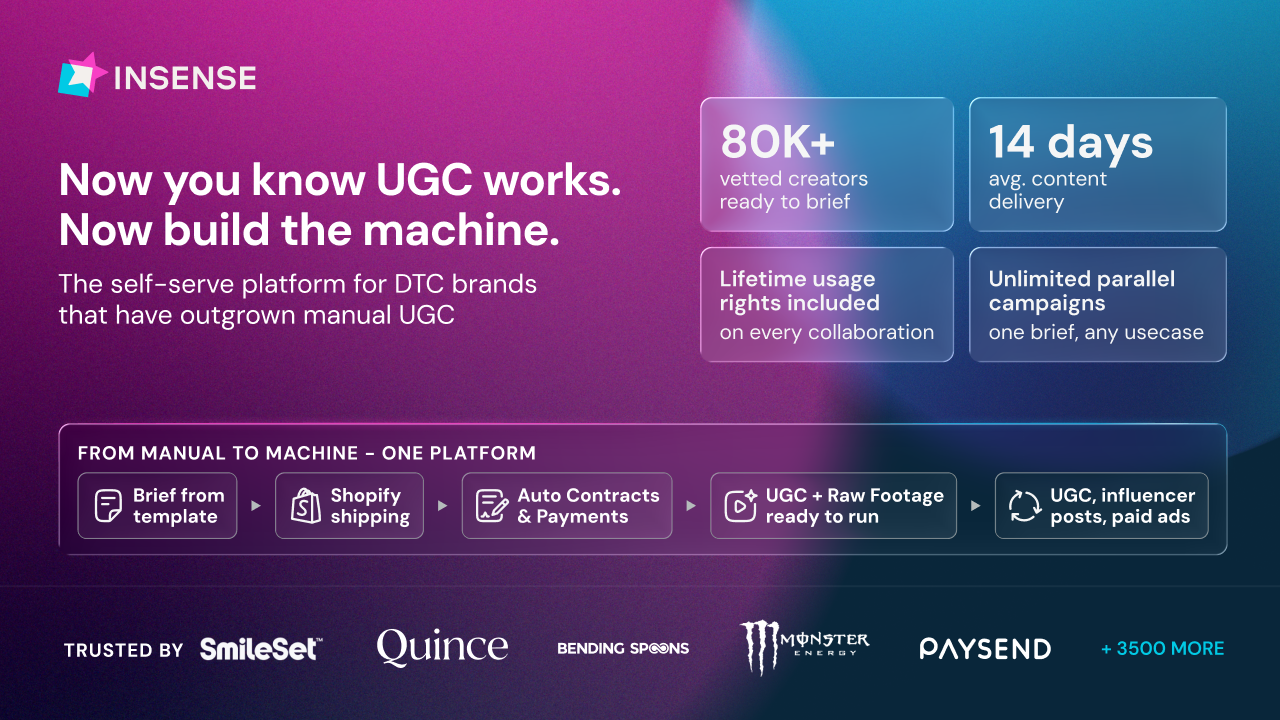
You know creator content works for your brand. The challenge now isn't whether to do it; it's how to do it at volume without the process falling apart.
Insense is the self-serve platform for DTC brands that have outgrown manual UGC.
Source from 80,000+ vetted creators, run multiple campaigns in parallel, automate contracts and payments via Shopify integration, and receive content in 14 days, with full lifetime usage rights included.
Trusted by SmileSet, Paysend, Bending Spoons, Quince, Monster Energy, and 3,500+ brands using Insense to turn what works into a repeatable production system.
Book a free strategy call and get a $200 platform credit towards your first campaign.
🛍️ Meta And Pinterest Bet Big On AI Commerce
Meta and Pinterest are rolling out new shopping and advertising tools designed to make product discovery, creator monetization, and campaign optimization more automated. Both platforms are leaning heavily into AI to connect shoppers with products more effectively.
The Breakdown:
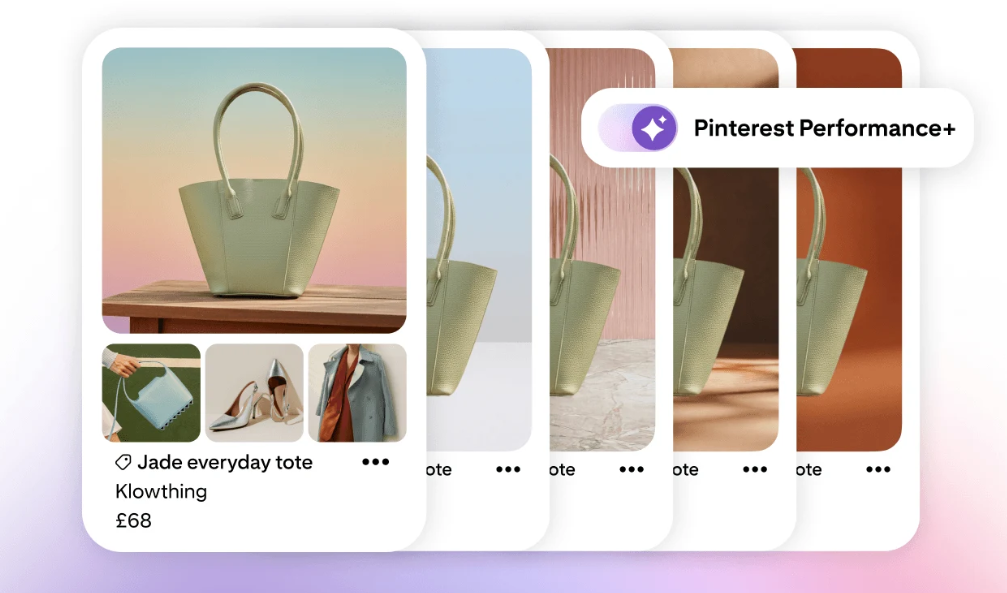
AI Advertising Assistant - Pinterest launched a new AI-powered business assistant inside Ads Manager that provides recommendations, insights, charts, and performance guidance. The tool acts as an AI collaborator to help advertisers build and optimize campaigns more effectively.
AI Shopping Discovery - Pinterest launched Ask Pinterest, dynamic creative optimization, and AI reporting tools, helping shoppers navigate complex purchase decisions through conversational recommendations and personalized discovery.
Livestream Shopping Expansion - Meta is bringing live video ads to Instagram and rolling them out globally on Facebook. New shopping features let viewers browse products, check prices, and discover items directly within livestreams without leaving the broadcast.
Affiliate Commerce Growth - Meta expanded affiliate partnerships with Flipkart, Mercado Libre, and Lazada, while enabling creators in 22 countries to tag products and earn commissions directly through Instagram.
Social commerce is becoming increasingly AI-driven. Meta is focused on turning livestreams and creators into stronger sales channels, while Pinterest is building AI tools that help both advertisers and shoppers make better decisions throughout the buying journey.
👨💻 Quick Hits
📊 UGC performance breaks long before media does. Revolut scaled to 350+ UGC assets from 140+ creators across 10+ countries by fixing creator fit upstream, not by increasing spend. Insense gives marketers access to 80,000+ vetted creators with licensing handled end-to-end. Book a free discovery call and get $200 toward your campaign.
🔍 Google AI Overviews cited self-promotional “best” software listicles 323 times, but excluded those brands from recommendations 69% of the time, often favoring stronger competitors with broader third-party authority and mentions.
📊 Google Ads launched a beta for Supplemental Conversion Data, letting advertisers combine Google Tag Tracking with CRM and backend transaction data.
🔎 Pew Research found 60% of Americans read AI-generated search summaries, while 40% use AI chatbots for information lookup. ChatGPT leads adoption at 44%, making AI-assisted search increasingly mainstream.
🎓 LinkedIn and Adobe launched AI Essentials for Marketers, a new training program teaching AI-powered marketing skills. The move comes as AI literacy requirements for marketing jobs have surged 113% year-over-year.
That’s a wrap for today! Tell us your thoughts about today's content as we line up more Shorts! And don’t hesitate to share this with someone who’d adore it. 🥰