
The Data Lag Trap
⚡How slow SEO reporting is killing fast experiments, AI ad systems hit peak precision, and more!
Hey there Smarty 👋
Are you geared up to catch the latest and greatest in quick shorts?
And just a quick heads-up! If you stumbled upon us through a friend, make sure to subscribe here! That way, you’ll never miss out on the trending shorts.

⚡ The Data Lag Trap
You don’t lose growth because your strategy is wrong. You lose it because your feedback loop is.
Marketers love to talk about velocity, but the truth is, most teams are trapped in the wrong time zone. You run a campaign, push an experiment, and wait for the dashboards to catch up. By the time your analytics refresh, the audience has moved on, the search patterns have mutated, and your insight is already a postmortem.
This is the data lag trap, the silent killer of fast growth.
The Real Enemy Isn’t Bad Data. It’s Late Data.
SEO reporting was built for static worlds, not LLM-fed, micro-trending ones. Your “rankings” mean nothing if the queries they’re tied to don’t exist anymore. The new search environment rewrites intent hourly, AI chats, voice prompts, and rephrased queries are spinning the demand graph faster than your team can pull a CSV.
Every delay compounds. You’re not analyzing; you’re reacting. And in that gap, your experiments die of latency.
Precision Has Become a Liability
Marketers crave precision because it feels safe. But the pursuit of perfect accuracy has become a drag anchor. The winner now isn’t the one with the cleanest data, it’s the one with the fastest interpretation. In a system shifting this fast, 80% clarity today beats 100% clarity next week.
Your dashboards don’t tell you what’s happening. They tell you what used to happen.
The System-Level Fix
What marketers actually need is infrastructure that runs at the same velocity as intent.
Not another “SEO tool.” Not another dashboard. A visibility system that listens to both human and machine search in real time, across Google, ChatGPT, Perplexity, Gemini, and whatever launches next week.
That’s the exact hole Semrush One plugs. It collapses the data lag between human search and AI query shifts, turning what used to be a 10-day refresh cycle into an always-on visibility pulse.
You can try it for free for 7 days, it’s not a reporting layer. It’s a reaction layer.
The New Growth Equation
Speed is now the only defensible advantage.
The team that detects change first wins the experiment, sets the benchmark, and controls the next iteration. Everyone else is just reading the recap.
The question is no longer “Are we ranking?”
It’s “Are we still relevant right now?”
Together with Nebius
Your Next Campaign > Your Next Cloud Invoice
Your ad budget shouldn’t be paying for someone else’s GPU delays. Yet every week on AWS or Azure, surprise invoices pile up while models idle in queues, burning the runway you need for growth.
With Nebius, you’ll see this right away:
- Free migration & 3 months free, savings start immediately
- 30–50 % lower GPU spend with consistent $2/hr pricing
- Training large models up to 50 % quicker with instant scaling
Teams like Recraft and Captions already run production workloads on Nebius, citing stable clusters, quick support, and zero launch delays, proof that the platform can handle serious scale without hidden fees.
Switch to Nebius and lock in your free months before your next cloud bill hits!
🎯 AI Ad Systems Get Sharper Across Meta, Google, and YouTube
AI-led advertising is entering a precision phase. Meta is refining app optimization, Google is improving product promotions, and YouTube is clarifying performance data. Together, these updates mark a shift toward transparency, accuracy, and smarter measurement across platforms.
The Breakdown:
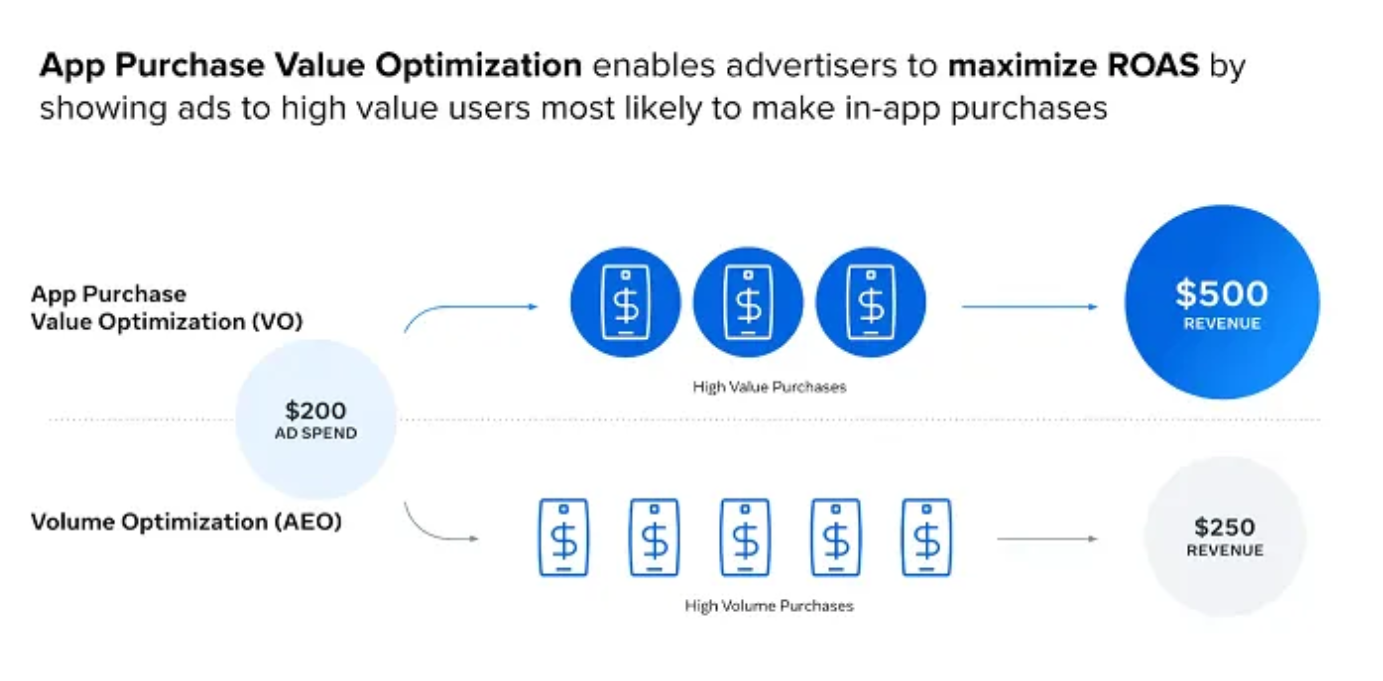
1. Meta Refines Value-Based App Optimization - Meta’s latest AI update improves “Value Optimization,” allowing advertisers to target users more likely to spend within apps. Campaigns using this setting report a 29% higher ROAS than volume-based ones, reflecting a shift from maximizing downloads to prioritizing long-term value.
2. Meta Adjusts Attribution and User Tracking Rules - Through updates with AppsFlyer, Adjust, and Singular, Meta introduced attribution windows up to 180 days for app campaigns, reducing redundant targeting and improving user categorization, leading to 20% fewer mismatched acquisitions across re-engagement efforts.
3. Google Enables Promotions for Top-Performing Products - Google Merchant Center now lets sellers apply promotions only to top-performing SKUs, instead of discounting all products, allowing precise targeting of proven items and a review interface where advertisers can edit or remove listings directly for better campaign control.
4. YouTube Separates Organic and Paid Performance Data - YouTube Analytics now distinguishes organic and paid traffic across views, engagement, and watch time. Channels can filter results by source to evaluate each independently, with YouTube noting that promoted content may expand reach but lower overall engagement averages.
Across Meta, Google, and YouTube, the focus is moving from automation to data-defined clarity. Each update strengthens control over performance signals, helping marketers evaluate impact without overlapping metrics or wasted effort.
🚀Quick Hits
#️⃣ If you’re still tracking hashtags, you’re a year behind. Syncly Social detects every spoken brand and product mention on TikTok to reveal what your customers actually say, not just what they type. Catch real-time trends and creators leading them. Book a call today to get your free TikTok analysis.
🎧 Acast’s 2025 study found podcasters and journalists top trust at 33%, ahead of influencers and celebrities, with 84% saying podcasts changed their opinions and 70% considering new brands.
💬 LinkedIn is stepping up enforcement against fake engagement, AI comments, and pod groups that artificially boost reach. VP Gyanda Sachdeva says the platform will restrict such content’s visibility and disable related automation tools.
🚗Google’s Performance Max campaigns now include Waze ad inventory for store goals, letting advertisers reach drivers through in-navigation pins. It also adds channel performance reporting, offering clearer visibility across Google’s network.
🤖 According to Semrush, ChatGPT increased brand mentions by 12% and expanded its source pool by 80%, while Google’s AI Mode narrowed focus, reducing mentions by 4% and growing sources only 13%.
That’s a wrap for today! Tell us your thoughts about today's content as we line up more Shorts! And don’t hesitate to share this with someone who’d adore it. 🥰