
The Ad that wouldn’t die
🥹Everything seemed good then, how did this one ad die all of a sudden? YouTube hands creators better audience data while Pinterest explains why variety wins, and more!
Hey there Smarty 👋
Are you geared up to catch the latest and greatest in quick shorts?
And just a quick heads-up! If you stumbled upon us through a friend, make sure to subscribe here! That way, you’ll never miss out on the trending shorts.

🥹The Ad That Wouldn’t Die
Thirty-one days. Same asset. Same segment. The kind of run that makes a media buyer feel like a genius.
Then the segment went quiet.
Not a cliff. No dramatic drop that flags in the dashboard. Just a slow, imperceptible closing-off, the highest-LTV cohort in the account, the intentional buyers with the longest sales cycle and the lowest churn, stopped responding. To anything. New creative. Fresh angles. Different hooks. Nothing landed the way it used to.
Nobody looked back at the ad that ran for 31 days. Nobody connected the silence to the signal they’d run into the ground three months earlier. Why would they? The dashboard never flagged it. The ROAS held. The asset looked fine right up until the moment the damage was already done.
You’ve done this. Maybe not with those exact numbers, but you’ve kept something live because the dashboard didn’t give you a clear reason to stop. Because pulling a converting asset feels like leaving money on the table. The rule in performance marketing is: if it’s working, don’t touch it.
That rule is costing you buyers you don’t know you’ve lost.
Here’s the part that doesn’t show up anywhere you can measure it. Creative doesn’t just stop working. It crosses a threshold , quietly, without flagging , where continued exposure moves through three distinct stages:
- Signal. The hook lands. The emotional trigger hasn’t been pattern-matched yet. Conversion reflects genuine resonance.
- Wallpaper. The buyer has unconsciously categorized it. Performance erodes slowly enough to read as normal variance. Most accounts never catch this in time.
- Scar Tissue. Continued exposure stops producing neutrality and starts producing aversion. Not the kind a buyer could articulate. Something lower-grade and more permanent , a quiet negative association filed away without their awareness.
They don’t hide the ad. They don’t click to complain. They scroll past it with a micro-response so subtle it registers as nothing. CTR reads stable. ROAS holds within range. The account looks healthy.
The damage is already done.
The shift isn’t dramatic. It doesn’t require a new strategy or a bigger creative budget. It requires one question asked before launch, not after:
How long is too long for this specific person , not this campaign, not this account, this person , to see this emotional signal before it stops feeling relevant and starts feeling like noise?
That question changes three things immediately:
- The brief. You stop writing to a broad persona and start writing to a decay window.
- The pull decision. You stop waiting for the dashboard and start pulling on a schedule built around the buyer.
- What you count as a win. A 14-day run that exits clean beats a 31-day run that ends in Scar Tissue every time.
The belief most performance marketers carry is that creative failure is a volume problem. You didn’t make enough. You didn’t test enough variants. You ran out of fresh material.
But the accounts quietly outperforming their peers aren’t producing more. They’re stopping sooner. They’ve accepted that the most expensive creative decision isn’t what you launch , it’s what you refuse to let run one week past its expiration.
Your best-performing ad right now might already be your biggest liability. The dashboard won’t tell you. It never does.
Together with Funnelish
90% more conversions. Same product. Different funnel.
Liquid Death didn't reformulate the water. They rebuilt what happened after the click, and the conversion rate jumped 90%. That's not a marketing story. That's a funnel story.
Most brands optimize the ad and ignore the rest. Pages drag. Checkouts leak. Abandoned carts go quiet. The revenue disappears before it ever lands.
Funnelish is built for everything the ad can't fix. And if you're already running a funnel somewhere else, their team will migrate it for you, free.
- Sub-1-second load times. Half of your traffic won't wait longer than 3 seconds
- Drag-and-drop builder covering every stage: landing pages, upsells, cart recovery, confirmation
- 70% of visitors abandon cart. Built-in email and SMS sequences pull them back
- Shopify, Stripe, Klarna, Google Sheets, Facebook Pixel, and 27+ integrations total
$2B+ processed. 33 million purchases. 4,600+ users who stopped patching and started scaling.
The traffic is already there. The funnel just needs to do its job.
Start free for 14 days. No card needed.
📊 YouTube Hands Creators Better Audience Data While Pinterest Explains Why Variety Wins
YouTube added Family Status and Household Income metrics to its Media Kit feature and brought Google's Nano Banana into its video creation app. Pinterest revealed why showing users similar content actually backfires and what it does instead.
The Breakdown:
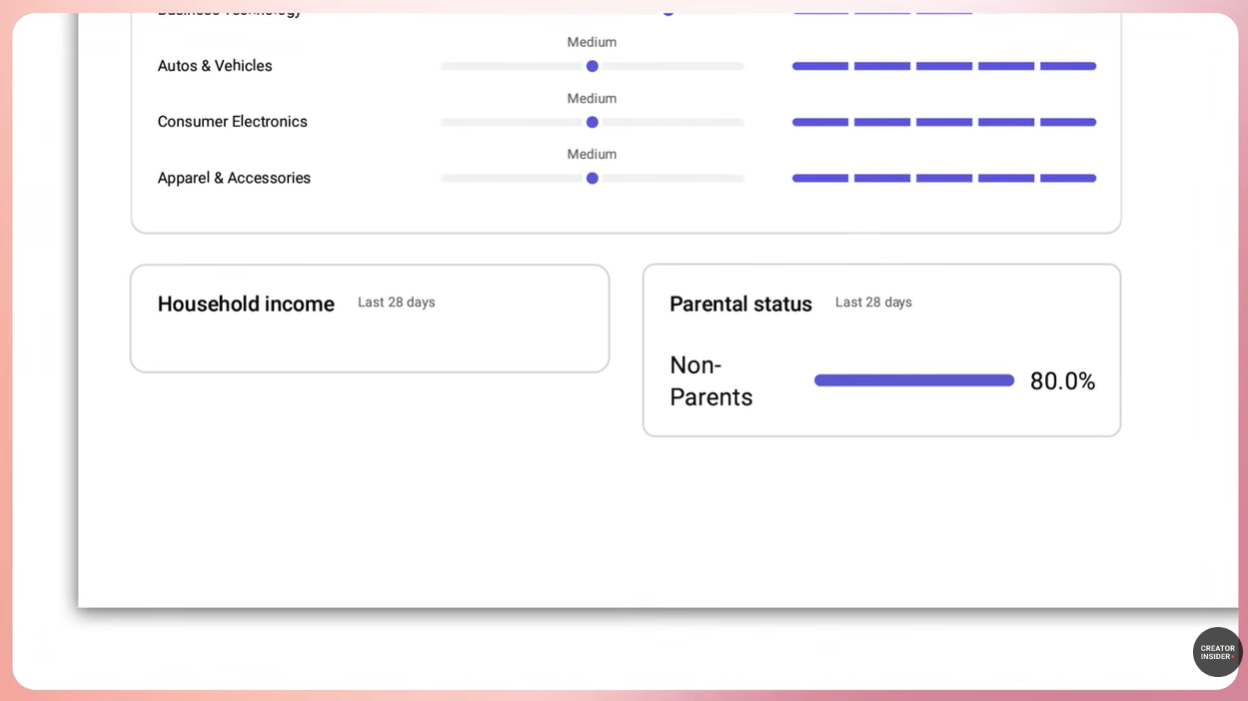
YouTube Adds Income and Family Data - The Media Kit now shows what percentage of a creator's audience are parents and breaks down household income, giving YouTube creators sharper data to pitch to brands when negotiating sponsorship deals.
Nano Banana Hits YouTube Create - YouTube Create, the platform's standalone editing app, now lets users generate images with Google's Nano Banana model using text prompts and up to three reference images uploaded directly from the device gallery.
Pinterest Says Repetitive Content Hurts Engagement - Visually similar Pins reduce session length and return visits even when they match a user's past searches. Pinterest now diversifies feeds intentionally because clinging to direct engagement signals ends up making the app less interesting over time.
Smarter Signals Beyond What You Click - Pinterest expanded its recommendation system to include visual and text embeddings, co-engagement patterns, and actions from other similar users. The result is broader, more relevant feeds across its 619 million monthly active users.
YouTube is making it easier for creators to land brand deals and giving them more AI-powered creative tools. Pinterest is proving that algorithmic variety beats algorithmic repetition. Both updates point to platforms refining how they connect users to content and creators to revenue.
Together withThe Shift
The AI Newsletter Built For People Who Actually Use AI
Many AI newsletters are interesting. Very few are useful.
The Shift is built for execution, not curiosity.
Every edition shows you exactly how you can use AI right now to save hours, reduce costs, or replace entire workflows. No theory, no tool dumps, no trend watching.
You get practical breakdowns, daily copy-paste prompts, simple systems, and access to over 3,000+ vetted AI tools and a tried and tested Prompts Library (500+ Prompts)
So you can apply everything immediately. If AI is part of your work, but still feels underutilized, this newsletter fixes that.
Subscribe to The Shift. It’s free!
🚀Quick Hits
⚡ The cart that sat for 48 hours, the browse session that got no follow-up, the post-purchase window that never converted - Omnisend has a pre-built flow for every one of them and FiGPiN is pulling $7.44 revenue per email sent running exactly that way. Your first automation is live in under 30 minutes. Try it free and be fully migrated in 5 days.
🌍 X rolled out AI-powered auto-translation globally, along with new in-app photo editing tools and expanded reply controls, aiming to boost cross-language engagement and creator customization.
💬 Instagram is testing expanded reach for Notes, allowing creators to share them with all followers instead of just mutuals, potentially turning Notes into a lightweight broadcast tool for engagement.
🔍 A new study shows over 20% of ChatGPT outbound clicks go to Google, highlighting how AI-driven discovery is still heavily concentrated among a small group of dominant sites despite growing overall referral traffic.
🤖 Google CEO Sundar Pichai says Search is evolving into an “agent manager,” where AI will handle multi-step tasks and coordinate actions across tools instead of just showing links and answers.
That’s a wrap for today! Tell us your thoughts about today's content as we line up more Shorts! And don’t hesitate to share this with someone who’d adore it. 🥰