
Stop Giving Meta Mixed Signals
😤 Breaking your situationship with the Meta Algo with clarity, Google Ads no longer runs purely on keyword matching, and more!

Hey there Smarty 👋
Are you geared up to catch the latest and greatest in quick shorts?
And just a quick heads-up! If you stumbled upon us through a friend, make sure to subscribe here! That way, you’ll never miss out on the trending shorts.

Together with Share Local Media
What Happens When Premium Brands Share The Mailbox
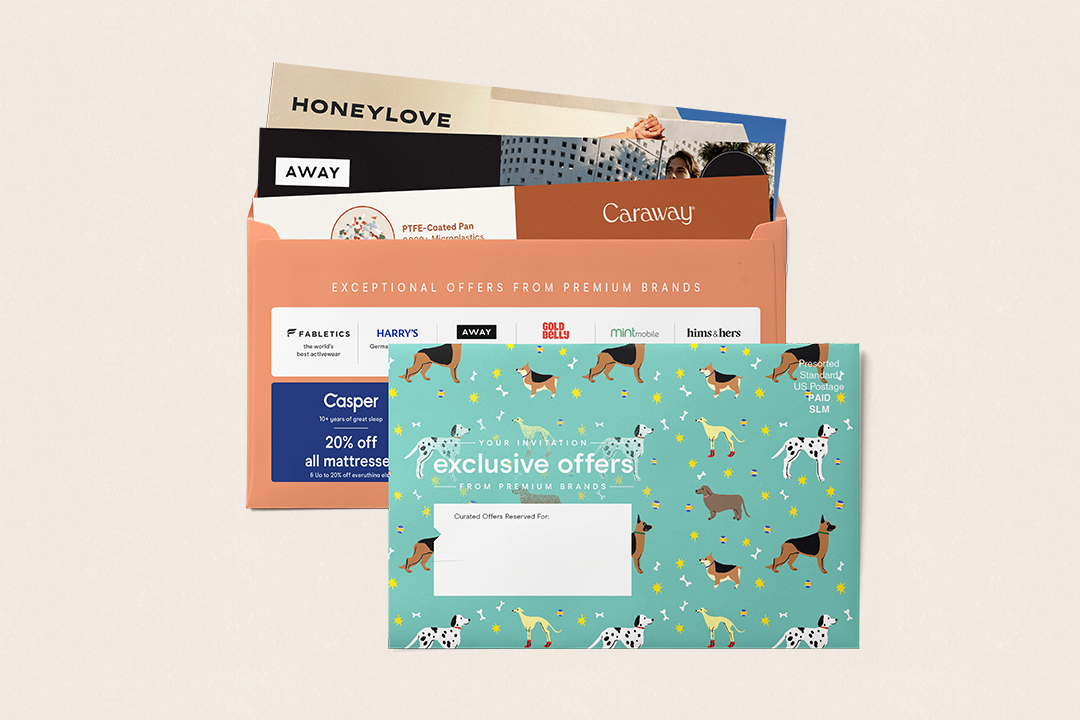
Direct mail continues to be a reliable driver of customer acquisition. But for many brands, getting started can feel complex - long setup timelines, high minimums, and limited flexibility when it comes to testing. That friction often delays experimentation, even as acquisition costs rise across other channels.
Shared Mail from Share Local Media removes that barrier.
Your brand plugs into a premium shared envelope alongside other trusted brands, giving you mass prospecting reach with minimal spend and effort.
No long setup, no operational drag, and no big upfront commitment required. That is why Shared Mail has become an excellent entry point for brands curious about direct mail.
Here’s what brands are actually seeing:
- Manscaped achieved 521% ROAS from shared mail prospecting
- DIME Beauty saw $20–$40 CPAs while scaling to 2.8MM circulation, driving 7–9x ROAS
With nearly a billion mailings delivered over the past decade, SLM’s Shared Mail Program is a proven, measurable channel trusted by brands like Away, Joybird, and HelloFresh, at an all-in cost as low as $0.06 per piece.
April Shared Mailings close on 3/2. Secure your spot now!
😤 Stop Giving Meta Mixed Signals
When revenue starts getting noisy, the instinct is to blame the creative or CPMs. The quieter issue usually sits in the feedback loop.
If purchases, add-to-carts, and random promo redemptions all get treated the same, the system will chase whichever fires most often. That often means low AOV buyers, discount hunters, or one-time purchasers. The platform isn’t misbehaving. It’s following the incentives built into the account.
Meta optimizes labels, not intent.
1️⃣ AOV Blindness Creates Margin Problems
If every purchase is equal in the ad account, the model cannot distinguish between a $28 accessory buyer and a $240 core product buyer. Over time, it gravitates toward the faster, cheaper conversion.
That feels efficient at first. Then, blended AOV drops and contribution margin compresses. Value-based optimization or tiered purchase events teach the system which transactions actually matter.
Signal hierarchy shapes revenue quality.
2️⃣ Discount Events Can Poison Learning
Heavy promo periods often create a surge in cheap conversions. If those purchases get fed back without context, the system starts preferring price-sensitive audiences long after the sale ends.
The cost shows up weeks later: higher CAC at full price and weaker repeat behavior. Separating sale campaigns or tagging promo buyers differently prevents long-term distortion.
Short-term lifts can create long-term drift.
3️⃣ Bundles and High-Margin SKUs Need Isolation
Mixing high-margin bundles with low-margin impulse products under one ROAS target creates confusion. The algorithm will default to whichever path hits the target easiest, even if it erodes profit.
Segmenting by margin profile or price band gives the system a cleaner learning environment. Fewer conflicting signals lead to steadier scaling.
Data density only works when economics align.
4️⃣ Creative Filters the Buyer Before the Click
Broad lifestyle messaging invites everyone. Specific use-case messaging narrows the field before the auction even settles.
If the ad highlights a premium outcome or a distinct problem, it naturally filters out low-intent traffic. That improves downstream event quality and strengthens optimization over time.
Acquisition performance reflects upstream precision.
Scaling paid acquisition isn’t about pushing harder. It’s about tightening what gets rewarded.
When higher-value orders, healthier margins, and repeat behavior become the signals that feed back into the system, acquisition stops drifting toward volume for volume’s sake.
The platform compounds whatever behavior is reinforced. Feed it better outcomes, and it hunts better customers.
🔍 Google Ads Now Runs on Intent, Not Keywords
Google Ads no longer runs purely on keyword matching. The auction is triggered by inferred intent, shaped by conversational AI, query fan-out, and reasoning layers that decide which ads best support a user’s underlying goal.
The Breakdown:
1. Auction Logic Has Changed - Google now uses query fan-out to split complex searches into subtopics and infer intent before users finish typing. Ads match need states, not exact keywords, reshaping how eligibility works.
2. Intent Beats Match Types - Campaigns should be structured around user goals and decision stages rather than exact or phrase match. The same query can signal different intents, and Google’s AI increasingly interprets that nuance.
3. Eligibility Favors AI Formats - Showing in AI Overviews and AI Mode requires broad match, Performance Max, or AI Max. Exact and phrase match still protect brand terms but limit exposure in conversational placements.
4. Context and Data Win - Landing pages must address why a user needs something, not just what it is. Rich metadata, optimized feeds, and Customer Match data strengthen signals, while automation requires consistent conversion volume.
Keywords still matter, but they are no longer the blueprint. Intent-first thinking aligns campaigns with Google’s AI reasoning, making it the most resilient way to compete as conversational search expands.
Together with The Shift
The AI Newsletter Built For People Who Actually Use AI
Many AI newsletters are interesting. Very few are useful.
The Shift is built for execution, not curiosity.
Every edition shows you exactly how you can use AI right now to save hours, reduce costs, or replace entire workflows. No theory, no tool dumps, no trend watching.
You get practical breakdowns, daily copy-paste prompts, simple systems, and access to over 3,000+ vetted AI tools and a tried and tested Prompts Library (500+ Prompts)
So you can apply everything immediately. If AI is part of your work, but still feels underutilized, this newsletter fixes that.
Subscribe to The Shift. It’s free!
🚀Quick Hits
💥 How did BioTech USA activate 70+ influencers and 500+ nano creators, without breaking their workflow? They scaled globally using Modash to find hyper-targeted talent and manage everything from gifting to performance tracking in one place. That’s what happens when you stop duct-taping tools together. Start your free 14-day trial today!
📸 Meta is internally testing Instants, a standalone disappearing photo app based on Instagram’s earlier “Shots” feature, aiming to drive spontaneous, Snapchat-style sharing among younger users, though no public launch plans exist yet.
🤖 Google is promoting its AI Max for Search tool directly inside Google Ads campaign settings, inserting in-platform prompts to drive AI adoption and accelerate advertiser use of automated features.
🔒 Discord will require mandatory age verification for all users starting in March, defaulting everyone to a teen-safe experience unless verified as an adult via facial age estimation or ID checks.
📈 71% of consumers buy or consider viral products, rising to 75% for Gen Z. 38% decide within 48 hours. If out of stock, 62% buy elsewhere, and 68% feel frustrated.
That’s a wrap for today! Tell us your thoughts about today's content as we line up more Shorts! And don’t hesitate to share this with someone who’d adore it. 🥰