
Meta’s Sending Pre-Judged Traffic
😮Your buyer was already judged before your ad appeared, Googlebot has a 2MB limit, and anything beyond it doesn't exist, and more!
Hey there Smarty 👋
Are you geared up to catch the latest and greatest in quick shorts?
And just a quick heads-up! If you stumbled upon us through a friend, make sure to subscribe here! That way, you’ll never miss out on the trending shorts.

Together with AirOps
Stop satisfying the algorithm. Start getting retrieved.
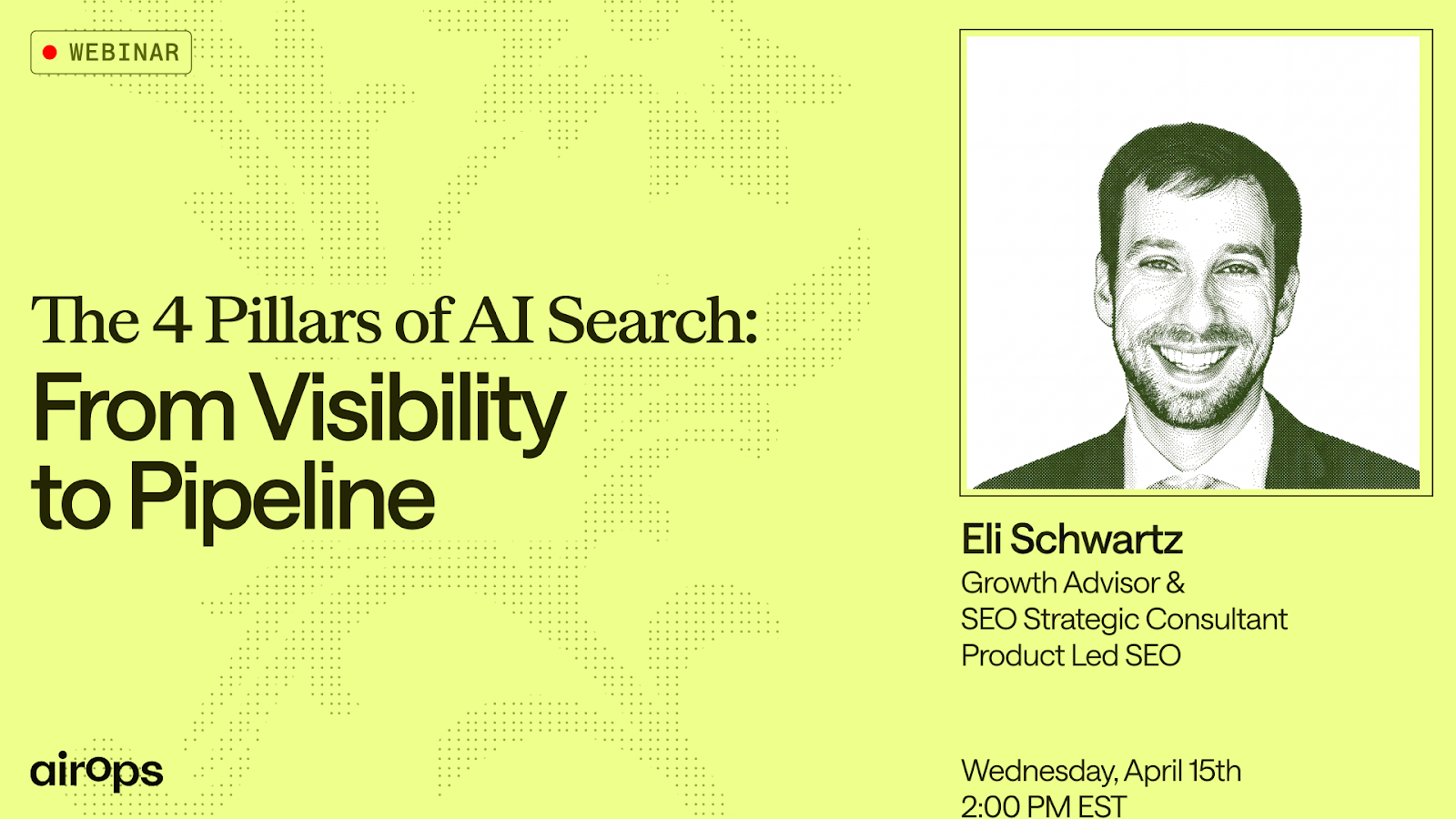
AI answers don't reward rankings. They pull from content that signals trust, structure, and relevance at the passage level. If your brand isn't being retrieved and cited, you're invisible where decisions are already being made.
Join AirOps on April 15th at 2 PM EST for a live session with Eli Schwartz, Growth Advisor and Author of Product-Led SEO.
Eli has created billions in organic search revenue, consulting with companies like Coinbase, Tinder, LinkedIn, Gusto, Quora, Zendesk, and more.
He’ll break down the exact framework he's shared with board rooms and VCs for how AI search is functioning now in 2026. You'll walk away knowing:
- The 4 pillars that determine whether AI retrieves your content
- How to identify the highest-leverage SEO stages to fix first
- Why deep customer research is still the most underused edge in AI visibility
One live session. A framework you can action the same week.
Can't make it live? Register anyway and get the recording within 24 hours.
😮Your Buyer Was Already Judged Before Your Ad Appeared
Meta's ranking model isn't deciding whether your ad is good. It's deciding whether your ad is next. Every user moves through a feed that the algorithm is actively sequencing in real time, content, content, content, then your ad.
The model's question isn't "is this relevant to this person?" It's "Does this continue the narrative this person is already inside?" That's the mechanic almost nobody is building creative around.
Your ad isn't an interruption. It's an audition to be the next frame.
Diagnose failing campaigns differently
Stop asking "what's wrong with the ad." Start asking "which sequence did the algorithm place this in, and did the creative belong there?" An ad underperforms not because it's bad, but because it got cast into the wrong narrative. To diagnose it properly:
- Pull the placements where it tanked
- Identify the content type surrounding it in those feeds
- Ask whether the hook assumes the same emotional state as the content created
An ad that fails cold sometimes converts at an absurd rate in retargeting, not because the audience changed, but because the sequence finally matched the assumption baked into the hook.
Write hooks as sequels, not openings
Weak hooks introduce a problem. Strong hooks continue one. Every high-performing hook assumes something already happened; it picks up a thread mid-thought. The reader should feel like the ad read their last three minutes of scrolling. Because functionally, the algorithm ensured it did.
Build creative for specific preceding content, not specific audiences
Ask: What does someone watch, read, or engage with immediately before they're ready to buy this product? Then build a creative that feels like the natural next piece of that content, not a demographic match, a narrative match. This is why creator-led formats outperform polished studio ads in cold audiences:
- They already look like what came before them in the feed
- They don't signal "ad," they signal "more of what you were just watching."
- The sequence stays unbroken, so the ranking model keeps them in rotation
When a creative wins, the algorithm finds a narrative it fits inside. Before you scale the format, identify the sequence. Build your next creatives deeper into that same thread.
You've been writing ads. You should have been writing sequels.
🤖 Googlebot has a 2MB limit, and anything beyond it doesn't exist
Gary Illyes broke down how Googlebot handles page size. There's a hard byte limit on what gets crawled, and if your important content sits past it, Google will never see it.
1. Google Only Reads the First 2MB of Your Page - Googlebot stops fetching at exactly 2MB, including HTTP headers. Everything after that cutoff is ignored completely, not crawled, not rendered, not indexed. If your structured data or metadata sits below bloated code, it's invisible.
2. External Resources Get Their Own Separate Limit - Every JS, CSS, and referenced file is fetched independently with its own 2MB counter. Moving heavy scripts and styles out of your HTML frees up that byte budget, so Google actually spends it reading your content.
3. PDFs Get 64MB and Other Crawlers Default to 15MB - The 2MB cap applies specifically to Googlebot and HTML pages. PDFs are allowed up to 64MB. Any other Google crawler that hasn't set a custom limit defaults to 15MB regardless of content type.
Keep your HTML lean and load critical elements like meta tags, canonicals, and structured data near the top of the document. If your pages carry inline base64 images, heavy menus, or massive CSS blocks, your campaign-critical content might be getting cut off before Google ever reaches it.
Together with Superhuman AI
Supercharge Your Productivity With 1,000+ ChatGPT Prompts from Superhuman AI
ChatGPT is insanely powerful. But most people waste 90% of its potential by using it like Google.
Master AI and work 10X faster with 1,000+ proven ChatGPT prompts.
Sign up for Superhuman AI to get:
- 1,000+ ready-to-use prompts to solve problems in minutes instead of hours—tested & used by 1M+ professionals
- Superhuman AI newsletter (3 min daily) so you keep learning new AI tools & tutorials to stay ahead in your career, the prompts are just the beginning
Claim your free prompts from Superhuman AI
🚀Quick Hits
💡 Email should be your highest-returning channel and your lowest-maintenance one. Omnisend averages $79 back per $1 spent across 150,000 brands, and Kate Backdrop hit 1:300 ROI without a dedicated team running it. Try it free and see what that looks like for your brand.
📅 Instagram now lets creators schedule Trial Reels, giving them more control over testing content with non-followers and optimizing timing to boost reach and performance.
🎬 Google upgraded Vids with new AI features, including higher-quality video generation via Veo 3.1, custom music creation, and AI avatars for creating more polished, professional content.
📄 According to a new analysis of 1.3 million posts, LinkedIn document posts (PDF carousels) are driving the highest engagement, outperforming video and image posts.
📢 ChatGPT ads are evolving toward short, structured, and highly contextual formats, prioritizing clarity, precise value, and intent-driven messaging over creative storytelling to drive conversions.
That’s a wrap for today! Tell us your thoughts about today's content as we line up more Shorts! And don’t hesitate to share this with someone who’d adore it. 🥰