
Majority is not always right
💔Fifteen customers can send you in completely the wrong direction, ChatGPT is expanding its influence across both search and digital advertising, and more!

Hey there Smarty 👋
Are you geared up to catch the latest and greatest in quick shorts?
And just a quick heads-up! If you stumbled upon us through a friend, make sure to subscribe here! That way, you’ll never miss out on the trending shorts.

💔 Majority is not always right
One of the easiest ways to waste an entire product sprint is finding a pattern that isn’t actually there.
The mistake usually starts with good intentions.
Support hears the same complaint a few times. Sales mentions it on customer calls. Reviews begin repeating the same frustration. Before long, someone says, “Fifteen customers asked for this. We need to prioritize it.”
Maybe.
Or maybe you’ve just heard from the loudest corner of your customer base.
That’s becoming a bigger problem as AI makes it effortless to summarize thousands of tickets into neat themes. AI can cluster similar feedback in seconds. It still can’t tell you whether those customers represent your business. Teams have to do that part themselves.
Before moving any recurring request onto the roadmap, run these four checks.
1. Calculate the complaint rate, not the complaint count. Export last month’s support tickets and divide each recurring issue by total tickets received. Fifteen complaints sounds urgent until you realize they came from 15 out of 4,200 conversations, or 0.36% of support volume. Always compare trends month over month before deciding whether an issue is actually growing.
2. Map every complaint to a customer segment. Add three columns to your spreadsheet: acquisition source, plan type and customer tenure. If twelve of the fifteen complaints come from trial users acquired through one paid campaign, you’ve uncovered an onboarding problem for one audience, not a product problem affecting everyone.
3. Overlay support data with revenue. Pull the total annual revenue generated by customers reporting each issue. Ten complaints from enterprise accounts worth $250,000 ARR deserve a different response than fifty complaints from customers who bought a $15 accessory once. Prioritize revenue at risk, not just ticket volume.
4. Compare complaints with silent churn. Open your analytics platform and filter customers who cancelled or never made a second purchase without contacting support. Then compare their behavior with people who opened tickets. If hundreds abandon the same onboarding step without saying a word, while fifteen customers complain about a cosmetic feature, your roadmap just changed.
Support tickets are evidence.
They’re just not complete evidence.
The next time someone says, “Customers keep asking for this,” ask four questions instead: What percentage of customers reported it?
Which segments did they come from?
How much revenue do they represent?
And what are the customers who never contacted us doing instead?
Those answers are usually far more valuable than the complaint itself.
Together with Omnisend
How healthy is your email setup, really?
You probably know your open rate. But do you know how healthy your email marketing setup actually is?
Now that Omnisend works with Claude and ChatGPT, all it takes is a simple prompt.
Ask Omnisend AI to score your account out of 100 based on campaign cadence, automation coverage, and catalog completeness, then list the top three areas to improve.
In seconds, you'll get a clear picture of how your account is performing and where to focus next.
Not yet an Omnisend user? Brands using Omnisend generate an average of $79 for every $1 spent. Migration is free and takes up to five days, while pricing is up to 35% lower than Klaviyo's.
Get started with ready-made prompts
🔎 ChatGPT Search And Ads Continue To Expand
New research suggests wider ChatGPT Search adoption is changing search behavior, while OpenAI continues adding new advertising features as ChatGPT Ads expands into more markets.
The Breakdown:
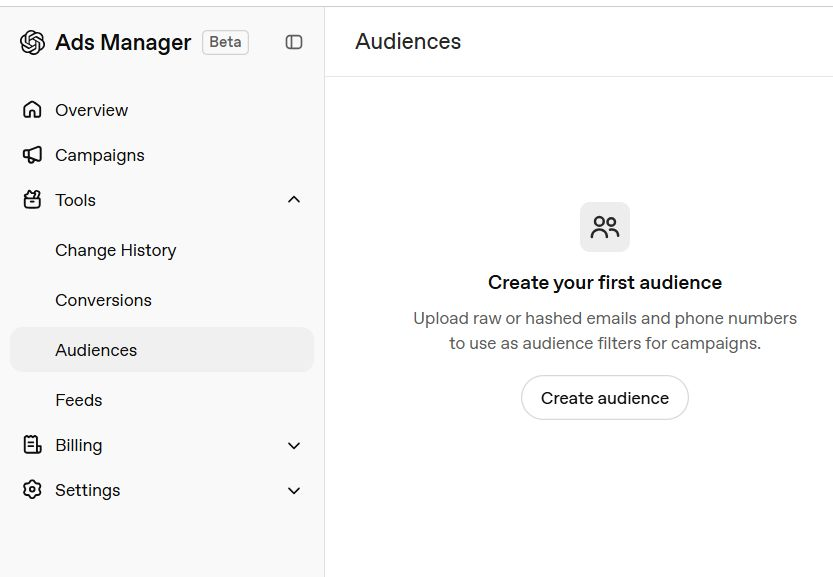
Audience Targeting Arrives - OpenAI is also rolling out Audience Lists, allowing advertisers to upload raw or hashed email addresses and phone numbers to build custom audiences and improve campaign targeting within ChatGPT Ads.
ChatGPT Changes Search Patterns - A Bocconi University study found broader ChatGPT Search access was associated with a 9.4% decline in traditional search queries, with informational searches seeing the biggest drop. The research also found ChatGPT referred users to external websites in 5.2% of sessions, compared with 31.1% for Google.
ChatGPT Ads Reach More Markets - OpenAI expanded ChatGPT Ads to Japan and South Korea while introducing new advertiser tools, including an overview dashboard, suggested ad drafts based on website metadata, refreshed ad formats, and campaign performance insights.
ChatGPT is continuing to reshape both search and advertising. As search behavior evolves, OpenAI is simultaneously expanding ChatGPT Ads with new markets, targeting capabilities, and campaign management tools.
👨💻 Quick Hits
🔄 X has updated its algorithm to show more posts from mutual followers, boosting visibility between users who follow each other to make replies feel more personal and encourage stronger interest-based communities.
🤖 Google clarified that AI Search ad eligibility hasn't changed, requiring AI-powered campaign types like AI Max, Performance Max, Broad Match, and Smart Bidding, while previewing predictive Qualified Future Conversions and encouraging broader use of YouTube Creator Partnerships.
🛍️ AI shopping is becoming mainstream, with a Bloomreach survey finding over 75% of consumers used AI assistants like ChatGPT, Gemini, or Claude for shopping in the past six months, boosting purchase confidence, spending, and shopping frequency.
🌙 Amazon dominates late-night impulse shopping, with 56% of consumers making unplanned post-midnight purchases there, as boredom, free time, and can't-sleep browsing continue to fuel overnight online spending.
💃Events
🔥 What 400+ Websites Reveal About Winning In Google Zero
July 23 | 60 Minutes | Virtual Event
Most SEO advice is based on opinion. This session is based on data. Learn what Cyrus Shepard discovered after studying 400+ websites, including the content formats still driving growth, the assets Google continues to reward, and where AI fits into a modern content strategy.
Can't make it live? Register anyway, you'll get the recordings within 24hours.
That’s a wrap for today! Tell us your thoughts about today's content as we line up more Shorts! And don’t hesitate to share this with someone who’d adore it. 🥰