
Limits help you truly scale
🕵️♂️ They expose weak creative, fast, so you can limit burning spend, Short-Form video is moving beyond the Phone, and more!
Hey there Smarty 👋
Are you geared up to catch the latest and greatest in quick shorts?
And just a quick heads-up! If you stumbled upon us through a friend, make sure to subscribe here! That way, you’ll never miss out on the trending shorts.

👨💻 Budget Caps Don’t Kill Performance
When spend stops scaling, most teams assume something is broken. The algorithm stalled. The account is constrained. The platform is limiting growth. That interpretation is convenient and wrong.
A budget cap doesn’t restrict performance. It reveals how much demand your creative can actually generate per dollar.
That’s not a media problem. That’s a creative one.
The Creative Throughput Law (The Part Nobody Models)
Every ad account has a ceiling that has nothing to do with bidding. It’s the maximum amount of qualified attention your creative can generate per day. When budgets are unlimited, this ceiling is invisible.
Spend floods weak messages. Inefficiency hides in volume. Learning slows. When budgets are capped, the ceiling becomes obvious. If ROAS won’t move, it’s not because the budget is small.
It’s because the creative cannot generate more high-intent impressions within that constraint. Budget caps don’t slow growth. They compress feedback.
Why Unlimited Budgets Create Lazy Systems
Large budgets create a dangerous illusion: progress without precision.
When spend is high:
- Vague hooks survive longer
- Low-intent buyers mask decay
- Teams mistake volume for leverage
When spend is capped, none of that survives.
Every impression has to work. Every hook has to earn attention. Every message has to qualify, not just attract.
This is why capped accounts often learn faster than uncapped ones. They are forced to respect creative math. This is also where teams need systems, not intuition.
Operators increasingly use tools like Lindy AI CMO to spin up agents that study competitors, generate multiple creative angles and briefs, and organize variants in Airtable so capped budgets are spent on learning, not guessing. You can signup for free and see AI CMO in action here.
The Non-Obvious Truth About Creative at Low Spend
At low daily budgets, creative volume matters more than creative polish. One cinematic ad cannot explore a message space.
Ten focused variants can. Budget caps shift the goal from “find the best ad” to “map where demand exists.”
That means:
- fewer broad ideas
- more precise hooks
- deliberate sequencing
- faster iteration
Not virality. Coverage.
The operator diagnostic that changes behavior
Ask this: “If this account stayed capped at this spend for 90 days, could we still learn our way to scale?”
If the answer is no, the issue isn’t the budget. It’s creative throughput. You are not producing enough distinct messages to discover pockets of demand.
Final Reframe
Scaling doesn’t start with more money. It starts with a creative that can carry weight under constraint. Budget caps don’t block growth.
They tell you whether growth is real. If your creative can win under pressure, scale becomes inevitable. If it can’t, no amount of spend will fix it. That’s not a limitation. That’s clarity.
Together with Insense
HACK: Turn One Creator Drop Into Weeks of Q5 Ads
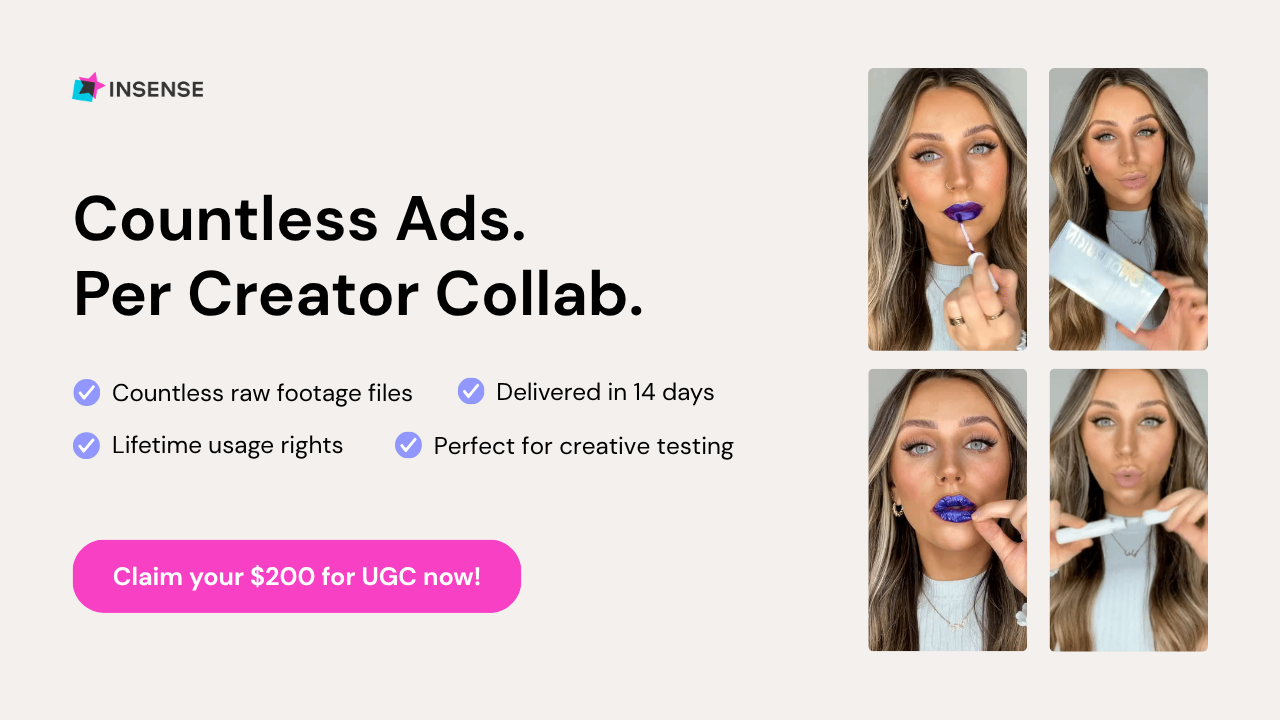
This is the scramble phase of Q5, the moment when every ad dies at once and performance hinges on how fast you can ship fresh creatives. Doing nothing means pouring budget into creatives that stopped converting yesterday.
With Insense, one creator drop gives you enough raw footage to fuel an entire round of testing without blowing up your team’s bandwidth.
- 20+ raw assets per creator, you can turn into countless variations.
- Fast 14-day turnaround so you stay ahead of Q5 spend.
- Lifetime usage rights, so every winning cut keeps earning for months.
That’s why 2,000+ brands like Quip, Revolut, and Matys rely on Insense to scale UGC without killing bandwidth.
Book a free strategy call by December 19th and get $200 for your first campaign!
📺 Short-Form Video Is Moving Beyond the Phone
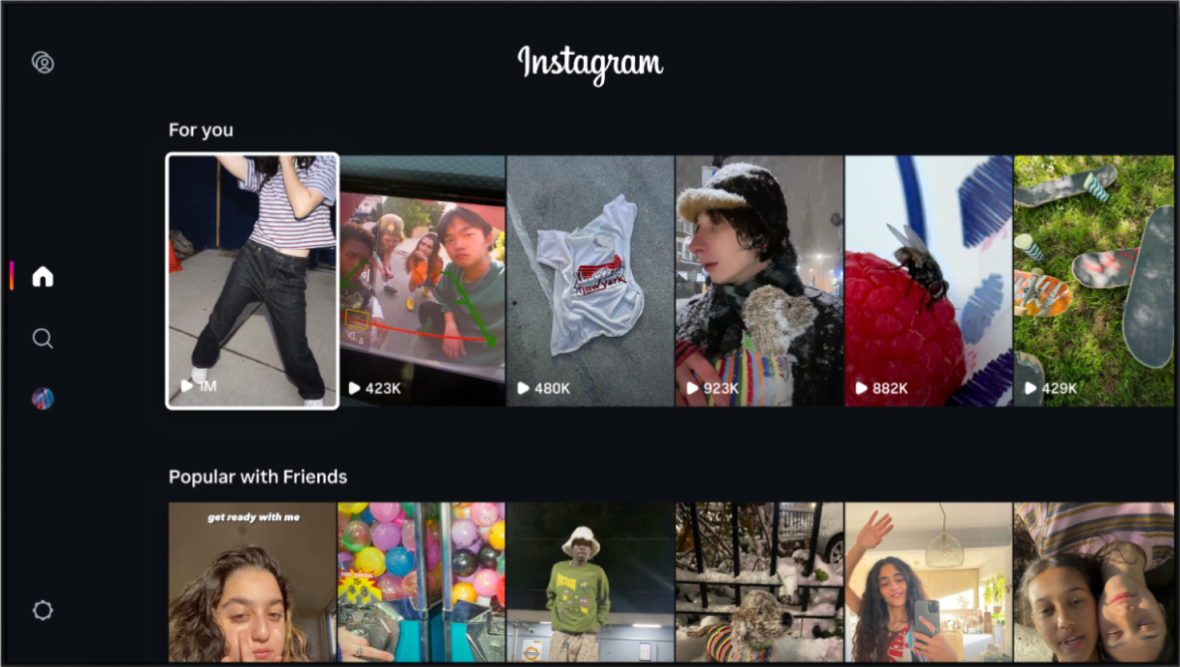
Instagram and TikTok rolled out product updates that change how short-form video is viewed and experienced. Instagram is piloting Reels on TV via Amazon Fire TV, while TikTok expanded its accessibility controls globally.
The Breakdown:
1. Instagram Launches IG for TV - Instagram is introducing IG for TV on Amazon Fire TV, bringing Reels to the big screen. The experience includes auto-play, personalized channels by topic, and the ability to pair or add multiple accounts.
Reels on TV are designed for passive, uninterrupted watching rather than active scrolling, positioning short-form vertical video alongside traditional connected TV viewing.
2. TikTok Adds HDR and Reduced Motion Toggles - TikTok rolled out a global HDR-to-SDR toggle for devices that support HDR playback, allowing users to reduce visual intensity caused by bright or rapidly changing video.
A new Reduced Motion toggle minimizes animations and transitions while keeping all interactions functional, building on existing tools like alt text, captions, dark mode, and text-to-speech.
Alongside these viewing and accessibility changes, Instagram also rolled out seasonal creative tools, including new fonts, Edits packs, and AI Restyle presets. These updates align creation tools with peak engagement periods, while consumption shifts toward TV screens and more inclusive viewing experiences.
🚀Quick Hits
📊 If your TV partner can’t clearly show where ads ran and what they drove, TV becomes guesswork. Tatari connects premium linear and streaming inventory with reporting that holds up as budgets grow. That’s why serious DTC brands stick with them. Book a demo and get a clean TV launch plan.
🚨 Meta is testing a major change: some Pages will be limited to two link posts per month unless they subscribe to Meta Verified. The test excludes publishers but could reshape Facebook's strategy in 2026.
📊 Googlebot still dominates 2025 crawling, generating 25% of all verified bot traffic, while AI crawlers surge 15x YoY. AI bots return little traffic, yet Google still drives ~90% of all search referrals.
📌 LinkedIn is opening Reserved Ads to all managed advertisers, letting brands lock in top-of-feed placement that boosts visibility and drives 75% higher dwell time, 88% higher VTR, and 99% forecast accuracy.
📌 Google Search now adds “read more” links to many snippets, sending users directly to anchored sections of a page, a change that could boost click-through rates for publishers.
That’s a wrap for today! Tell us your thoughts about today's content as we line up more Shorts! And don’t hesitate to share this with someone who’d adore it. 🥰