
Even your fallback failed
🫠Your search traffic dropped. Your social reach dropped the same week. Same cause, no fallback left.

Hey there Smarty 👋
Are you geared up to catch the latest and greatest in quick shorts?
And just a quick heads-up! If you stumbled upon us through a friend, make sure to subscribe here! That way, you’ll never miss out on the trending shorts.

🫠 Your search traffic dropped. Your social reach dropped the same week. Same cause, no fallback left.
For two years the contingency was straightforward. Search drops, push social. Social drops, push search. Two channels, two escape valves, one always open.
That plan ended quietly. Google's core update is suppressing scaled AI content. Social platforms deployed their own quality classifiers to detect and suppress generic AI posts. Brands that automated both with undifferentiated content are now bleeding from both simultaneously with nothing left to redirect to.
What the classifiers are actually detecting
Not AI-generated text. The absence of genuine signal.
Generic information aggregation. Sentences that could apply to any brand in any industry. Perspectives so safe they communicate nothing. These patterns get suppressed because they are what real users find worthless and scroll past.
A post written entirely by a human that says nothing original fails a quality classifier as reliably as an AI post does. A piece of AI-assisted content built around a genuine first-person observation, a specific operational result, or a contrarian position backed by real evidence passes because the signal is real regardless of what produced the words around it.
Production method is not the variable. Signal presence is.
The one change that survives every classifier at once
Before any AI tool touches content destined for external distribution, identify the one thing your brand knows from direct experience that a generic prompt cannot surface:
- A specific number from your own operations
- A client result with enough detail to be verifiable
- An observation from your category that contradicts the conventional advice
That input becomes the foundation. AI handles the structure and language around it. The output passes every classifier because the signal at the center is real. Without that input, AI produces content that sounds authoritative, covers the topic correctly, and gets suppressed anyway. The words are not the problem. The absence of anything behind them is.
Two production tracks, permanently separated
Not every content need carries classifier risk. Internal documentation, templated responses, operational summaries do not face suppression.
External distribution always does.
Build two explicit tracks: undifferentiated content for internal use only, differentiated content for any channel where a classifier evaluates it. The quality gate goes at track selection, not as a post-production review that slows everything downstream.
Once differentiated content is in distribution, track whether it is gaining ground across surfaces. SEMrush's AI Visibility Toolkit monitors visibility across ChatGPT and Google AI Mode so you can confirm differentiated content is gaining AI retrieval while organic rankings recover simultaneously. You can try it free for 7 days.
Two classifiers. One fix. The signal has to be real.
Together with Insense
1 UGC creator = 20+ ad variations to scale your ad creatives
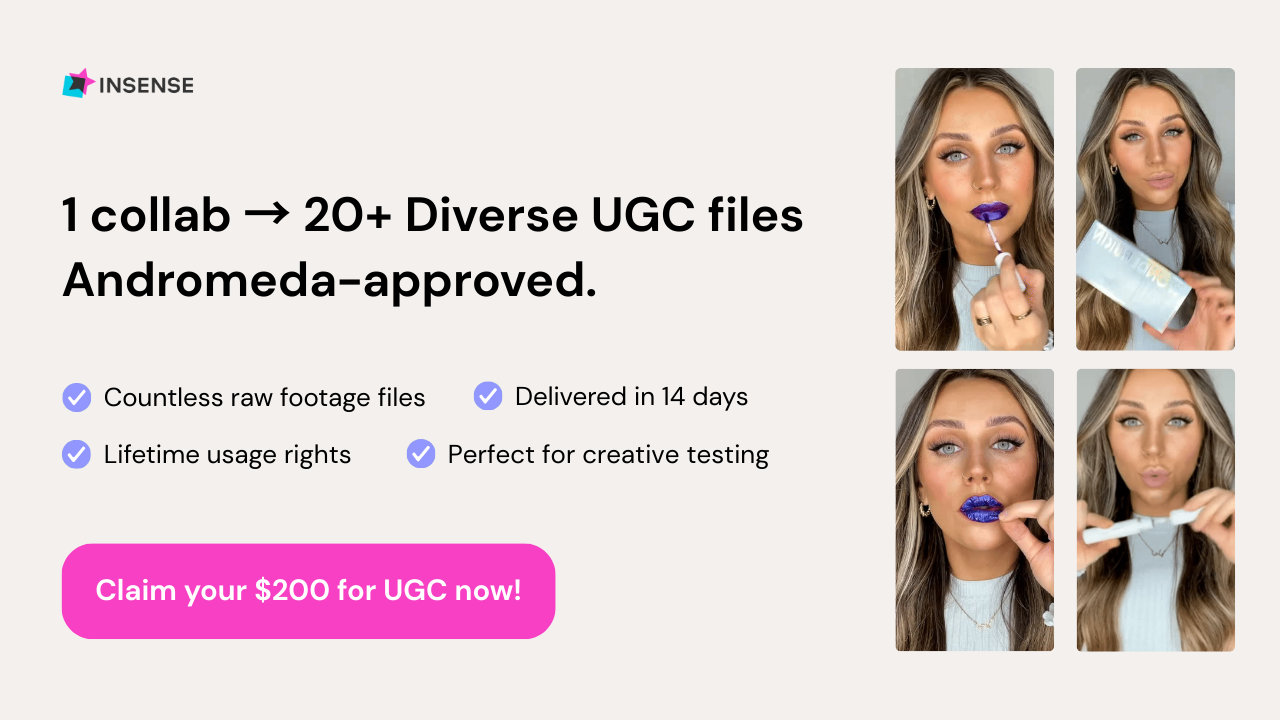
Insense makes UGC ads insanely cost-effective - and Andromeda-approved!
From one brief, get numerous raw footage clips to mix, match, and turn into multiple scroll-stopping creatives for your paid social ads.
Source 20+ pieces of raw content (per creator) with lifetime usage rights, all delivered in 14 days or less.
That’s how over 3500+ brands and agencies like Beauty Pie, Bones Coffee, Flo Health, and Aceable scale UGC without killing team bandwidth.
Cost-effective UGC with lifetime usage rights? Yes please!!
Book a free strategy call and get $200 for your first campaign.
🛒 Amazon, Pinterest, and OpenAI deepen AI-powered shopping
Amazon, Pinterest, and OpenAI announced new commerce and advertising features designed to connect shoppers with products more efficiently. The updates show how AI assistants, social discovery platforms, and conversational interfaces are increasingly becoming shopping destinations.
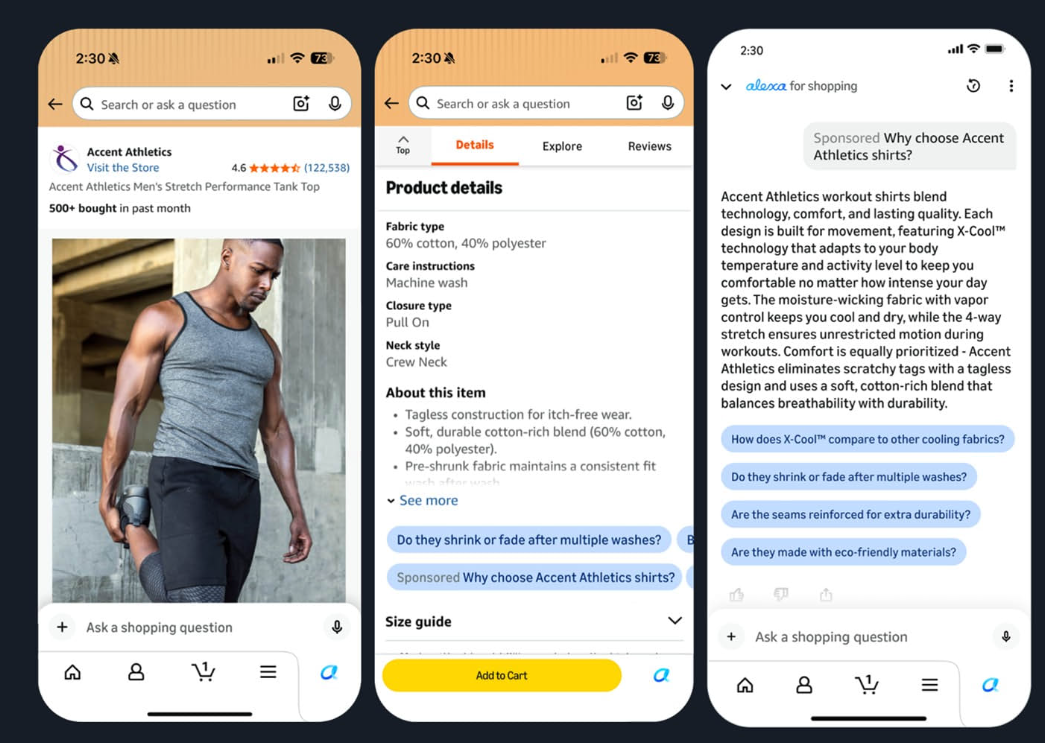
The Breakdown:
Shopping conversations become ad inventory - Amazon has combined Rufus and Alexa+ into Alexa for Shopping, allowing users to research products, compare options, build carts, and make purchases while exposing them to Sponsored Products, Sponsored Brands, and conversational ad formats.
Intent signals become more valuable - Amazon says more than 300 million customers used Rufus in 2025, while nearly 20% of shoppers who engage with Sponsored Brands prompts continue conversations about those brands, contributing to a 6% lift in conversions.
Affiliate promotion becomes easier - Pinterest is introducing Amazon Storefront linking, allowing creators to showcase their Amazon Storefronts on profiles and automatically apply affiliate tracking when tagging Amazon products in Pins.
Retail catalog advertising scales up - OpenAI's new Ads Manager beta feature lets retailers upload product catalogs and automatically generate ads from feed data, helping brands match inventory to high-intent shopping conversations without building campaigns product by product.
Amazon is embedding ads directly into purchase conversations, Pinterest is simplifying affiliate commerce, and OpenAI is bringing retail product feeds into ChatGPT. Together, these moves point toward a future where product discovery, recommendations, and purchases happen inside AI-driven experiences rather than traditional search and browsing journeys.
👨💻 Quick Hits
💬 YouTube is expanding its in-app messaging feature, allowing users to create chats, share videos, and discuss content directly within YouTube, reducing reliance on external messaging apps and keeping engagement on-platform.
🛒 Google partnered with Walmart Connect, letting advertisers measure how Google and YouTube campaigns drive Walmart sales using retailer purchase data. It also launched richer real estate ads with property details, images, pricing, and direct agent contact options.
🎯 Instagram expanded Your Algorithm controls to the main Feed, letting users directly adjust interest topics that shape recommendations across Feed, Reels, and Explore, giving people more influence over what content they see.
🏡 Google expanded enhanced Local Services Ads for real estate nationwide, adding property photos, pricing, and key listing details directly in Search, helping agents attract higher-intent buyers and generate leads earlier in the home-buying process.
💃Events
🔥 Why Some Pages Get Cited In AI Search While Higher Rankings Get Ignored
June 17 | 60 Minutes | Virtual Event
Google's AI Mode is changing how buyers discover brands, and rankings alone no longer guarantee visibility. Learn the content signals AI uses to choose citations, how to identify visibility gaps before they cost pipeline, and the workflows top B2B teams are using to earn references in AI answers, with insights from Chris Long, co-founder of Nectiv.
Can't make it live? Register anyway, you'll get the recordings within 24hours.
That’s a wrap for today! Tell us your thoughts about today's content as we line up more Shorts! And don’t hesitate to share this with someone who’d adore it. 🥰