
Don’t treat Retention as a safety net
🔪This is killing repeat rate and your AOV faster than ever, Google is turning AI into the checkout button, and more!

Hey there Smarty 👋
Are you geared up to catch the latest and greatest in quick shorts?
And just a quick heads-up! If you stumbled upon us through a friend, make sure to subscribe here! That way, you’ll never miss out on the trending shorts.

Together with Modash
New Influencer Marketing Industry Report: Risk Management
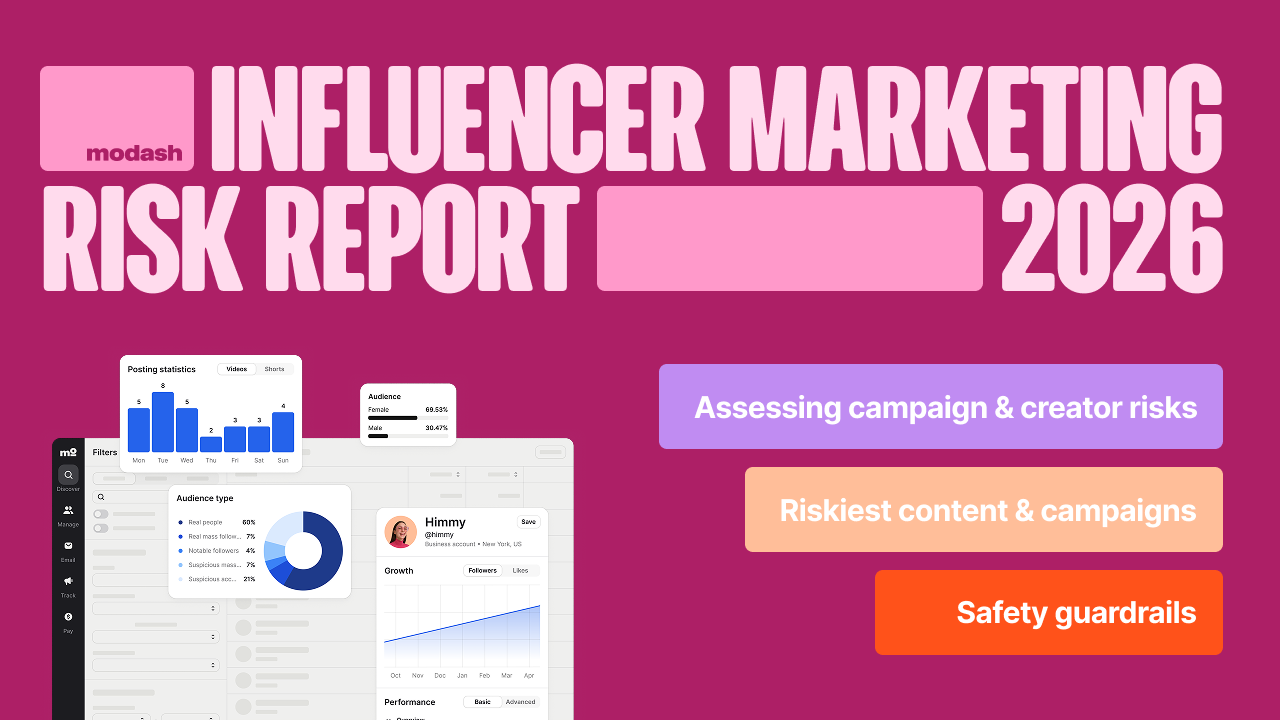
Spending money is part of marketing. But when it comes to influencers, it often means betting on variables you can’t fully control: will the algorithm push the content? Will the audience engage? And more importantly, will they buy?
Modash’s latest influencer marketing study reveals that 71% of marketers ran campaigns in the last quarter that made them a little nervous. Risk comes with the job, and the majority of surveyed influencer marketers are willing to take it - as long as brand reputation stays protected.
This influencer marketing risk report outlines:
- How marketers assess the risk of a campaign or creator
- Which types of collabs and content feel riskiest
- How do they hedge their bets when investing in uncertain partnerships
Access the full report for free here (non-gated)
🥹Don’t treat Retention as a safety net
Brands hit a soft week in paid, open Klaviyo like it’s a fire extinguisher, and blast the list by noon. Revenue ticks up, and Slack celebrates.
Two weeks later, repeat rate slips and AOV compresses, and nobody connects the dots. The campaign worked. The cohort didn’t.
The problem isn’t volume. It’s predictability.
Customers learn your panic rhythm fast. If every acquisition dip is followed by urgency copy and a 20 percent incentive, you create a timing arbitrage class inside your own base. They don’t churn. They wait.
Waiting customers quietly distort your demand curve and force bigger pushes to clear the same number.
You’ll see it here:
- Renewal intervals stretch without obvious churn spikes
- Repeat purchase windows widen during non-promo weeks
- AOV compresses outside campaign periods
- Cash flow gets lumpy while the top line looks stable
Finance calls it volatility. Marketing calls it seasonality. It’s conditioned behavior.
So if email isn’t the fallback lever, what is?
Install a Revenue Shock Absorber.
Most brands run on two gears:
- Paid traffic
- Campaign blasts
When paid softens, retention gets squeezed. That binary system is the structural flaw.
Build a third layer that activates without discounting:
- Dynamic post purchase add ons triggered after checkout
- Usage-based replenishment nudges tied to consumption timing
- Value framed bundles that increase cart depth without lowering price
This isn’t about more flows. It’s about smoothing revenue timing. An 8 to 12 percent AOV lift from structured add-ons reduces reliance on emergency promos.
Separate engagement from extraction.
If every email eventually asks for money, customers optimize around it. Engagement becomes transactional.
Create a stream that never sells:
- Product education deep dives
- Founder notes with zero CTA
- Community spotlights
- Behind-the-scenes process content
When 30 to 40 percent of sends build value without extracting it, campaign emails regain force.
Replace discounts with access mechanics.
Price cuts train patience. Access mechanics train participation:
- Limited production runs
- Early restock windows
- Randomized surprise upgrades
- Private drops for engaged segments
Customers don’t delay accessing the way they delay discounts.
Revenue volatility is rarely demand collapse. It’s timing distortion amplified by predictable reactions. Email should be an amplifier, not a defibrillator.
Redesign the system so revenue doesn’t depend on urgency spikes. When customers buy because they want the product, not because they are gaming your cadence, forecasts stabilize, and margins stop bleeding.
🤖 Google Is Turning AI Into the Checkout Button
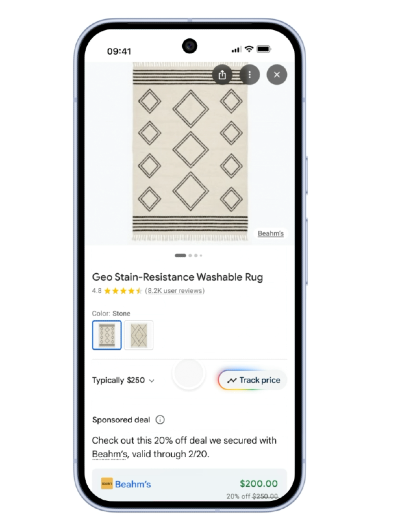
Google isn’t just adding AI to ads. It’s rebuilding the buying journey around it. In her third annual letter, Vidhya Srinivasan made it clear that 2026 is about agent-driven commerce. Search, YouTube, and checkout infrastructure are being redesigned so AI doesn’t just suggest products, it helps close the sale.
The Breakdown:
1️⃣ Ads Move Inside AI Conversations - Google is testing sponsored retail listings, and Direct Offers directly inside AI Mode, embedding paid placements into conversational answers and shifting ads from static search results into dynamic discovery flows.
2️⃣ Checkout Happens Without Leaving Search - Universal Commerce Protocol now powers in-chat purchases for Etsy and Wayfair, with Shopify, Target, and Walmart next, enabling identity verification, payments, and seamless agent-assisted checkout inside AI Mode and Gemini.
3️⃣ Creators Become Conversion Infrastructure - YouTube remains the top discovery engine, with AI matching brands to relevant creator communities, turning influence into measurable commerce.
4️⃣ Creative and Reach Go Fully AI-Native - Gemini 3, Nano Banana, Veo 3, and AI Max automate asset production and campaign expansion, generating studio-quality creative while unlocking net-new searches beyond traditional keyword-triggered demand.
Adapting to AI-driven commerce is no longer optional. As buying journeys shift into conversational search, creator ecosystems, and embedded AI checkout, brands gain new conversion paths but surrender more control to platforms shaping discovery, pricing power, and performance visibility.
Together with The Shift
The AI Newsletter That Solves Problems, Not Creates Them
AI can do a lot, but most newsletters leave you wondering what’s actually worth trying.
That’s where The Shift comes in. They don’t just tell you “what’s new” in AI.
Every edition answers one question: What can you do with AI today that saves you time, money, or effort?
You’ll see real-world examples, step-by-step mini-guides, and instantly usable prompts, plus free access to 3,000+ AI tools and top free AI courses so you can apply what you learn right away.
No hype, no wasted time, and no “just in case” news. If it’s in The Shift, it’s because it can make your work better today.
Subscribe to The Shift now - it’s free!
🚀Quick Hits
📦 Most brands obsess over ads and checkout, then let fulfillment erase the win. Shipfusion placed five real orders across leading clear protein brands and found that 0 brands used exterior or interior branding, making every delivery forgettable. If you ship products to customers, download the DTC Delivery Files to benchmark your post-checkout experience.
📌 Pinterest hit 619M users and $1.3B Q4 revenue, driven by shopping discovery and 80B monthly searches. AI tools boost personalization, while CTV expansion and international growth strengthen its commerce-focused strategy.
💼 LinkedIn launched a $99/month SMB Premium dashboard combining prospecting, hiring, AI guidance, and $150 in ad credits. With founder profiles up 60% and subscriptions nearing $2B annually.
🇷🇺 Russia has blocked WhatsApp, Facebook, and Instagram, restricting access to over 100 million users and pushing citizens toward its state-backed Max app, tightening control over online communication and information flow.
🔍 Google says campaign consolidation isn’t the goal itself. The priority is stronger data signals and performance, with segmentation still valid for real business needs. Aim for 15 conversions in 30 days to ensure sufficient data density.
🌍 PQ Media forecasts global ad spend to rise 8.8% in 2026, with total marketing up 9.8%, lifting industry composite growth to 7.7%. Growth may slow to 4.4% in 2027.
That’s a wrap for today! Tell us your thoughts about today's content as we line up more Shorts! And don’t hesitate to share this with someone who’d adore it. 🥰