
Bundle for payback
🎯Your entry SKU pulls clicks, your margin SKU saves you, Google makes demand gen and testing more useful, and more!

Hey there Smarty 👋
Are you geared up to catch the latest and greatest in quick shorts?
And just a quick heads-up! If you stumbled upon us through a friend, make sure to subscribe here! That way, you’ll never miss out on the trending shorts.

🎯Bundle for payback
While you obsess over testing and ignore what happens under the hood of the cart. Your AOV might rise, but if your margin curve collapses, CAC payback falls apart. There’s a better way to structure bundles, one that teaches your acquisition funnel how to sustain itself from Day 1.
Let’s call it the Merge Event
say you’ve got:
- A $29 entry SKU that converts well but only clears 18% margin
- A $42 retention SKU that repeats at 31% and carries a healthy 55% margin
You would bundle these and call it a win. But the merge event is more precise: a one-time pairing designed to blend payback upfront without relying on higher ticket size.
You’re not selling a kit. You’re creating a margin-forward entry path, where the low-margin SKU earns the click, and the high-margin SKU accelerates breakeven before media fatigue hits.
Conversion is fragile in early-year cycles. First-time buyers are deal-sensitive, and AOV pushes often backfire.
But margin-split bundling trains your CAC recovery curve instead. If 2.3 items per order at a blended 36% margin gets you to payback inside 30 days, you can throttle ad spend without touching ticket size.
You’ve essentially turned SKU selection into a cashflow tool.
The Hidden Risk Layer
Even the best margin plan fails if the delivery experience makes the brand feel cheap. Shipfusion placed five real orders across leading clear protein brands and tracked everything after checkout, and what they found explains why repeat purchases quietly drop off:
0 brands used exterior or interior branding, only 40% offered more than one delivery speed, and most post-purchase emails stopped at confirmation instead of building trust.
Even though the test was on protein brands, the insights apply to any brand that ships products. You can download the DTC Delivery Files and audit your post-checkout experience today.
What to Track
- SKU-level CAC-to-Margin Ratio
- Payback Curve: Merge vs Solo SKU
- Retention Delta: Merged vs Unmerged
These aren’t bonus metrics, they’re the ones that reveal if your bundles are profitable, or just expensive short-term lifts.
Treat SKU selection like media buying, and your unit economics will start compounding instead of leaking.
Together with Section
The AI Marketing Strategy Summit featuring Scott Galloway – January 29 | Free Virtual Event

On January 29 from 12 - 4 PM ET, join Section and Scott Galloway for an afternoon of AI marketing strategy sessions.
From AIEO to advanced consumer personalization to more targeted campaigns.
You’ll learn what’s hype vs what’s table stakes, how top teams are actually using AI to move faster, and what to prioritize if you want better performance without burning out your team.
Bring your whole team and leave with clear next steps, smarter workflows, and strategies you can put to work the very next day.
📊 Google Makes Demand Gen and Testing More Useful
Google just dropped two updates that actually help day-to-day account management. Demand Gen is getting clearer signals on the interest it creates, not just clicks. And Google Ads is rolling out a better way to test how different campaign types work together.
The Breakdown:
1. Demand Gen Now Shows Brand Search Lift - Demand Gen now reports brand searches driven by your ads across Google and YouTube, helping you see when people do follow-up research after viewing. It’s a cleaner “demand-created” signal.
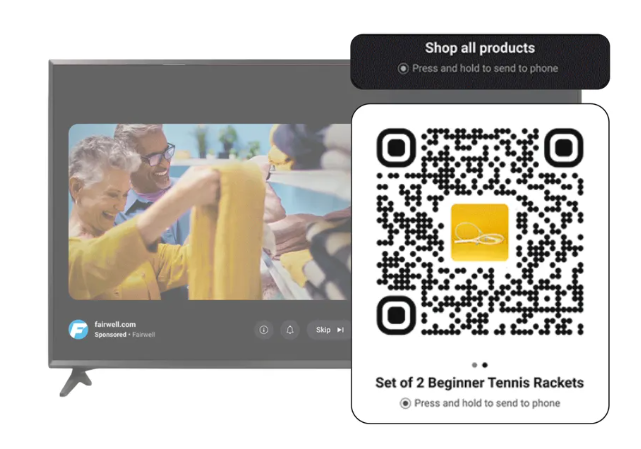
YouTube CTV ads now support scannable QR codes, so viewers can act straight from the TV screen. YouTube says shopping-related videos hit 35B watch hours last year. CTV shopping behavior is growing fast.
2. Mix Experiments Beta Launch - Google Ads launched Campaign Mix Experiments (beta), letting you test multiple campaign types and budgets inside one experiment. You can compare Search, PMax, Shopping, Demand Gen, Video, and App mixes together.
You can build up to five experiment arms and split traffic as low as 1%. Reporting includes confidence levels and metrics like ROAS, CPA, conversions, and conversion value. Google suggests running tests for 6–8 weeks.
These updates push Google Ads closer to how teams actually work: proving impact beyond clicks, making TV easier to convert, and testing the full account instead of guessing. If you run automation-heavy setups, this gives you more control without extra busywork.
🚀Quick Hits
🛒 Your customers already shop everywhere, your affiliate program should too. Levanta runs creator and affiliate partnerships across marketplaces with clean attribution and ROI clarity, so you stop paying for what does not convert. Join 3,000+ brands driving 3× ROAS. Book a demo and claim your $75 Uber Eats or DoorDash gift card.
💰 X is testing in-feed paid partnership tags that let creators label sponsored posts without manual “#ad” disclosures, potentially unlocking cleaner transparency and future brand analytics.
📱 TikTok’s US deal has officially closed, shifting operations to a new Oracle and Silver Lake led entity with ByteDance under 20% ownership, while keeping US data, moderation, and algorithm security under majority American oversight.
📉 PwC’s CEO survey found 56% saw no revenue or cost gains from AI in the past year, with only 12% achieving both, showing most companies are still stuck in tactical pilots instead of scaled AI deployment.
🛒 Shoppers are pulling back online as economic pressure and trust issues rise, with daily e-commerce shopping dropping from 21% to 9% and more buyers abandoning purchases when product info is inconsistent or misleading.
That’s a wrap for today! Tell us your thoughts about today's content as we line up more Shorts! And don’t hesitate to share this with someone who’d adore it. 🥰