
Amazon Search Just Got Rebuilt
🫠Your listing was written for the old version, and more!

Hey there Smarty 👋
Are you geared up to catch the latest and greatest in quick shorts?
And just a quick heads-up! If you stumbled upon us through a friend, make sure to subscribe here! That way, you’ll never miss out on the trending shorts.

🫠Amazon Search Just Got Rebuilt
COSMO, Amazon's AI knowledge engine, now powers search relevance, recommendations, and navigation across the platform. It does not read listings the way the previous system did.
Where the old algorithm indexed keywords and matched them to queries, COSMO builds a semantic model of what a product is, who it is for, and how people use it. The difference matters because the optimisation required to perform under each system is not the same.
Under the old model, the listing copy was written for keyword detection. Title density, backend search terms, and bullet structure were all organised around getting the right words indexed in the right fields. A listing that was keyword-rich but conceptually vague performed well because the system was looking for keyword matches, not product understanding.
Under COSMO, semantic accuracy about product identity is the primary signal. The system is asking: what is this product actually for, what problem does it solve, and for which type of buyer?
A listing that uses the right language but does not clearly communicate the product's use context, intended user, and specific benefit produces weaker relevance signals than one that reads as if a human explained the product clearly to another human who had never heard of it. The shift is from writing for detection to writing for comprehension.
The second implication is what COSMO does with content that exists about your product outside the listing itself.
Authentic creator content, reviews, social posts, videos where real buyers describe how they use the product in their own words, feeds the semantic model that COSMO builds.
The language your actual customers use to describe the product becomes part of how Amazon understands and categorises it.
Stack Influence generates exactly that content at scale: micro-influencers from a network of 11M+ purchase your product, use it, and create authentic content across their own channels. Brands including Martha Stewart and Unilever have used this channel to reach page one on Amazon in under two months. You can sign up this week and save 10% on your first campaign.
The listing audit starts with one question: if someone who had never heard of your product read this listing, would they understand immediately who it is for and what specific problem it solves? If the answer requires any inference, the listing is written for the old system.
Together with Dreem
The Wait Between Upload And Launch Just Disappeared
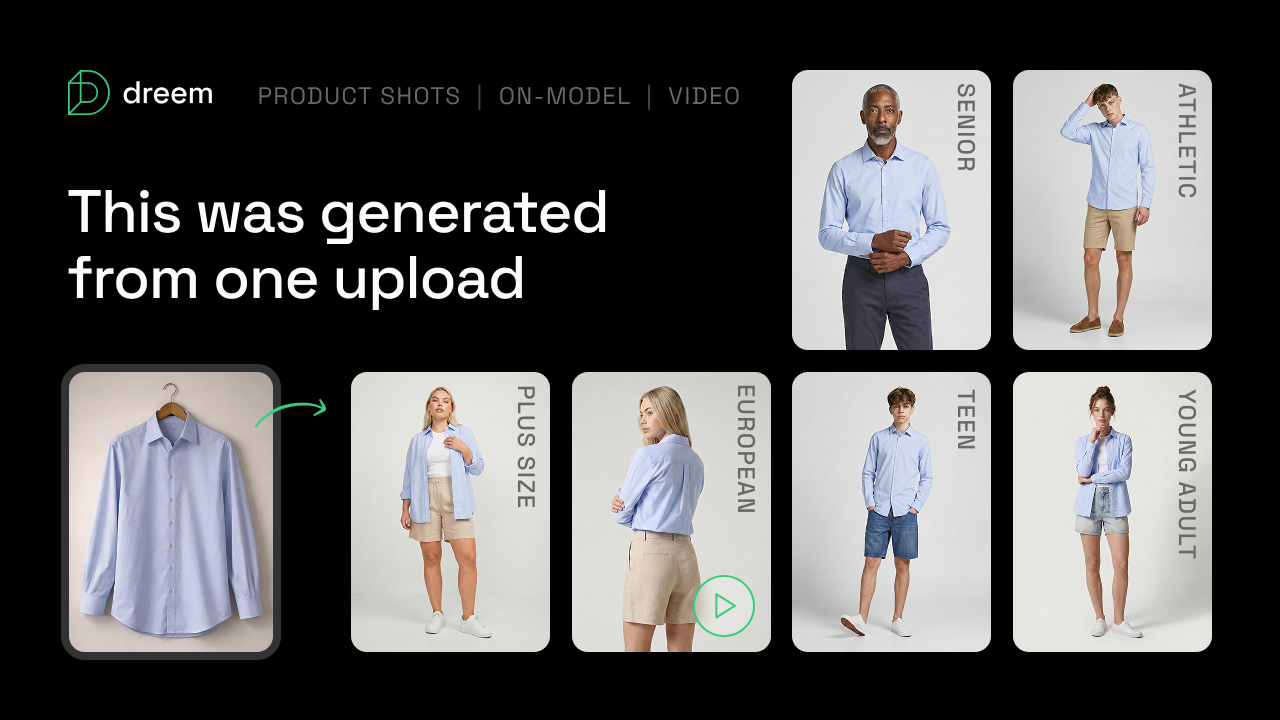
You upload a photo, and then you wait. A few days later it finally turns into something you can actually use, and that wait is the real cost here, not the shoot itself.
Every SKU needs assets across segments, channels, and formats. Most teams ship one shot and call it a launch, then stretch it for a year because nobody has six weeks to wait on samples and reshoots.
Dreem closes that wait. One upload and you get model shots, product shots, and video across 400+ virtual talents, for about $2 an image.
- One upload becomes every shot you need: model, product, and video, from a phone photo or flat lay, no studio required.
- Pick from 400+ talents across body type, age, and skin tone, so the shopper browsing actually sees someone who looks like them.
- A new SKU goes from flat lay to live page in a single day. No shoot scheduling or sample shipping.
CX teams use this to cut return tickets by showing real fit before the purchase. Growth teams ship 15+ audience-specific variants per launch.
Sign up before July 30 and you get 600 bonus credits, enough for 50 full per-segment kits on your top SKUs.
👨💻 Quick Hits
💰 Meta is introducing paid access to advanced AI features through its Meta One Premium subscription, charging users for enhanced AI capabilities, premium support, and exclusive features across its apps and AI glasses.
📺 X launched a new livestream studio in Creator Studio, giving Premium users streamlined broadcast controls, audience analytics, scheduling tools, and a $1 million creator incentive program to encourage more live streaming.
📱 Six in ten U.S. adults support banning teens from social media, reflecting growing public backing for stricter age-based restrictions as governments worldwide push to strengthen online protections for young users.
🧠 ChatGPT’s Thinking mode dramatically changes which brands get cited, with only 25.6% citation overlap versus standard mode, favoring official documentation and authoritative sources over Reddit and review sites.
That’s a wrap for today! Tell us your thoughts about today's content as we line up more Shorts! And don’t hesitate to share this with someone who’d adore it. 🥰