
Algo fell for the wrong customer
📉 Early traction can quietly lock accounts into weak buyers, PPC trends to watch in 2026, and more!

Hey there Smarty 👋
Are you geared up to catch the latest and greatest in quick shorts?
And just a quick heads-up! If you stumbled upon us through a friend, make sure to subscribe here! That way, you’ll never miss out on the trending shorts.

Together with Insense
Stop Guessing. Start Working With Creators Who Actually Convert
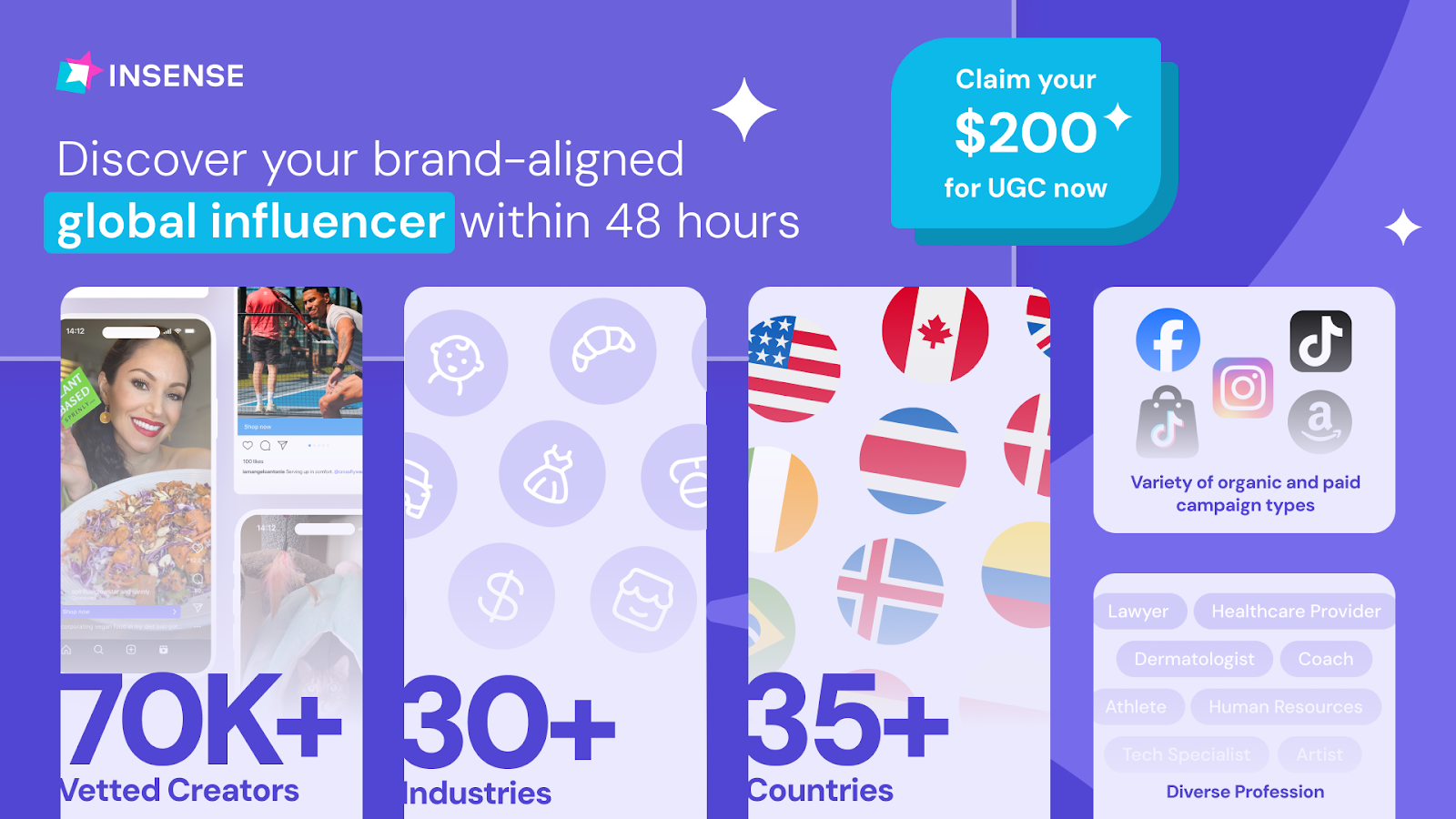
You don’t need more creators. You need the right creators, the ones who look like your buyer, speak their language, and move your metrics from the first piece of content.
But manually sourcing them? Total momentum killer and the fastest way to fall behind in Q1.
That’s why 2,000+ brands and agencies now rely on Insense.
In under 48 hours, you get high-fit creators hand-matched to your exact niche so you can run everything end-to-end: product seeding, UGC, TikTok Shop, Meta Partnership Ads, and TikTok Spark Ads without the sourcing chaos.
Here’s what brands are actually seeing:
- Revolut: 350+ UGC assets from 140+ creators across 10+ countries.
- goPure: 150+ UGC videos generated at zero cost through product seeding.
- Maty’s: 12x higher reach using TikTok Spark Ads at roughly $0.60 CPC.
Now imagine your Q1 pipeline built on creators who actually convert, not creators you hope will convert.
Book a free strategy call by Jan 16th and get a $200 bonus for your first campaign!
💔Algo fell for the wrong customer
The first sign an account is drifting usually looks like progress.
A few ads get traction quickly. One segment responds better than the rest. The system starts reallocating spend with confidence. Everyone relaxes because the numbers are moving in the “right” direction.
That confidence is premature.
What’s being rewarded in those early days isn’t buying behavior. It’s visibility, curiosity, and low-friction interaction. And once the system commits there, it becomes harder to convince it to look elsewhere.
Nothing is technically wrong, which is why it’s easy to miss.
What’s happening underneath is simpler and more dangerous: the algorithm has locked onto the easiest audience to please, not the one that actually buys.
This usually starts with early signals. Clicks. Likes. Watch time. Cheap attention. Those signals arrive fast, and platforms are designed to trust what arrives first. The system doesn’t know yet who converts well. It only knows who reacts quickly.
So budget flows there.
Once that happens, learning narrows. The algorithm sees more of the same audience, gets more of the same engagement, and becomes increasingly confident it’s on the right path. Meanwhile, higher-intent segments never get enough spend to prove their value.
This is how accounts drift without anyone making a “bad” decision.
The mistake isn’t trusting automation. It’s assuming early behavior predicts downstream value.
In reality, the people most likely to click are often the least likely to convert. They’re curious, not committed. They respond to visuals, not outcomes. They interact, but they don’t decide.
If you let the system fully optimize around them, you end up paying to entertain the wrong customer.
The fix isn’t to fight the algorithm or turn everything manual. It’s to slow its conclusions and force broader learning.
That means deliberately shaping budget flow early on. Ensuring that different segments actually receive spend, even if their initial engagement looks weaker. Allowing enough volume for conversion data to surface before the system reallocates everything toward the path of least resistance.
This is where operators earn their keep.
Not by choosing creatives.Not by tweaking bids every hour.
But by deciding where the algorithm is allowed to fall in love, and where it’s required to keep looking.
Once conversion data becomes clear, automation works incredibly well. The problem is letting it make long-term decisions based on short-term attraction.
The uncomfortable truth is that dashboards won’t warn you when this is happening. Performance doesn’t collapse. It just slowly optimizes toward audiences that are easy to win but hard to grow with.
By the time CPA rises or scale stalls, the learning window has already closed.
Good accounts don’t just optimize results. They protect the learning phase long enough for the right customer to reveal themselves.
Automation will always chase the fastest signal. Your job is to make sure it doesn’t mistake attention for intent.
Together with The Shift
Turn AI from “Interesting” to “Impactful”
If you’ve ever thought, “That’s cool, but how would I actually use it?”
The Shift is for you. Here’s what you’ll get:
- Easy-to-follow breakdowns of even the most complex AI concepts.
- Real strategies you can apply in minutes, no tech degree required.
- Bonus access to 3,000+ AI tools, free courses, and prompt libraries.
Every edition is built for action, so you can improve campaigns, speed up workflows, or launch ideas faster than ever before.
You don’t just “learn AI” here. You make it work for you.
🚀 PPC trends to watch in 2026
PPC in 2025 moved at record speed. AI became unavoidable, platforms changed weekly, and advertisers felt both enabled and constrained. Heading into 2026, winning is less about chasing features and more about guiding automation with intent.
What’s working
Strong structure, controlled keywords, and clean conversion signals still anchor performance. Performance Max and Demand Gen work when advertisers actively guide inputs and use scripts to catch tracking issues before automation amplifies them.
Authentic UGC and influencer-style content are beating polished, AI-heavy ads. Teams that align campaigns to real business goals, not just ROAS targets, are seeing more sustainable results.
What’s not working
Automatically Created Assets remain risky for brand safety and nuance. Limited approval control often leads to off-brand messaging, wasted spend, and poor prioritization across product catalogs.
Complex UIs, long learning periods, modeled conversions, and buried settings slow decision-making. Smaller and seasonal campaigns struggle most when automation demands data without flexibility.
As 2026 approaches, platforms are evolving faster than ever, and the biggest changes likely haven’t even been announced yet. Advertisers who stay flexible, protect fundamentals, and feed strong signals into automation will win whatever comes next.
That’s a wrap for today! Tell us your thoughts about today's content as we line up more Shorts! And don’t hesitate to share this with someone who’d adore it. 🥰